The city, which recently adopted a Vision Zero action plan, has one of the nation’s highest pedestrian fatality rates.


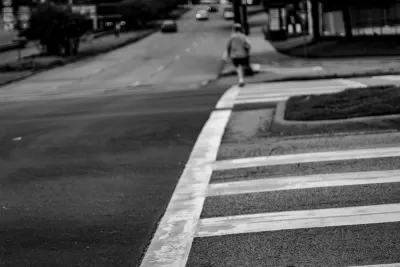
Despite having the “fifth highest pedestrian fatality rate out of the 25 largest U.S. cities,” Dallas has failed to prioritize pedestrian infrastructure, reports Lori Brown for Fox 4 News.
Responding to a recent audit of the city’s accessibility ramps, “City staff revealed on Monday that the city would need $54 million to install all of the ramps needed to comply with the federal ADA law on the books for more than 30 years.” According to the article, “The audit found a backlog of 1,500 crosswalks in need of new pavement markings. When the markings wear out, they lose reflectivity and can become slippery.”
Dallas City Councilman Chad West expressed disappointment at the city’s lack of commitment to finding funding sources, saying “the current approach continues to put walkers at risk in a city that historically has struggled to improve its walkability.”
On June 13, the Dallas Morning News Editorial Board urged the city to make their recently adopted Vision Zero plan “a true action plan – not just a wish list.” According to the editorial, “Though traffic fatalities are on the rise nationally, a city staff data analysis shows that Dallas’ fatality rate is rising faster than the U.S. average, reaching 17 deaths per every 100,000 residents in 2020.” Pedestrians account for 30 percent of Dallas traffic deaths, despite only making up 2 percent of commuters.
Read the full story: Dallas needs $54 million to install sidewalk ramps that meet ADA requirements

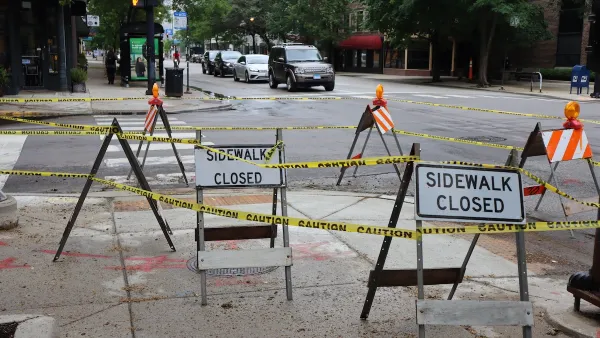
Chicago Residents Sue City Over Inaccessible Sidewalks
The suit alleges the city has failed to create a “coordinated, proactive system” for complying with ADA and ensuring accessibility on the city’s sidewalks and crosswalks.

For Advice on Accessibility, Look to Iceland
Cities around the country installed over 1,700 wheelchair ramps in the last five years, thanks in part to one man’s initiative.
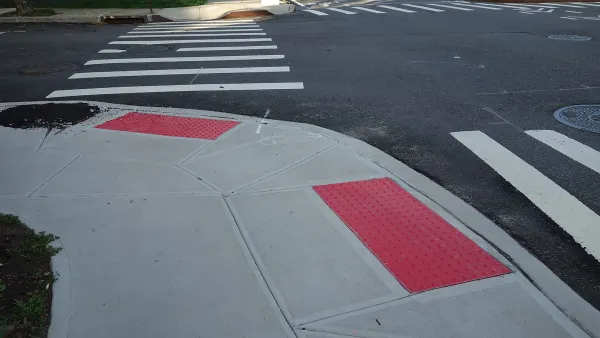
Federal Government to Enforce Accessibility Guidelines
Local agencies will soon be tasked with adhering to federal right-of-way accessibility rules: comprehensive guidelines for accessible streets and sidewalks.

Planetizen Federal Action Tracker
A weekly monitor of how Trump’s orders and actions are impacting planners and planning in America.

California plans to bury El Niño’s downpour
If the state plays its cards right, it may be able to store a billion acre-feet of El Niño’s water in aquifers.

Desperate measures: Advocates weigh draining Lake Powell to fill Colorado River
Draining the reservoir could reduce evaporation losses by a couple hundred thousand acre-feet.

California city breaks ground on transit connector
The project includes three mobility hubs and a pedestrian bridge.

After public outcry, Massachusetts city releases housing development tracker
Cambridge’s tracker currently shows 250 housing projects in various stages of development.

40 years after approval, Chicago breaks ground on new park
The park honors Jean Baptiste Point du Sable, the city’s first permanent non-native settler.

FREE Course: Walkable City 1: Why Walkability?
After describing his path towards focusing on walkability as the essence of good planning, Jeff Speck marches through his five principal reasons for making more walkable places.
Reinventing Malls: Planning Alchemy—Turning Gray Fields Into Gold
The course focuses on the opportunities and imperatives that shape reinvention of mall sites.

City of Rosemead
Rutgers University, Edward J. Bloustein School of Planning and Public Policy
One Hundred Miles
Hunter College, City University of New York (CUNY)
The Architects Foundation
University of Cincinnati Online
City of Cambridge
Montrose County
The Pocatello Development Authority