The insanity of the housing market during the pandemic seems to have peaked in an increasing number of U.S. cities, according to recent data.


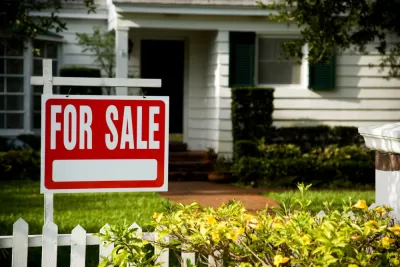
“U.S. cities that saw some of the biggest jumps in home prices during the pandemic now have the largest shares of price cuts,” reports Alex Tanzi for Bloomberg, using data published recently by Zillow.
More specifically, according to Tanzi:
Overall, the proportion of active real estate listings with lower prices has increased in all 50 of the largest U.S. metropolitan markets tracked by Zillow. In these cities, 11.5% of homes saw a price cut in May, on average, up from 8.2% a year earlier.
And:
Among the 50 metros in Zillow’s data, 32 had more than 10% of listings with a price decline. In eight cities, the share has jumped by at least 5 percentage points over the past year.
Edward Seiler, associate vice president of housing economics at the Mortgage Bankers Association is quoted in the article blaming the slowdown in housing prices on higher interest rates (and thus higher mortgage payments) and the already high cost of housing.
Read the full story: Hottest US Housing Markets Now Have Bigger Share of Price Cuts

The ‘Lock-In Effect’ Keeping Home Prices High
Housing prices dropped slightly last year, but first-time and middle-income buyers found little price relief due to the “lock-in effect” of the historically low interest rates in effect for more than a decade prior to 2022.
The Consequences of 'Runaway' Housing Prices
There's been no shortage of discussion and debate about what's causing the price of homes in the United States to skyrocket at record rates, but less discussion of the consequences for housing market trends on the broader economy.
Tight For-Sale Market Leads to Record Price Spikes in the Rental Market
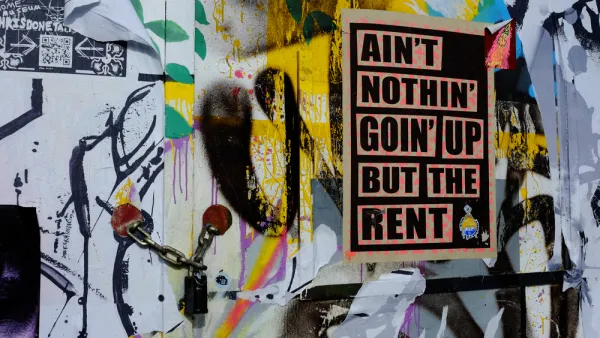
A supply-demand imbalance in the for-sale housing market will eventually spill into the rental market.

Planetizen Federal Action Tracker
A weekly monitor of how Trump’s orders and actions are impacting planners and planning in America.

California plans to bury El Niño’s downpour
If the state plays its cards right, it may be able to store a billion acre-feet of El Niño’s water in aquifers.

Chicago breaks ground on $3 billion megadevelopment
The new neighborhood, titled Foundry Park, will one day host 3,700 residences.

City officials are dumping billions of gallons of sewage into the Chicago River
This year, the Racine Avenue sewage pumping station has poured over 10 billion gallons of sewage into the Chicago River.

Move over, LA: St. Louis gears up for Olympics, invests millions in downtown redevelopment
The Missouri city will host the 2028 Olympic soccer group stage and knockout matches.

Satanic place names
From streams and lakes to valleys and canyons, I mapped more than 1,000 places named after the Devil.

FREE Course: Walkable City 1: Why Walkability?
After describing his path towards focusing on walkability as the essence of good planning, Jeff Speck marches through his five principal reasons for making more walkable places.
Reinventing Malls: Planning Alchemy—Turning Gray Fields Into Gold
The course focuses on the opportunities and imperatives that shape reinvention of mall sites.

City of Rosemead
Rutgers University, Edward J. Bloustein School of Planning and Public Policy
One Hundred Miles
Hunter College, City University of New York (CUNY)
The Architects Foundation
University of Cincinnati Online
City of Cambridge
Montrose County
The Pocatello Development Authority