While residents differ on how to allocate the neighborhood’s street space, many want to see safer infrastructure for pedestrians and people on bikes.


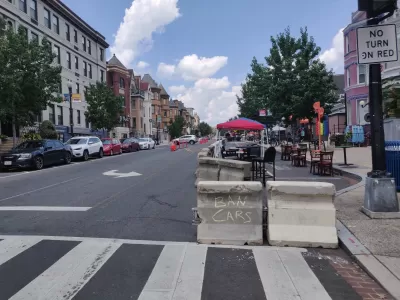
Ashley Hopko reports on efforts to bring street safety improvements to Washington, D.C.’s Adams Morgan neighborhood, where pandemic-era ‘streateries’ and bike lanes are vying with traffic lanes for space. “Adams Morgan community stakeholders are pushing for road changes that would increase safety for bicyclists and pedestrians, potentially shift bus routes, and limit vehicle access to major thoroughfares in the neighborhood.”
According to Hopko, “To address growing pains in the area, the District Department of Transportation (DDOT) began drafting the Columbia Road Bus Priority Plan in 2021. It aims to improve infrastructure for pedestrians, cyclists, and bus commuters by rethinking how street space is utilized by various modes of transit.”
In the article, two local bike commuters criticized the use of ‘sharrows,’ calling for fully segregated bike lanes that would better serve both cyclists and drivers. Advocates also want to see more pedestrian-only segments, such as on 18th Street. “The Adams Morgan Business Improvement District has been pushing for approval to repeat the pilot pedestrian zone program launched in 2020, according to Kristen Barden, the group’s executive director.”
Residents also express concerns about the on-street restaurant patios known as ‘streateries,’ Hopko writes. “Though most community members don’t seem to mind the squeeze caused by streateries, there are safety issues that arise due to narrow roadways and limited visibility caused by pop-up structures.”
Read the full story: Adams Morgan stakeholders grapple over road safety improvements

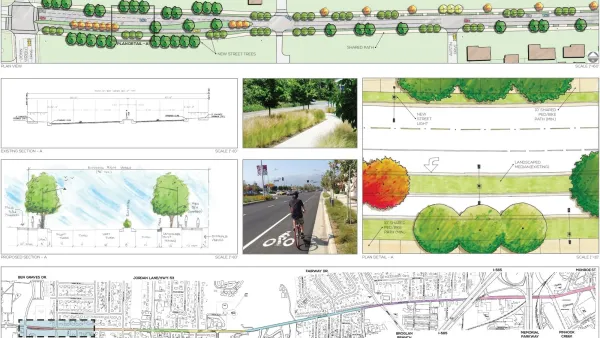
Huntsville, Alabama Launches $30M Complete Streets Project
A redesign of Holmes Avenue will bring new sidewalks, bike lanes, lighting, and street furniture to the corridor.
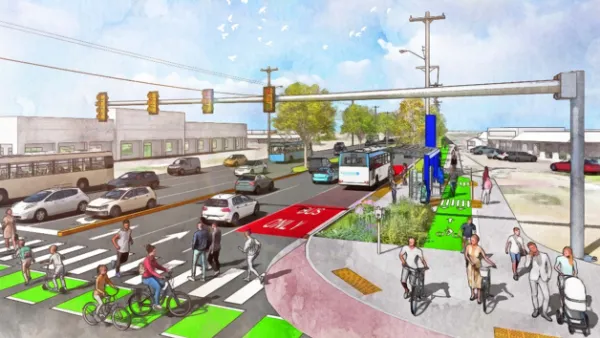
WSDOT Offers Ambitious Multimodal Vision for Dangerous SR 99 Corridor
The proposal includes dedicated bike and bus lanes as well as pedestrian improvements.
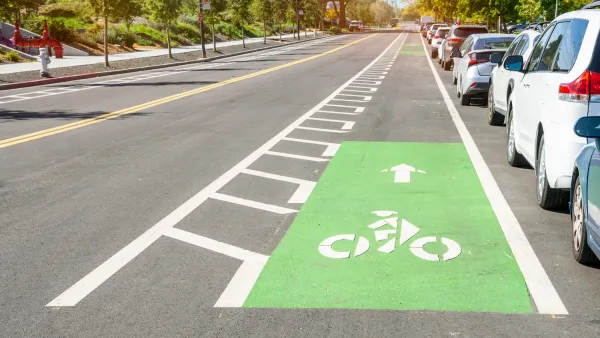
Why Bike Lanes Are Good: An Explainer for the US Transportation Secretary
Sean Duffy says there’s no evidence that bike lanes have benefits. Streetsblog — and federal agencies’ own data — beg to differ.

Planetizen Federal Action Tracker
A weekly monitor of how Trump’s orders and actions are impacting planners and planning in America.

The state-sanctioned urbicide of Austin
People don’t kill cities. Freeways do.

Colorado’s Largest Data Center Could Rise Next to Homes — Without a Public Hearing
The proposed campus would consume 11 times the power of Denver International Airport; as it has across the country, opposition mounts.

Judges permit Denver to divert 77,000 acre feet from the Colorado River for reservoir expansion
Overuse and climate change have caused the Colorado River’s water levels to plummet.
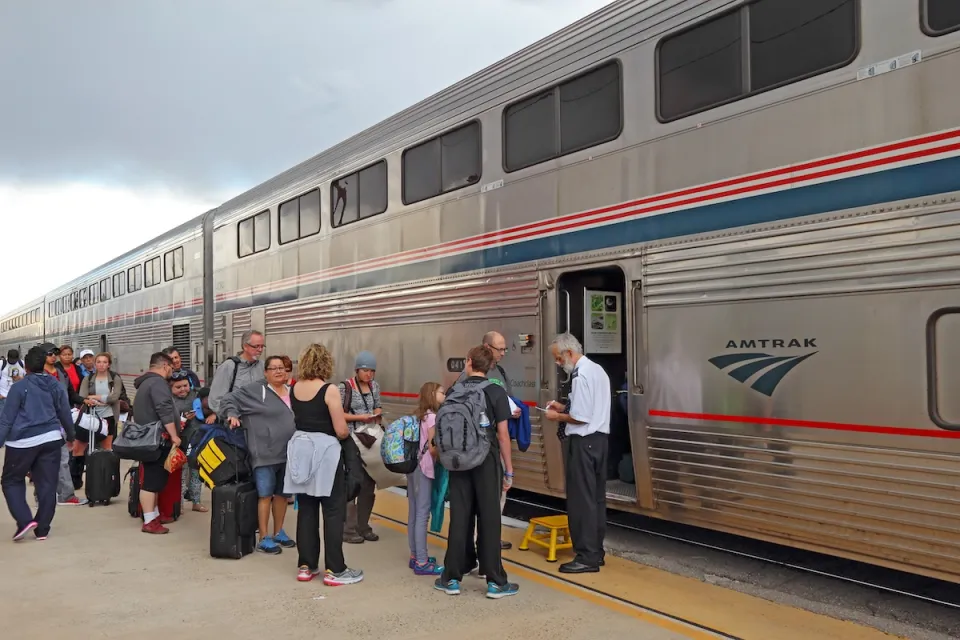
Amtrak, CN end decades-long dispute with eight-year agreement
The new operating agreement establishes an updated framework for the companies to work together, including processes to resolve disputes.
Raised interest rates may kill financially vulnerable construction projects
The chief economist at ConstructConnect warns that if construction project owners are negatively impacted by the raised rates, it could result in delayed payments to contractors.

FREE Course: Walkable City 1: Why Walkability?
After describing his path towards focusing on walkability as the essence of good planning, Jeff Speck marches through his five principal reasons for making more walkable places.
Reinventing Malls: Planning Alchemy—Turning Gray Fields Into Gold
The course focuses on the opportunities and imperatives that shape reinvention of mall sites.


KFH Group Inc.
Greater Baltimore Committee
Eagle County Government
The Architects Foundation
University of Cincinnati Online
The Pocatello Development Authority
The Urban Renewal Agency of the City of Pocatello