A TV show featuring young Japanese children going on errands on their own highlights the differences between Japanese and American urban design that enable even toddlers to safely navigate big cities.


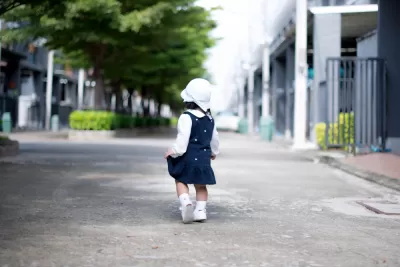
Henry Grabar comments on the urban design differences that enable Hajimete no otsukai, a long-running Japanese television show that follows toddlers in big cities going on errands alone (followed by a camera crew, of course). “In the first of the 20 episodes made available to Netflix subscribers, a 2-year-old travels to the town convenience store to buy groceries for Mom. In the fourth, 3-year-old Yuka crosses a five-lane road in Akashi, a city the size of Cincinnati, to get to the fish market.”
“But the Japanese are not so different from us,” Grabar writes. “They’ve just made policy choices that make it possible for kids to run their first errand a decade before their American counterparts get to do the same.”
Typically, Japanese children don’t actually run errands for Mom and Dad in the city at 2 or 3 years old, [Hironori Kato, professor of transportation planning at the University of Tokyo] notes, as they do in the show. But the comic, TV-friendly premise exaggerates a truth about Japanese society: Children in Japan have an unusual degree of independence from an early age.
Grabar attributes this independence to several factors: “Drivers in Japan are taught to yield to pedestrians. Speed limits are low. Neighborhoods have small blocks with lots of intersections.” Additionally, “Many small streets do not have raised sidewalks but depend on pedestrians, cyclists, and drivers to share the road. Curbside parking is rare, which creates better visibility for drivers and pedestrians and helps give the smaller streets of big Japanese cities their distinctive feel.”
Rebecca Clements, a research fellow at the University of Sydney, says “the show is evidence of how Japan gives children a ‘right to the city.’” E. Owen Waygood, a professor at Montréal Polytechnique, says the culture of independence doesn’t only liberate children: “Japanese kids ages 10 and 11, Waygood found, make just 15 percent of weekday trips with a parent, compared with 65 percent of trips for American kids. A city that frees children also frees their parents.”
FULL STORY: How Japan Built Cities Where You Could Send Your Toddler On An Errand

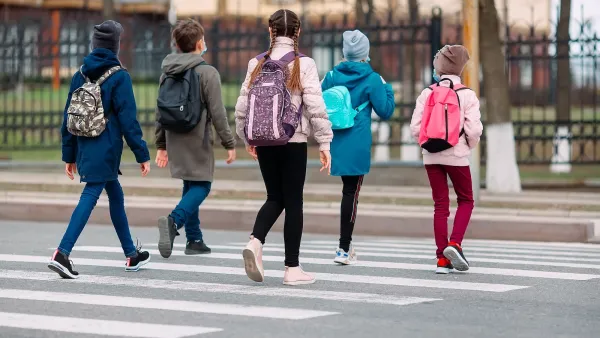
The number of kids walking to school dropped from over 50% to 11% since the 1960s
Unsafe pedestrian infrastructure makes walking to school dangerous or impossible for a growing number of American students.
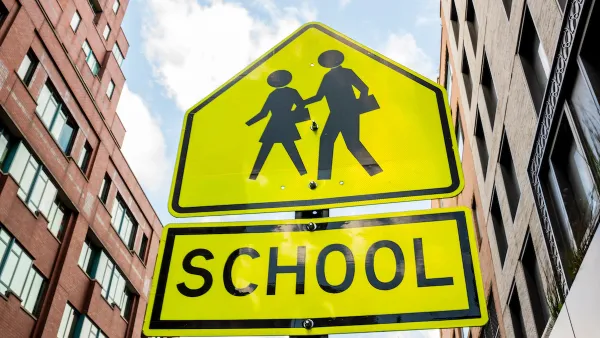
Crosswalks Near NYC Schools More Dangerous Than Average
A child and a crossing guard were killed in school crosswalks within one week as the NYPD cuts crossing guard jobs.

The Major Shortcoming in Biden's COVID Action Plan
Dr. Leana S. Wen, an emergency physician and public health expert, writes that Covid will become a 'manageable problem' with three key actions, only one of which hasn't received the attention it deserves in the Biden administration's action plan.

Planetizen Federal Action Tracker
A weekly monitor of how Trump’s orders and actions are impacting planners and planning in America.

The state-sanctioned urbicide of Austin
People don’t kill cities. Freeways do.

US to reduce Colorado River water deliveries to Mexico
A new Colorado Treaty amendment reduces Mexico’s Colorado River water allocation by 250,000 acre feet.

5 New England states march closer to 800 megawatt wind energy project
Securing federal approval for the project may be complicated under the Trump administration, which has historically been hostile towards domestic wind power.

Baltimore to break ground on $50 million Transit Priority Project
The project will bring faster bus trips, safer streets and better bike connections to Baltimore.

Airbnb launches $250 million 'last-dollar financing' housing accelerator, makes first investment in Austin
The company will put $6.4 million towards affordable housing development in Texas’ capital.

FREE Course: Walkable City 1: Why Walkability?
After describing his path towards focusing on walkability as the essence of good planning, Jeff Speck marches through his five principal reasons for making more walkable places.
Reinventing Malls: Planning Alchemy—Turning Gray Fields Into Gold
The course focuses on the opportunities and imperatives that shape reinvention of mall sites.

Eagle County Government
Harvard University Graduate School of Design
Nashville Planning Department
The Architects Foundation
University of Cincinnati Online
The Pocatello Development Authority
The Urban Renewal Agency of the City of Pocatello
Journal of the American Planning Association