The Low-Income Housing Tax Credit program has helped create more than 3 million affordable housing units across the country. But if something isn’t done soon, thousands of those homes could be lost forever as affordability periods expire.



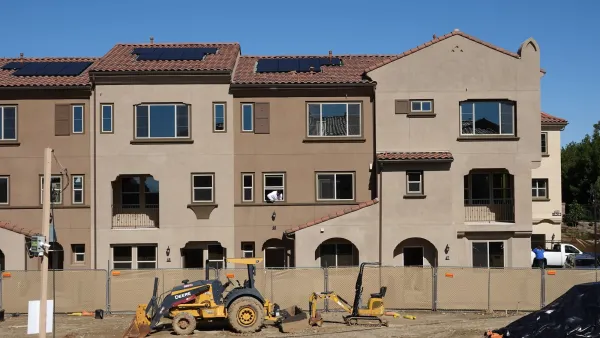
Last April, seniors who lived in rent-restricted units at the Sierra Ridge apartment complex in Clovis, California, were told that their rents would double by January 2022. Rent for a one-bedroom apartment would increase from $591 to $1,295 a month, management said, and a two-bedroom unit would go from $699 a month to around $1,400.
Although 20 percent of the units at Sierra Ridge had been subject to long-term affordability requirements that prohibited such increases, those conditions officially came to an end in early 2021.
Sierra Ridge was built in 1990 as one of numerous properties in the U.S. constructed using the Low-Income Housing Tax Credit (LIHTC) program, which provides tax incentives for the building, rehabbing, or purchasing of affordable housing. The development is comprised of a mix of market-rate and affordable units, the latter of which, like all other LIHTC-funded units, must remain affordable for 30 years, after which property owners are allowed to rent those units at prices the market will bear. The LIHTC program was created in 1986 and made permanent in 1993, meaning that many of those first LIHTC units are beginning to see those 30-year affordability restrictions expire.
It’s estimated that by the end of the decade, nearly half a million LIHTC-funded housing units will reach the end of their affordability period. “When these affordability restrictions go away, a lot of people lose the dignity of being able to afford living on their own,” says Marcos Segura, a staff attorney at the National Housing Law Project.
These properties are also at risk of falling into disrepair as property owners often need money for major renovations by the end of their affordability period, money that isn’t available without a new source of funding.
Are there any mechanisms in place to protect residents who live in these properties? What can housing advocates and public officials do now to preserve the affordability of those LIHTC units, and the ones to be built in the future?
No Game Like the Long Game
For profit-motivated owners, the closer their property gets to losing its rent restrictions, the more focused owners become on the returns that could be made from converting affordable units to market-rate. This is especially true in .....
Read the full story: What Can Be Done When LIHTC Affordability Restrictions Expire?


Does every planner need an AI policy?
From a hundred-person agency to a one-person consultancy, the answer is yes. The difference is what “policy" means.

Cost of living too high? Planners to the rescue!
Excessive costs of living force many people to work more than optimal hours, leaving less time for family and fun. Local policies that favor affordable housing and transportation increase freedom, opportunity and happiness.
Senate Bill Calls for National Housing Emergency
If passed, the bill could trigger the use of the Defense Production Act to speed up production of construction materials.

Planetizen Federal Action Tracker
A weekly monitor of how Trump’s orders and actions are impacting planners and planning in America.

The state-sanctioned urbicide of Austin
People don’t kill cities. Freeways do.

Colorado’s Largest Data Center Could Rise Next to Homes — Without a Public Hearing
The proposed campus would consume 11 times the power of Denver International Airport; as it has across the country, opposition mounts.

Nation's most wind-powered state turns to coal as data centers increase energy demand
For the first time in decades, Iowa has increased its generation of coal power.

NYC cools commuters with city's first rain garden above a bus stop
New York City officials say the plants in the rain garden can absorb 16 gallons of rainwater during heavy storms.

Brightline West’s future may rely on $6 billion federal loan
The company has until Nov. 2 to make a $400 million equity investment into its proposed high-speed rail line.

FREE Course: Walkable City 1: Why Walkability?
After describing his path towards focusing on walkability as the essence of good planning, Jeff Speck marches through his five principal reasons for making more walkable places.
Reinventing Malls: Planning Alchemy—Turning Gray Fields Into Gold
The course focuses on the opportunities and imperatives that shape reinvention of mall sites.

Greater Baltimore Committee
Eagle County Government
Harvard University Graduate School of Design
The Architects Foundation
University of Cincinnati Online
The Pocatello Development Authority
The Urban Renewal Agency of the City of Pocatello
Journal of the American Planning Association