A new web portal allows Detroiters to see how the city is spending hundreds of millions in federal American Rescue Plan Act funds.


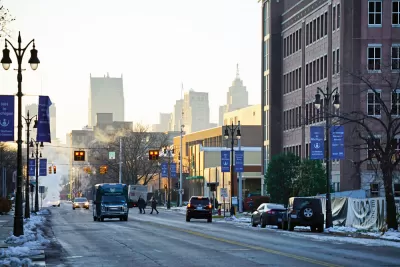
Detroit is receiving $826 million in American Rescue Plan Act (ARPA) funds, and the city wants to ensure that the public can easily access information about how those funds are being spent, reports Dana Afana. To that end, "The city launched a website to show where the funding is being used and ways Detroiters can get involved. The city thus far programmed $530 million, which City Council approved in June 2021, and is moving forward with compliance reviews and more than 80 initiatives from 15 spending categories, according to the city."
Detroit's ARPA website also has a #TakePart element for residents to find information about community meetings, jobs and special alerts. The website also has a registration page for suppliers, a portal of available bid opportunities, and a section showing which contracts were approved by City Council and those that are pending.
The article lists ARPA-funded projects already underway, such as the Basement Back-up Program, affordable housing for seniors, expansion of social services, and job training and development programs. "Some of the upcoming ARPA-funded programs, which require further approvals and are expected to launch between the spring and fall, include neighborhood beautification grants, blight remediation, an arts alley initiative, Detroit at Work's Learn to Earn, recreation centers, restoration of the unused Detroit Fire Department Ladder 30 facility, Joe Louis Greenway, neighborhood signs and the Detroit Police Department Shot Spotter expansion."
Read the full story: Detroiters can track how city is spending $826M in American Rescue Plan Act funds

New Federal Grant Rules Could Kill Detroit Road Diets
Millions in federal dollars for safe streets could be in jeopardy after federal agencies changed conditions for grant funding.
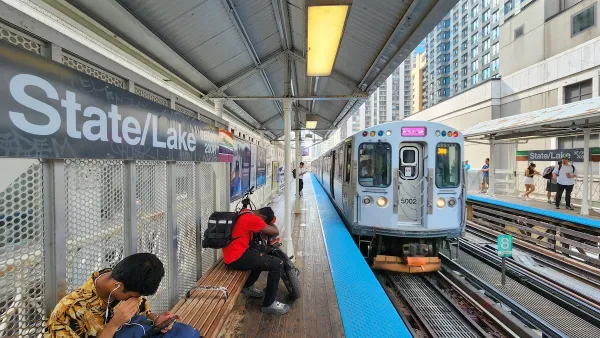
Trump Freezes $2.1 Billion for Chicago Transit and Infrastructure Projects
The administration plans to revoke federal funding over what it calls “discriminatory, illegal, and wasteful contracting practices.”
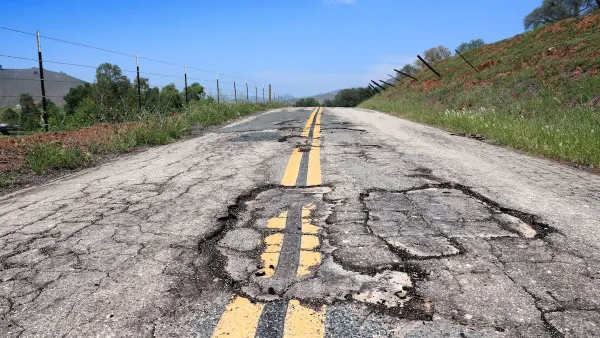
Engineers Gave America's Roads an Almost Failing Grade — Why Aren't We Fixing Them?
With over a trillion dollars spent on roads that are still falling apart, advocates propose a new “fix it first” framework.

Planetizen Federal Action Tracker
A weekly monitor of how Trump’s orders and actions are impacting planners and planning in America.

California plans to bury El Niño’s downpour
If the state plays its cards right, it may be able to store a billion acre-feet of El Niño’s water in aquifers.

Desperate measures: Advocates weigh draining Lake Powell to fill Colorado River
Draining the reservoir could reduce evaporation losses by a couple hundred thousand acre-feet.

US buildings threatened, destroyed by fires set to triple by 2060
Researchers found a high fire risk for socioeconomically vulnerable neighborhoods in the American West.

LA residents may be allowed to paint their own crosswalks
Councilwoman Katy Yaroslavsky put out a motion instructing the Los Angeles Department of Public Transportation to study the feasibility of allowing volunteers to paint crosswalks.

Dallas moves to overhaul its zoning code
The city's zoning reform will allow more multi-family and mixed-use developments.

FREE Course: Walkable City 1: Why Walkability?
After describing his path towards focusing on walkability as the essence of good planning, Jeff Speck marches through his five principal reasons for making more walkable places.
Reinventing Malls: Planning Alchemy—Turning Gray Fields Into Gold
The course focuses on the opportunities and imperatives that shape reinvention of mall sites.

City of Rosemead
Rutgers University, Edward J. Bloustein School of Planning and Public Policy
One Hundred Miles
Hunter College, City University of New York (CUNY)
The Architects Foundation
University of Cincinnati Online
City of Cambridge
Montrose County
The Pocatello Development Authority