A proposal before the Board of Supervisors could undermine the state's density law by upzoning the city to allow duplexes, a step housing advocates call a disingenuous effort to prevent higher density.



San Francisco officials are proposing a novel workaround for SB9, a new California law that promotes increased density in neighborhoods previously zoned only for single-family homes, report Dustin Gardiner and J.D. Morris for the San Francisco Chronicle.
On its surface, "Supervisor Rafael Mandelman’s plan would double down on the state’s goal to add more homes in existing neighborhoods by allowing up to four units on lots currently zoned for residential homes — and up to six units on corner lots." However, "the effort recently took on a new dimension after he accepted a recommendation from the Planning Commission that would upzone all single-family neighborhoods to allow duplexes, basically exempting San Francisco from SB9 because the law applies only to areas zoned for single-family homes." Additionally, the proposal also keeps the city's onerous permitting process.
"Mandelman said the way much of San Francisco is zoned for single-family homes today encourages developers to flip properties and build 'monster homes' for the very wealthy, rather than small apartment buildings for people from with a variety of incomes." While Mandelman defends the plan as a way to ease housing pressures while preserving "the city's unique character," pro-housing advocates say it doesn't do enough to increase housing production.
Gardiner and Morris describe the opposing proposals before the Planning Commission and Board of Supervisors as officials debate how to balance new development, affordability, and historic preservation in the city.
FULL STORY: San Francisco may embrace fourplexes — while undercutting part of state density law


San Francisco Mayor’s ‘Family Zoning’ Plan Faces Pushback, Displacement Concerns
Newly proposed legislation aims to protect long-term tenants from displacement caused by Mayor Lurie’s proposed zoning reform plan, which would allow for more housing construction in parts of the city.

San Francisco Just Ended Single-Family Zoning
The San Francisco Board of Supervisors voted to Tuesday to eliminate single-family zoning, but pro-development advocates say additional changes are needed to unleash a wave of construction.
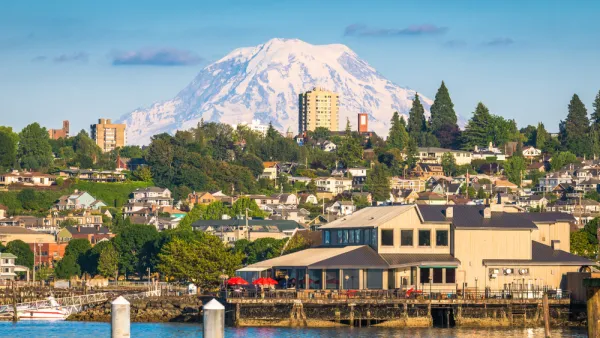
Tacoma Density Plan Moves to Phase Two
The Home in Tacoma plan would amend the city's zoning code to include more 'missing middle' housing types and encourage infill development.

Planetizen Federal Action Tracker
A weekly monitor of how Trump’s orders and actions are impacting planners and planning in America.

The state-sanctioned urbicide of Austin
People don’t kill cities. Freeways do.

US to reduce Colorado River water deliveries to Mexico
A new Colorado Treaty amendment reduces Mexico’s Colorado River water allocation by 250,000 acre feet.

5 New England states march closer to 800 megawatt wind energy project
Securing federal approval for the project may be complicated under the Trump administration, which has historically been hostile towards domestic wind power.

Baltimore to break ground on $50 million Transit Priority Project
The project will bring faster bus trips, safer streets and better bike connections to Baltimore.

Airbnb launches $250 million 'last-dollar financing' housing accelerator, makes first investment in Austin
The company will put $6.4 million towards affordable housing development in Texas’ capital.

FREE Course: Walkable City 1: Why Walkability?
After describing his path towards focusing on walkability as the essence of good planning, Jeff Speck marches through his five principal reasons for making more walkable places.
Reinventing Malls: Planning Alchemy—Turning Gray Fields Into Gold
The course focuses on the opportunities and imperatives that shape reinvention of mall sites.

Eagle County Government
Harvard University Graduate School of Design
Nashville Planning Department
The Architects Foundation
University of Cincinnati Online
The Pocatello Development Authority
The Urban Renewal Agency of the City of Pocatello
Journal of the American Planning Association