With demand for housing in Eastern Washington rising steeply, the region could benefit from zoning reform that encourages small and mid-sized multifamily developments.


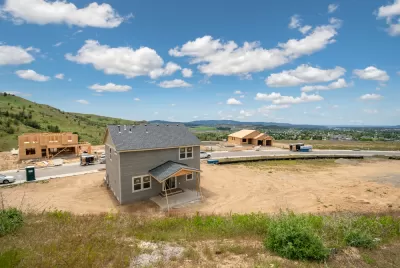
In an opinion piece in Inlander, housing developer Jim Frank argues in favor of zoning reform in Eastern Washington, where housing costs have risen dramatically along with demand in the last decade. "Over the past 10 years, we've taken housing affordability for granted. We thought it was a staple that we would never lose. In 2010, the median home price was about $160,000 — and we were worried about it going down."
While the first signs of growth were heralded as a positive development for the local economy, Frank writes, that soon changed. "The trickle of growth turned into a stream, then surged into a COVID migration-swollen river. The regional growth rate is now well over 2 percent a year, while the median home price is nearly $400,000." For Frank, "This rapid price escalation is a result of our complacency and a failure to build enough housing to accommodate our population."
"We need to allow a wide variety of housing types in every neighborhood. When you look around Spokane, what you see are single family homes on large lots, along with large multifamily projects. There is virtually nothing in between."
Frank calls for revisions to local zoning codes that allow more 'missing middle housing' such as townhomes and small multifamily buildings. "How we build neighborhoods and regulate housing has to change in ways that encourage infill. Regardless of economic status, families need to be welcomed into all of our neighborhoods."

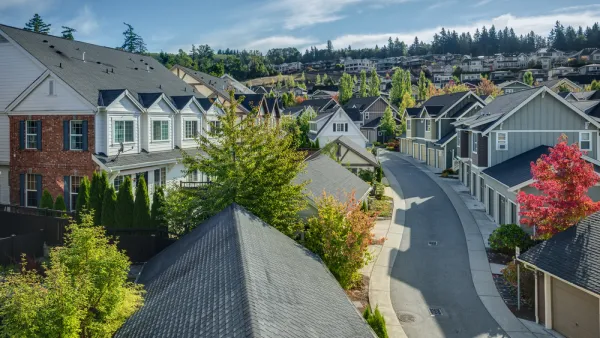
Wealthy Washington Neighborhoods Could Remain Untouched by Zoning Reforms
Neighborhoods with preexisting internal contracts are exempted from new legislation requiring all Washington cities to permit duplexes and other ‘missing middle housing.’
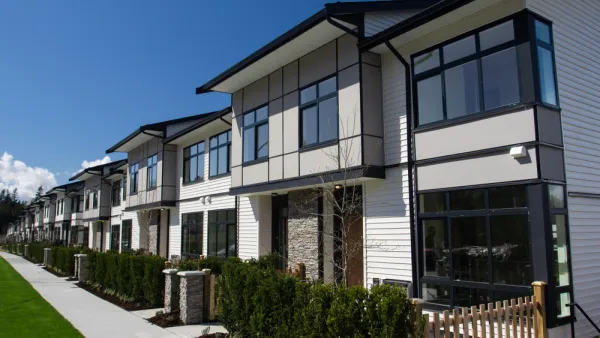
When Zoning Reform Isn’t Enough: How To Boost Missing Middle Housing
For upzoning efforts to result in a significant rise in new housing units, cities and states must do more than just change zoning codes to ensure missing middle housing is easy and affordable to build.

Eugene Approves ‘Missing Middle Housing’
The city council voted to approve an ordinance that will permit more middle housing types in single-family neighborhoods.

The state-sanctioned urbicide of Austin
People don’t kill cities. Freeways do.

US to reduce Colorado River water deliveries to Mexico
A new Colorado Treaty amendment reduces Mexico’s Colorado River water allocation by 250,000 acre feet.

New Jersey’s second-largest city bans standalone data centers
Jersey City will continue to allow co-location facilities, such as those meant for research institutions that store their own data.

Amtrak not solely to blame for New Jersey commuter rail's unreliability, report finds
A new study from the Garden State Initiative found that NJ Transit’s budget grew 20% across a 4 year period, but reliability declined significantly over the same period.

EPA erases limits on planet-warming pollution from power plants
Under Monday’s plan, power plants would still have some limits on how much mercury, arsenic and other contaminants they can emit.

Phoenix announces new on-demand transit service, more frequent RAPID buses
Both new services will launch in October, and are part of Phoenix's Project Effective Access Solutions for Easing Congestion.

FREE Course: Walkable City 1: Why Walkability?
After describing his path towards focusing on walkability as the essence of good planning, Jeff Speck marches through his five principal reasons for making more walkable places.
Reinventing Malls: Planning Alchemy—Turning Gray Fields Into Gold
The course focuses on the opportunities and imperatives that shape reinvention of mall sites.

Eagle County Government
Harvard University Graduate School of Design
Nashville Planning Department
The Architects Foundation
University of Cincinnati Online
The Pocatello Development Authority
The Urban Renewal Agency of the City of Pocatello
Journal of the American Planning Association