From wildfires to hurricanes, environmental risks pose a threat to around 40 percent of U.S. rental units.


More than 17 million rental units across the United States are at risk of "substantial annual losses" from environmental hazards, warns the Joint Center for Housing Studies' American Rental Housing 2022 report. According to Sophia Wedeen, who outlines the report's findings, this represents about 40 percent of total occupied rental units in the country.
"Areas with substantial expected annual losses are geographically widespread, reflecting the variety of acute and chronic environmental hazards that impact every part of the country." While California and the West Coast face high wildfire risks, Gulf Coast states are threatened by hurricanes and flooding. "California has the largest number of rental units at risk, with 4.5 million rentals (76 percent of the state’s occupied rental stock) located in census tracts with at least moderate expected annual losses due to likely hazards."
Wedeen notes that renters in manufactured homes are at especially high risk. "Manufactured units are also more likely to be classified as structurally inadequate by HUD than other types of rental units, and therefore may be especially vulnerable to loss due to hazards."
As the effects of climate change worsen, some rental units will become uninhabitable, requiring a "massive federal and local investment" to preserve and adapt existing stock, says the report. "In the short term, damage from hazards will almost certainly drive up the cost of repairing and rebuilding rental units. Reducing the time to build replacement rental housing after a natural disaster and increasing the availability of post-disaster financial assistance for renters are both urgent priorities."
FULL STORY: THE THREAT OF ENVIRONMENTAL HAZARDS TO THE RENTAL STOCK

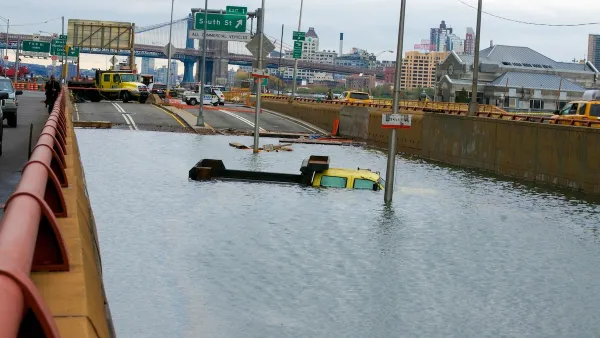
Over a Quarter of US Homes Face ‘Severe or Extreme’ Climate Risk
The number of U.S. homes at risk from hurricanes, fires, or flooding is valued at close to $13 trillion.
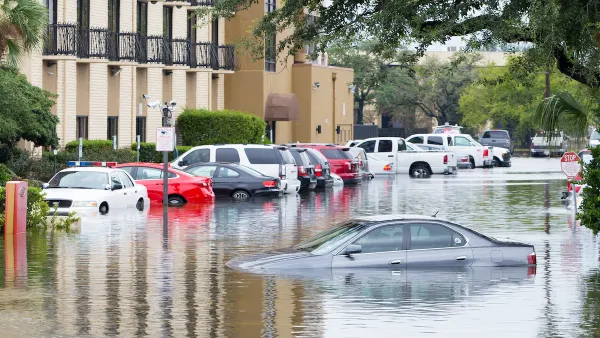
Migration to Disaster-Prone Areas Persists
Regions at high risk for flooding, wildfires, and other climate-fueled disasters continue to see rapid population growth.
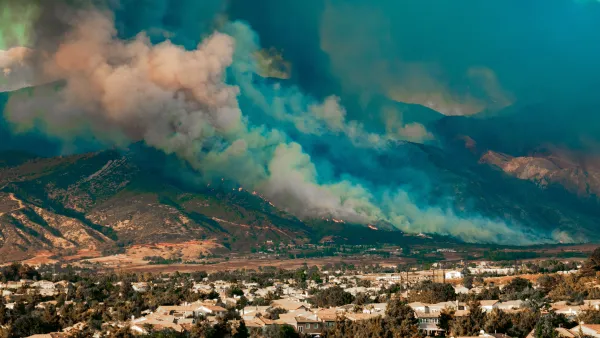
Home Insurers Are Fleeing California
Homeowners in the state are finding it increasingly difficult to secure insurance policies thanks to the growing risks of wildfire, drought, and other climate threats.

Planetizen Federal Action Tracker
A weekly monitor of how Trump’s orders and actions are impacting planners and planning in America.

The state-sanctioned urbicide of Austin
People don’t kill cities. Freeways do.

US to reduce Colorado River water deliveries to Mexico
A new Colorado Treaty amendment reduces Mexico’s Colorado River water allocation by 250,000 acre feet.

5 New England states march closer to 800 megawatt wind energy project
Securing federal approval for the project may be complicated under the Trump administration, which has historically been hostile towards domestic wind power.

Baltimore to break ground on $50 million Transit Priority Project
The project will bring faster bus trips, safer streets and better bike connections to Baltimore.

Airbnb launches $250 million 'last-dollar financing' housing accelerator, makes first investment in Austin
The company will put $6.4 million towards affordable housing development in Texas’ capital.

FREE Course: Walkable City 1: Why Walkability?
After describing his path towards focusing on walkability as the essence of good planning, Jeff Speck marches through his five principal reasons for making more walkable places.
Reinventing Malls: Planning Alchemy—Turning Gray Fields Into Gold
The course focuses on the opportunities and imperatives that shape reinvention of mall sites.


Eagle County Government
Harvard University Graduate School of Design
Nashville Planning Department
The Architects Foundation
University of Cincinnati Online
The Pocatello Development Authority
The Urban Renewal Agency of the City of Pocatello
Journal of the American Planning Association