As more cities embrace small waterways for public and private development opportunities, experts caution about the risks of trusting existing resources on environmental risk along variable waterways.


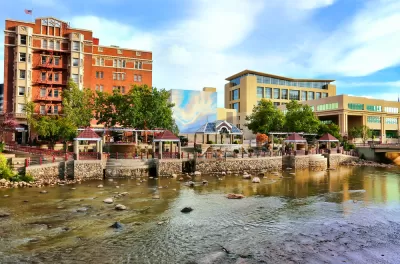
Kevin Williams reports for the New York Times of a trend among private developers and public officials toward recognizing the economic development potential of long-neglected creeks and waterways.
The example of Wolf Creek in Trotwood, Ohio opens the article. "A former rail line along the creek has been converted into a bike path, and on warm spring days, cyclists pedal under the shade of sycamores," according to Williams.
Smaller waterways like Wolf Creek offer their own unique challenges when compared to the economic development surrounding the waterfronts along larger rivers, according to the article. Some residents don't realize that new amenities have been added along creeks, for example, but there are also wide swings in the amount of water flowing through small creeks—a variability exacerbated by climate change, according to the article.
The article discusses a variety of challenges and lessons from small cities that have already chosen a creek-oriented approach to economic development. Among the experts cited in the article is Bill Becker, a climate change expert and former Department of Energy official and author of the book, The Creeks Will Rise. In particular, Bill Becker warns that 100-year and 500-year flood maps published by the Federal Emergency Management Agency might not go far enough in defining post-climate change risk.
"Past isn’t prologue anymore," says Becker in the article.
Read the full story: Creeks, Once Overlooked, Are Now Seen as Assets for Urban Renewal

Rediscovering the River
Chicago's river has often played second fiddle to its lakefront. A new riverwalk hopes to change that.
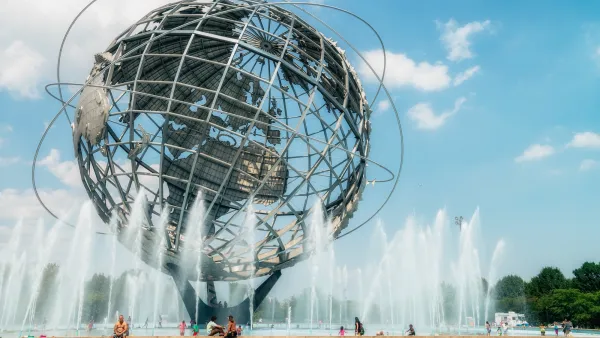
Historic Queens park is getting a $120M upgrade
The borough's largest park will undergo significant upgrades for accessibility, flood mitigation and historic preservation.
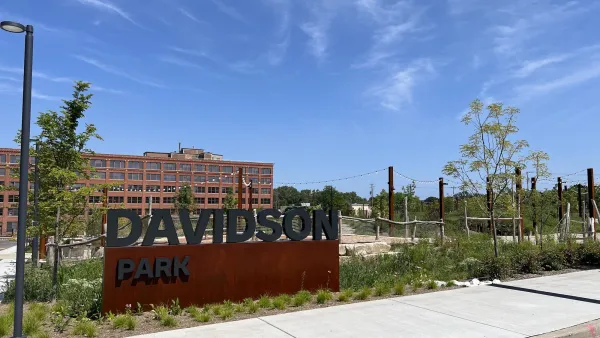
Harley-Davidson turned a Milwaukee parking lot into a green oasis
The park, adjacent to Harley-Davidson headquarters, doubles as stormwater retention infrastructure.

Planetizen Federal Action Tracker
A weekly monitor of how Trump’s orders and actions are impacting planners and planning in America.

California plans to bury El Niño’s downpour
If the state plays its cards right, it may be able to store a billion acre-feet of El Niño’s water in aquifers.

Chicago breaks ground on $3 billion megadevelopment
The new neighborhood, titled Foundry Park, will one day host 3,700 residences.

Satanic Place Names
From streams and lakes to valleys and canyons, I mapped more than 1,000 places named after the Devil.

California High-Speed Rail Authority CEO resigns after $600,000 scandal
Under Ian Choudri, the authority used taxpayer dollars to fund first class flights and trips to nightclubs.

Want to study the Missouri River? Soon, you may need unanimous approval from 10 states
Legislation would require 10 governors’ permission to study or build projects moving water outside the basin.

FREE Course: Walkable City 1: Why Walkability?
After describing his path towards focusing on walkability as the essence of good planning, Jeff Speck marches through his five principal reasons for making more walkable places.
Reinventing Malls: Planning Alchemy—Turning Gray Fields Into Gold
The course focuses on the opportunities and imperatives that shape reinvention of mall sites.

City of Rosemead
Rutgers University, Edward J. Bloustein School of Planning and Public Policy
One Hundred Miles
Hunter College, City University of New York (CUNY)
The Architects Foundation
University of Cincinnati Online
City of Cambridge
Montrose County
The Pocatello Development Authority