FasTracks, one of the most ambitious long-term transit plans in the U.S., has been underway for over 15 years. With the finish line in sight, some locals wonder how useful the new hub-and-spoke system (regional routes connecting to downtown) will be.


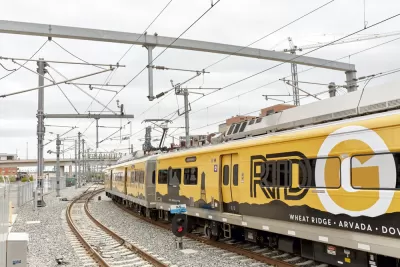
Nathaniel Minor checks in with the ongoing project to build more than 100 miles of passenger rail connecting Denver's suburbs to the city's downtown. The FasTracks plan, adopted by the Regional Transportation District in 2004, is now three-quarters of the way to complete, and some locals have been left to wonder about the efficiency of the hub-and-spoke network.
Minor starts this examination with the testimony of Sam Chesser, who, as a teenager in Aurora in the early 2000s, thought the system would transform Denver. "Chesser is now in his 30s, with a wife, a dog and a mid-century bungalow in Chaffee Park," according to Minor, "[a]nd, he’s sad to say, he almost never uses the trains."
The cause of Chesser's indifference is a public transit paradigm repeated in cities and regions all over the United States. Minor summarizes:
He cites a host of reasons — they’re expensive, they’re typically slower than driving. But one stands above the rest: They don’t go where he needs to go. Even though FasTracks was primarily designed to carry commuters from the suburbs to downtown and more than two dozen stations are in Denver proper, they’re often in hard-to-reach places. The nearest station to Chesser’s house, for example, is more than two miles away, tucked into the armpit of interstates 76 and 25.
According to Chesser, the city of Denver once had the public transit system more resembling his hopes for FasTracks: the historic network of streetcars known as the Denver Tramway. According to Minor, while that system was long ago dismantled, the city also missed a chance in the late '80s and early '90s to build a light rail line between Downtown Denver and the old Stapleton Airport, "running through the heart of Denver’s historic Black neighborhoods of Five Points and Park Hill via Martin Luther King, Jr. Boulevard." That plan failed due to local opposition that viewed the proposed rail line as a desecration of the legacy of Martin Luther King, Jr. To Bishop Acen Phillips, a minister in Denver for 50 years, "cars meant freedom from the racist streetcars he had to use in Kansas City, where he went to junior college," explains Minor.
Hub-and-spoke transportation planning, with downtown as the hub and suburban stations located along the spokes, was a controversial paradigm of transportation planning before FasTracks and has only become more debatable since the pandemic upended daily routines and with so many downtown workers now working from home. Commuter rail systems have seen some of the steepest declines in ridership during the pandemic and are facing some of the biggest obstacles to returning to a pre-pandemic normalcy.
More on the long, see-sawing history of transit planning in the Denver region can be found in the source article below.
FULL STORY: Why don’t RTD’s trains go into Denver’s neighborhoods?

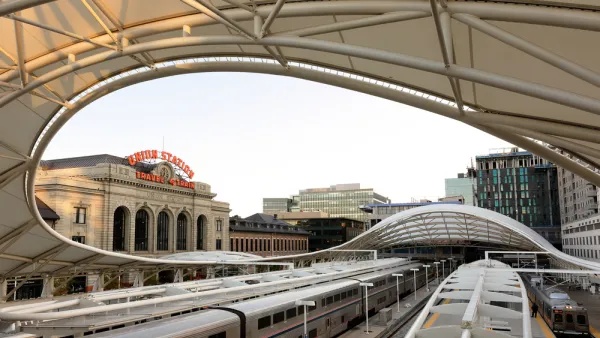
B Line Commuter Rail Extension Gets a Green Light in Colorado
The Board of Directors for the Regional Transportation District has given a preliminary green light to accelerate planning work on the B Line extension from Denver to Boulder and Longmont.
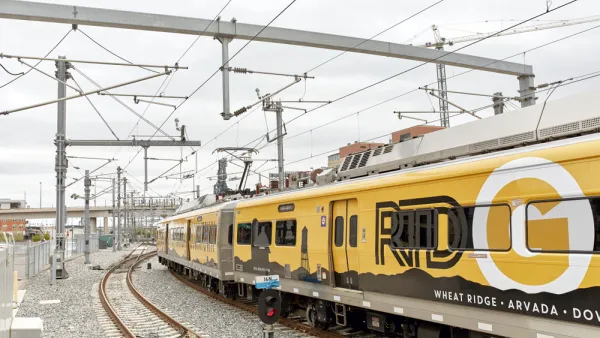
Political Pressure Reinvigorates B Line Extension Plans in Colorado
The CEO of the Regional Transportation District speculated recently about whether a planned extension of the B Line to Boulder was necessary or desirable. The governor doesn't think the speculation was necessary or desirable.
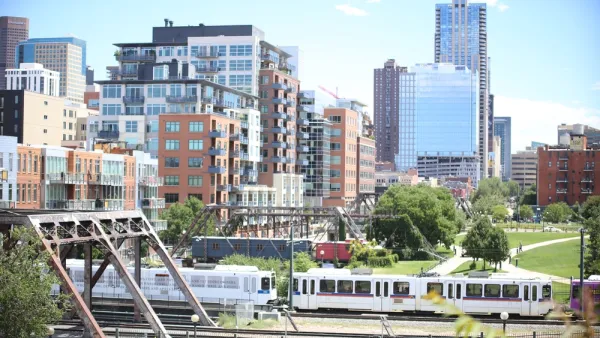
Pandemic Casts a Shadow Over Today's Big Rail Line Opening in Denver
The N Line between Denver and its northern suburbs opens today to the public, but N Line trains are expected to carry far fewer passengers, and lower frequencies, than originally planned.

The state-sanctioned urbicide of Austin
People don’t kill cities. Freeways do.

US to reduce Colorado River water deliveries to Mexico
A new Colorado Treaty amendment reduces Mexico’s Colorado River water allocation by 250,000 acre feet.

New Jersey’s second-largest city bans standalone data centers
Jersey City will continue to allow co-location facilities, such as those meant for research institutions that store their own data.

Amtrak not solely to blame for New Jersey commuter rail's unreliability, report finds
A new study from the Garden State Initiative found that NJ Transit’s budget grew 20% across a 4 year period, but reliability declined significantly over the same period.

EPA erases limits on planet-warming pollution from power plants
Under Monday’s plan, power plants would still have some limits on how much mercury, arsenic and other contaminants they can emit.

Phoenix announces new on-demand transit service, more frequent RAPID buses
Both new services will launch in October, and are part of Phoenix's Project Effective Access Solutions for Easing Congestion.

FREE Course: Walkable City 1: Why Walkability?
After describing his path towards focusing on walkability as the essence of good planning, Jeff Speck marches through his five principal reasons for making more walkable places.
Reinventing Malls: Planning Alchemy—Turning Gray Fields Into Gold
The course focuses on the opportunities and imperatives that shape reinvention of mall sites.

Eagle County Government
Harvard University Graduate School of Design
Nashville Planning Department
The Architects Foundation
University of Cincinnati Online
The Pocatello Development Authority
The Urban Renewal Agency of the City of Pocatello
Journal of the American Planning Association