A deep dive into the history of zoning and development in Manchester, New Hampshire.



Johnny Bassett writes an explainer article focusing on the zoning code of Manchester, New Hampshire as part of the "Invisible Walls" reporting project on the consequences of exclusionary zoning.
The project identifies persistent poverty as a consequence of zoning in Manchester, as well as in the many other local municipalities with similar zoning policies in place around the state. According to Bassett, the history of the city's zoning shows that zoning has "mostly maintained the status quo established by the Amoskeag Company, continuing the pattern of center city poverty and North End wealth that has existed in Manchester since the late 1800s."
The history of zoning in Manchester is especially relevant because the city is updating its code after adopting a new master plan [pdf] in August 2021.
The article calls on numerous experts and research, including a seminal article by William A. Fischel published by the Urban Studies journal in 2004 (Fischel went on to write Zoning Rules! The Economics of Land Use Regulation, published by the Lincoln Institute of Land Policy in July 2005.
New Hampshire is grappling with skyrocketing housing prices. A recent article for the Concord Monitor written by David Brooks, reports that businesses are having a hard time attracting talent due to the high cost of housing in the state.
FULL STORY: Invisible Walls: The shackles of zoning

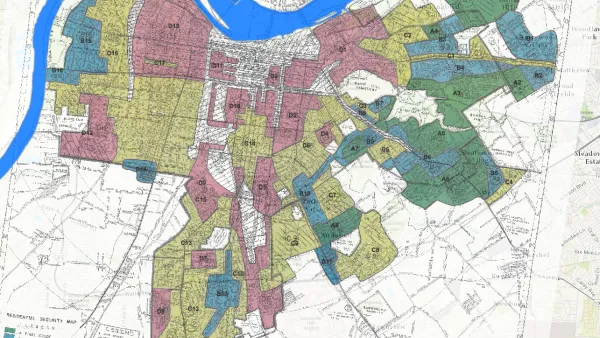
Story Mapping the Racism in Planning History
A Story Map created by the Louisville Metro Office of Planning & Design Services offers a detailed, visual presentation of the history of racism and discriminatory in the planning and zoning of the Louisville and Jefferson County.
'Housing Supply and Affordability Act' Offers $1.5 Billion in Grants for Development-Friendly Zoning Reforms
The Housing Supply and Affordability Act would be a major victory for the YIMBY cause.
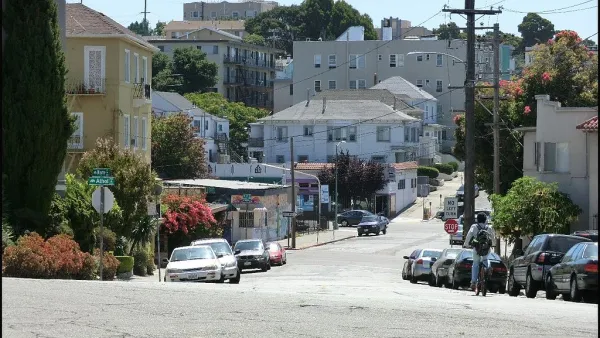
Oakland Wants to Make Space for Fourplexes
The city of Oakland in the East Bay Area is a hotbed of planning and development issues, most notably gentrification and the displacement of communities of color. Now the city is considering a drastic change to its zoning code.

Planetizen Federal Action Tracker
A weekly monitor of how Trump’s orders and actions are impacting planners and planning in America.

The state-sanctioned urbicide of Austin
People don’t kill cities. Freeways do.

US to reduce Colorado River water deliveries to Mexico
A new Colorado Treaty amendment reduces Mexico’s Colorado River water allocation by 250,000 acre feet.

5 New England states march closer to 800 megawatt wind energy project
Securing federal approval for the project may be complicated under the Trump administration, which has historically been hostile towards domestic wind power.

Baltimore to break ground on $50 million Transit Priority Project
The project will bring faster bus trips, safer streets and better bike connections to Baltimore.

Airbnb launches $250 million 'last-dollar financing' housing accelerator, makes first investment in Austin
The company will put $6.4 million towards affordable housing development in Texas’ capital.

FREE Course: Walkable City 1: Why Walkability?
After describing his path towards focusing on walkability as the essence of good planning, Jeff Speck marches through his five principal reasons for making more walkable places.
Reinventing Malls: Planning Alchemy—Turning Gray Fields Into Gold
The course focuses on the opportunities and imperatives that shape reinvention of mall sites.

Eagle County Government
Harvard University Graduate School of Design
Nashville Planning Department
The Architects Foundation
University of Cincinnati Online
The Pocatello Development Authority
The Urban Renewal Agency of the City of Pocatello
Journal of the American Planning Association