A 2020 law that exempts transit, bike, and pedestrian projects from California's strict environmental review process could become permanent.


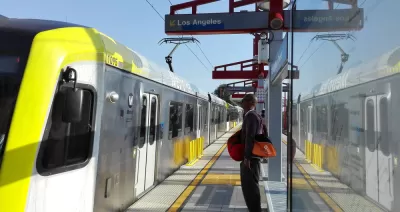
A proposal from California Senator Scott Wiener could make permanent a 2020 law that exempts certain transit projects from environmental review in order to accelerate the construction process for public transit, reports Jerold Chinn.
The current proposal would extend Senate Bill 288, which expires in 2023 and exempts transit, bike, and pedestrian safety projects from California Environmental Quality Act (CEQA) review. According to Wiener, the bill supports "sustainable, climate friendly, transportation projects" that often get delayed for years by environmental review. "We need to make our streets safer yesterday. Not in a year, not in five years, not after seven years of appeals and lawsuits. Now," said Wiener.
Jeffrey Tumlin, the San Francisco Municipal Transportation Agency’s director of transportation, praised the bill for its ability to streamline projects and, for example, allow the agency to quickly re-stripe traffic lanes for buses.
Designed to assess the environmental impacts of new projects, CEQA often receives criticism for causing significant delays in the construction of projects like affordable housing developments. Recently, a lawsuit brought by a neighborhood group called for the University of California, Berkeley to reduce its planned enrollment for next fall because they did not conduct a new environmental review taking into account a larger freshman class.
Read the full story: Permanent exemption for environmental review sought for California transit projects
How the Environmental Review Process Privileges Highway Construction Over Transit
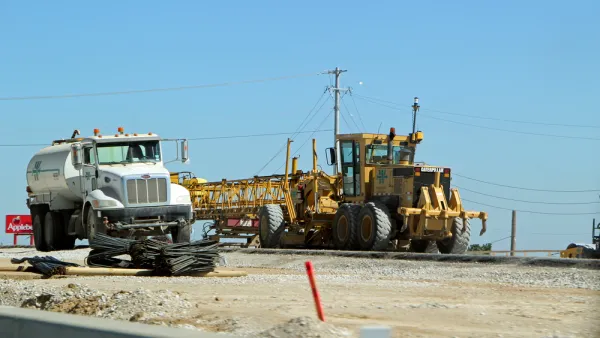
U.S. transit projects have a much harder time getting environmental approval than road projects, perpetuating the dominance of cars in U.S. transportation policy.
In California Battle of Housing vs. Environment, Housing Just Won
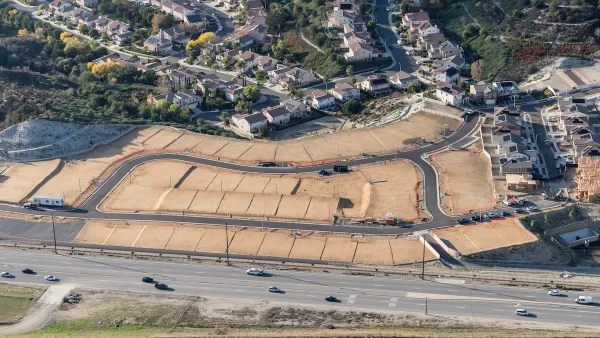
A new state law significantly limits the power of CEQA, an environmental review law that served as a powerful tool for blocking new development.
California Governor Suspends CEQA Reviews for Utilities in Fire Areas
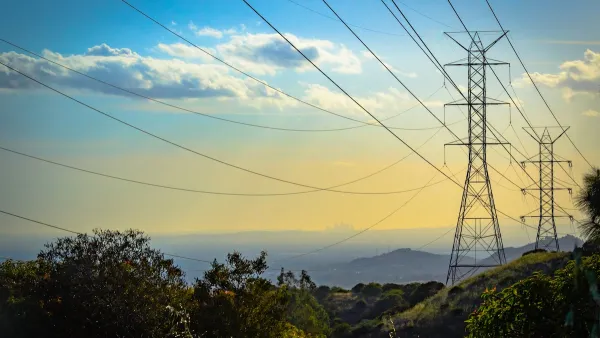
Utility restoration efforts in areas affected by the January wildfires in Los Angeles will be exempt from environmental regulations to speed up the rebuilding of essential infrastructure.

Planetizen Federal Action Tracker
A weekly monitor of how Trump’s orders and actions are impacting planners and planning in America.

California plans to bury El Niño’s downpour
If the state plays its cards right, it may be able to store a billion acre-feet of El Niño’s water in aquifers.

Desperate measures: Advocates weigh draining Lake Powell to fill Colorado River
Draining the reservoir could reduce evaporation losses by a couple hundred thousand acre-feet.

US buildings threatened, destroyed by fires set to triple by 2060
Researchers found a high fire risk for socioeconomically vulnerable neighborhoods in the American West.

LA residents may be allowed to paint their own crosswalks
Councilwoman Katy Yaroslavsky put out a motion instructing the Los Angeles Department of Public Transportation to study the feasibility of allowing volunteers to paint crosswalks.

Dallas moves to overhaul its zoning code
The city's zoning reform will allow more multi-family and mixed-use developments.

FREE Course: Walkable City 1: Why Walkability?
After describing his path towards focusing on walkability as the essence of good planning, Jeff Speck marches through his five principal reasons for making more walkable places.
Reinventing Malls: Planning Alchemy—Turning Gray Fields Into Gold
The course focuses on the opportunities and imperatives that shape reinvention of mall sites.

City of Rosemead
Rutgers University, Edward J. Bloustein School of Planning and Public Policy
One Hundred Miles
Hunter College, City University of New York (CUNY)
The Architects Foundation
University of Cincinnati Online
City of Cambridge
Montrose County
The Pocatello Development Authority