A $5 billion federal investment will contribute to state efforts to install electric vehicle charging stations along interstate highways and major corridors.


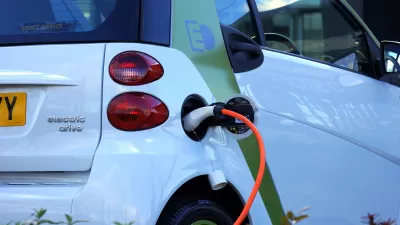
The Biden administration has proposed a $5 billion investment in electric car charging with the goal of making electric vehicle infrastructure more accessible in more places, reports Ian Duncan in the Washington Post. "Officials say the federal funding is aimed at standardizing charging systems so drivers have an experience comparable to finding a gas station on a road trip." The investment falls short of the $39 billion that experts estimate is needed to build out a national public charging system by 2035, adds Duncan.
Electric vehicles are a tiny fraction of annual sales and establishing a viable network of chargers — the administration wants 500,000 — is widely seen as a vital step to convince more Americans to switch out their gas-powered cars. But it’s a job that must account for the needs of apartment and rowhome dwellers, who can’t charge on their driveway, and people traveling through rural areas, where electric grids might struggle to meet demand.
Today, there are roughly 116,000 public charging ports in the U.S., with many of them located in California. The Department of Transportation has been tasked with distributing the funding, while states are responsible for submitting plans by August 1. Guidelines established by the departments of energy and transportation recommend starting with chargers near interstate freeways, but the plan also needs to address the needs of drivers living farther from major highways. "The administration is seeking to ensure that 40 percent of the benefits of the spending accrue to disadvantaged communities and it will be up to states to demonstrate how they intend to meet that goal."
FULL STORY: Biden administration plan calls for $5 billion network of electric-vehicle chargers along interstates

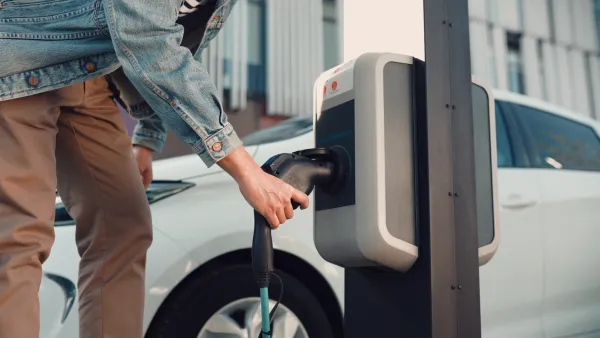
DC Installing Public, Curbside EV Chargers in All Wards
DDOT hopes the pilot program will make EV charging easier and more accessible for residents in denser neighborhoods and apartment dwellers.
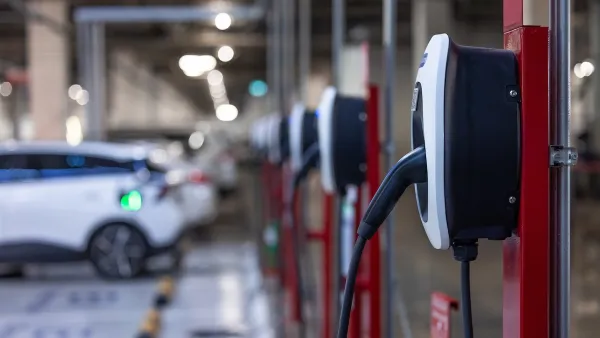
Electric Surge: EV Chargers Outnumber Gas Nozzles in California
California now has 48% more electric vehicle chargers than gasoline nozzles, reflecting its rapid shift toward clean transportation and aggressive zero-emission goals despite federal pushback.
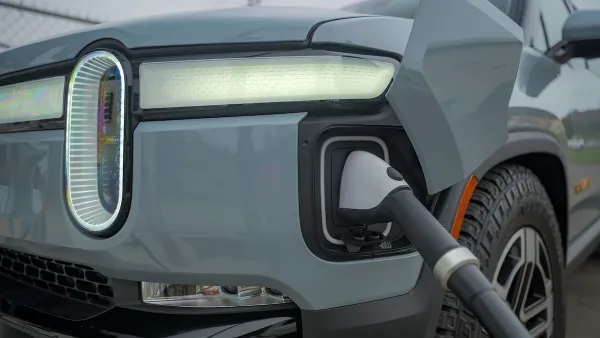
Rivian Joins Movement Toward Universal EV Charging
As more automakers like Tesla, Ford, and Rivian make their charging infrastructure compatible, the shift could lead to the faster development of a nationwide EV charging network.

Planetizen Federal Action Tracker
A weekly monitor of how Trump’s orders and actions are impacting planners and planning in America.

The state-sanctioned urbicide of Austin
People don’t kill cities. Freeways do.

US to reduce Colorado River water deliveries to Mexico
A new Colorado Treaty amendment reduces Mexico’s Colorado River water allocation by 250,000 acre feet.

Mamdani overhauls NYC's Vision Zero plan with 100 new policy goals
The overhaul aims to reduce traffic deaths and make streets safer for pedestrians, cyclists and drivers through lower speed limits, new safety infrastructure and more.

Amtrak not solely to blame for New Jersey commuter rail's unreliability, report finds
A new study from the Garden State Initiative found that NJ Transit’s budget grew 20% across a 4 year period, but reliability declined significantly over the same period.

EPA erases limits on planet-warming pollution from power plants
Under Monday’s plan, power plants would still have some limits on how much mercury, arsenic and other contaminants they can emit.

FREE Course: Walkable City 1: Why Walkability?
After describing his path towards focusing on walkability as the essence of good planning, Jeff Speck marches through his five principal reasons for making more walkable places.
Reinventing Malls: Planning Alchemy—Turning Gray Fields Into Gold
The course focuses on the opportunities and imperatives that shape reinvention of mall sites.

Eagle County Government
Harvard University Graduate School of Design
Nashville Planning Department
The Architects Foundation
University of Cincinnati Online
The Pocatello Development Authority
The Urban Renewal Agency of the City of Pocatello
Journal of the American Planning Association