The promises of politicians and developers to build more sustainably in the U.K. are going unfulfilled, according to a recent report.



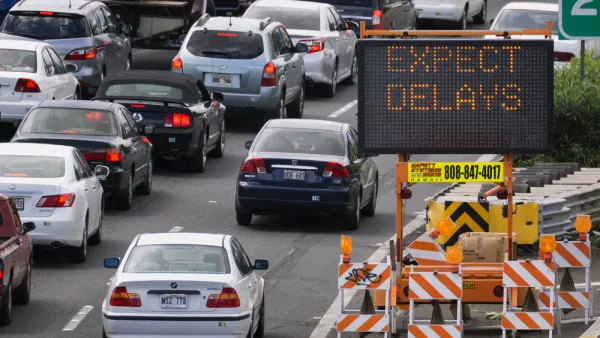
Transport for New Homes, a U.K.-based advocacy organization, has published a report finding that new housing developments in England are adding to congestion, greenhouse gas emissions, and car dependence.
The "Building Car Dependency" report "examines 20 new housing developments across England to find out whether they are built around sustainable transport – or the car," according to the report's website.
The recent report updates a similar report published in 2018—and finds few examples of non-car-dependent progress since that time. According to the report, outlier examples of greenfield development with sustainable mobility options include Hampton Park in Peterborough, Poundbury in Dorset, and Derwenthorpe in York.
"Rather than the walkable, green, and sustainable places that both the Government and developers envisage for future living, new greenfield housing has become even more car-based than before and the trend has extended to surrounding areas, with out-of-town retail, leisure, food outlets and employment orientated around new road systems," according to the website.
The report attracted the interest of multiple international and national media outlets. Roger Harrabin, BBC environmental analyst, picked up the news. Laura Laker also picked up the news of the report for The Guardian.
Read the full story: Building Car Dependency: The Tarmac Suburbs of the Future


Planning for Congestion Relief
The third and final installment of Planetizen's examination of the role of the planning profession in both perpetuating and solving traffic congestion.

How Planning Fails to Solve Congestion
Solutions for congestion are never as simple and easy as armchair planners and engineers would like you to believe—especially those who suggest that congestion can be solved by forever building more roadway capacity.
Planning and the Complicated Causes and Effects of Congestion
What do planners know about congestion, and what can they do about it? Explanations and solutions are less obvious than they seem (part one of a three-part series).

Planetizen Federal Action Tracker
A weekly monitor of how Trump’s orders and actions are impacting planners and planning in America.

The state-sanctioned urbicide of Austin
People don’t kill cities. Freeways do.

Colorado’s Largest Data Center Could Rise Next to Homes — Without a Public Hearing
The proposed campus would consume 11 times the power of Denver International Airport; as it has across the country, opposition mounts.

Judges permit Denver to divert 77,000 acre feet from the Colorado River for reservoir expansion
Overuse and climate change have caused the Colorado River’s water levels to plummet.

Amtrak, CN end decades-long dispute with eight-year agreement
The new operating agreement establishes an updated framework for the companies to work together, including processes to resolve disputes.

Raised interest rates may kill financially vulnerable construction projects
The chief economist at ConstructConnect warns that if construction project owners are negatively impacted by the raised rates, it could result in delayed payments to contractors.

FREE Course: Walkable City 1: Why Walkability?
After describing his path towards focusing on walkability as the essence of good planning, Jeff Speck marches through his five principal reasons for making more walkable places.
Reinventing Malls: Planning Alchemy—Turning Gray Fields Into Gold
The course focuses on the opportunities and imperatives that shape reinvention of mall sites.

KFH Group Inc.
Greater Baltimore Committee
Eagle County Government
The Architects Foundation
University of Cincinnati Online
The Pocatello Development Authority
The Urban Renewal Agency of the City of Pocatello