After Texas relinquished control of state highways to cities in an effort to save money on maintenance costs, San Antonio planned an ambitious makeover of Broadway to accommodate pedestrian and bike improvements. The state won't approve it.


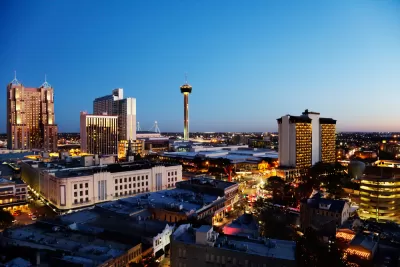
Texas Governor Greg Abbott has rejected the City of San Antonio's ambitious plan to transform Broadway from an undervalued thoroughfare into a thriving urban destination "flanked as it is by museums, parks, high-design new office buildings and thousands of popular new apartment units." As Robert Rivard writes, Abbott denied the city's plan to reduce the number of lanes to make way for bike and pedestrian infrastructure.
"What city leaders want is in essence to take the six-lane street down to four lanes, converting the recovered space into wider sidewalks, bike lanes and shade-producing trees. The purpose is to continue providing an efficient corridor to Alamo Heights and points north while better serving the thousands of residents and visitors attracted to what is fast becoming San Antonio’s most ambitiously urban neighborhood."
The fight over the street's future stems from a 2013 decision by the Texas Transportation Commission to transfer responsibility for some state routes to cities "to get them off the state maintenance rolls." While the city is eager to implement its plan, the state says it never officially made the transfer. Rivard contends that "Abbott’s move is a minor skirmish in what has become the Texas Republican war on cities and local governments." According to Rivard, "The dynamic is simple: The cities are Democratic, so the traditional conservative theory that power should be placed with the government closest to the people is obsolete."
FULL STORY: Give my regards to SL 368? Why Abbott killed San Antonio’s Broadway plan

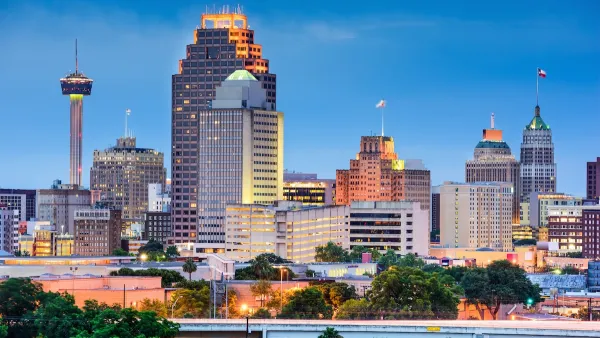
San Antonio Approves New Downtown Cycletrack
The city will install a one-mile, protected two-way bike lane connecting Flores Street to Interstate 37.
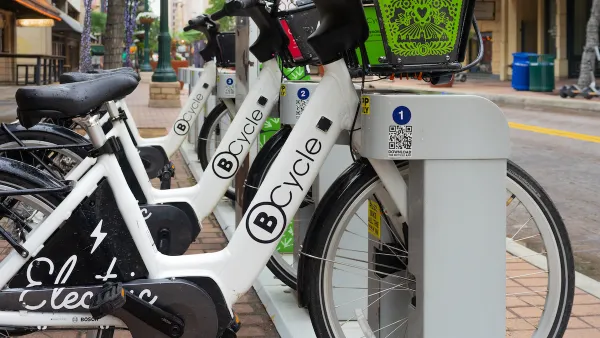
San Antonio Leaders Look to Revive Dormant Bike Plan
The city’s 12-year-old plan to improve its bike network has made little headway. Now, city leaders hope to revitalize the effort.
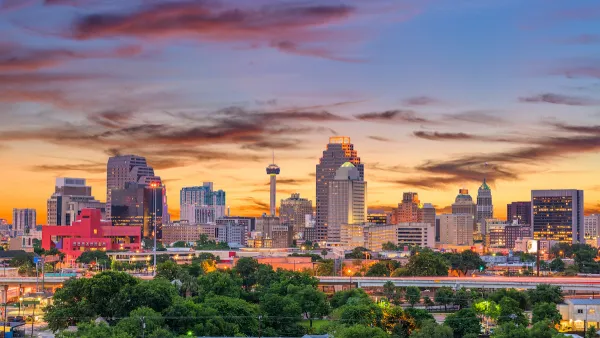
San Antonio Awarded Federal Grant for Bike Lanes
The $16 grant will fund a two-way, separated bike lane in the city’s downtown.

Planetizen Federal Action Tracker
A weekly monitor of how Trump’s orders and actions are impacting planners and planning in America.

The state-sanctioned urbicide of Austin
People don’t kill cities. Freeways do.

US to reduce Colorado River water deliveries to Mexico
A new Colorado Treaty amendment reduces Mexico’s Colorado River water allocation by 250,000 acre feet.

5 New England states march closer to 800 megawatt wind energy project
Securing federal approval for the project may be complicated under the Trump administration, which has historically been hostile towards domestic wind power.

Baltimore to break ground on $50 million Transit Priority Project
The project will bring faster bus trips, safer streets and better bike connections to Baltimore.

Airbnb launches $250 million 'last-dollar financing' housing accelerator, makes first investment in Austin
The company will put $6.4 million towards affordable housing development in Texas’ capital.

FREE Course: Walkable City 1: Why Walkability?
After describing his path towards focusing on walkability as the essence of good planning, Jeff Speck marches through his five principal reasons for making more walkable places.
Reinventing Malls: Planning Alchemy—Turning Gray Fields Into Gold
The course focuses on the opportunities and imperatives that shape reinvention of mall sites.

Eagle County Government
Harvard University Graduate School of Design
Nashville Planning Department
The Architects Foundation
University of Cincinnati Online
The Pocatello Development Authority
The Urban Renewal Agency of the City of Pocatello
Journal of the American Planning Association