The Port of Humboldt has proposed a plan to modernize its facilities to accommodate offshore wind energy production, hoping to stimulate the local economy and create sustainable jobs.


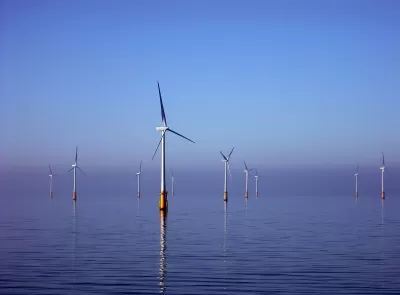
While the East Coast has moved forward with testing and building out offshore wind energy infrastructure, California has lagged due to the Pacific's deep waters and local political challenges. Now, with the Biden administration pushing for more investment in offshore wind and Governor Newsom signing a bill calling for a statewide offshore wind plan, Emma Foehringer Merchant reports that boosters of Northern California's Port of Humboldt are hoping to attract federal investment for what could be a lucrative industry.
While the port has many characteristics that make it a promising location for a wind energy hub, a federal contract will still require the construction of additional facilities to accommodate production, assembly, and transportation of turbines and associated equipment. To achieve this, the Humboldt Bay Harbor, Recreation and Conservation District has developed a two-phase plan to renovate the port into a modern terminal capable of supporting wind infrastructure. "Most essential to the plan is a 'heavy-lift terminal,' basically a huge dock that can support the weight and size of different wind turbine components, including blades longer than a football field and towers nearly as tall as the Washington Monument."
Meanwhile, environmentalists express concerns about how wind turbines may affect local marine life and the environment, while other locals worry about the costs of yet another extractive industry in a region formerly ruled by lumber mills. Local officials express optimism that the industry will bring sustainable jobs and a clean source of energy to the region.
FULL STORY: As the Biden Administration Eyes Wind Leases Off California’s Coast, the Port of Humboldt Sees Opportunity

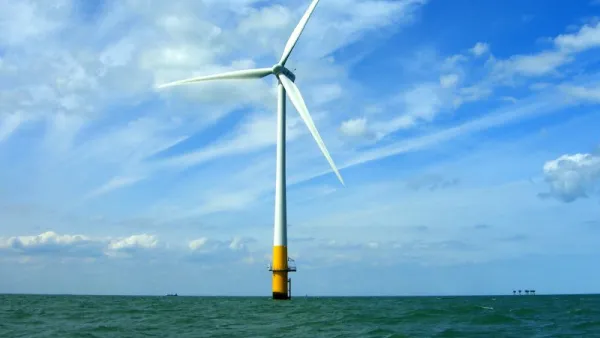
Offshore Wind Zone Proposed for the East Coast
A "priority offshore wind zone" between Long Island and New Jersey could accelerate permits and help the industry gain a foothold in the United States.
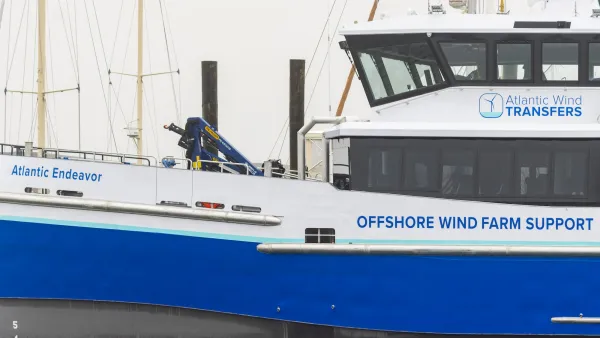
Nation’s Largest Offshore Wind Project, Suspended by Trump, Restarts Construction
A judge issued a temporary restraining order against the Trump administration’s suspension of five East Coast offshore wind projects.
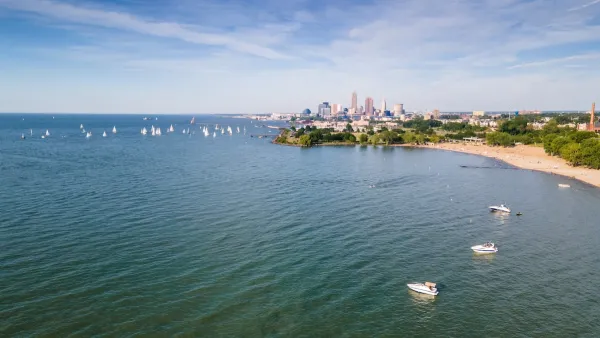
Op-Ed: The Great Lakes Could Be a Key Source of Wind Energy
States, not the federal government, have authority over wind power leases in the Great Lakes.

Planetizen Federal Action Tracker
A weekly monitor of how Trump’s orders and actions are impacting planners and planning in America.

The state-sanctioned urbicide of Austin
People don’t kill cities. Freeways do.

US to reduce Colorado River water deliveries to Mexico
A new Colorado Treaty amendment reduces Mexico’s Colorado River water allocation by 250,000 acre feet.

5 New England states march closer to 800 megawatt wind energy project
Securing federal approval for the project may be complicated under the Trump administration, which has historically been hostile towards domestic wind power.

Baltimore to break ground on $50 million Transit Priority Project
The project will bring faster bus trips, safer streets and better bike connections to Baltimore.

Airbnb launches $250 million 'last-dollar financing' housing accelerator, makes first investment in Austin
The company will put $6.4 million towards affordable housing development in Texas’ capital.

FREE Course: Walkable City 1: Why Walkability?
After describing his path towards focusing on walkability as the essence of good planning, Jeff Speck marches through his five principal reasons for making more walkable places.
Reinventing Malls: Planning Alchemy—Turning Gray Fields Into Gold
The course focuses on the opportunities and imperatives that shape reinvention of mall sites.


Eagle County Government
Harvard University Graduate School of Design
Nashville Planning Department
The Architects Foundation
University of Cincinnati Online
The Pocatello Development Authority
The Urban Renewal Agency of the City of Pocatello
Journal of the American Planning Association