To reduce homelessness, advocates say, build more affordable housing.


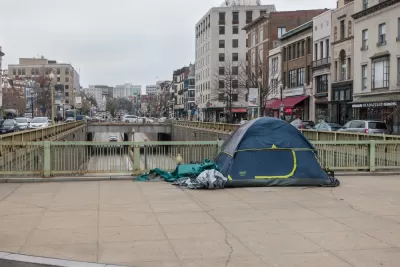
Although people fall into homelessness for a wide range of reasons, writes Libby Solomon, "national advocates and groups convened to end homelessness all point to one key cause of homelessness: a lack of affordable housing."
"A robust affordable housing stock," Solomon argues, "can prevent households from falling into homelessness in the first place." In fact, "[h]ousing affordability and homelessness have a direct link." According to Nan Roman, CEO of the National Alliance to End Homelessness, "the major societal change that coincided with widespread modern homelessness was a rise in the cost of housing." A 2018 Zillow study supports that conclusion, finding that "areas where people spend more than a third of their income on rent experience more rapid increases in homelessness."
In Washington, D.C., "low-income people in particular are struggling — more than half of DC’s lowest-income renters are cost-burdened, spending more than 30% of their income on rent, NLIHC [National Low Income Housing Coalition] says." At the end of August 2021, "more than 100,000 households across the region were behind on rent — about 14% of renters."
As in other parts of the country, housing construction isn't keeping up with rising demand, and rents are rising–signs that don't bode well for future housing stability for D.C. families.
FULL STORY: Homelessness and DC’s housing shortage are part of the same conversation

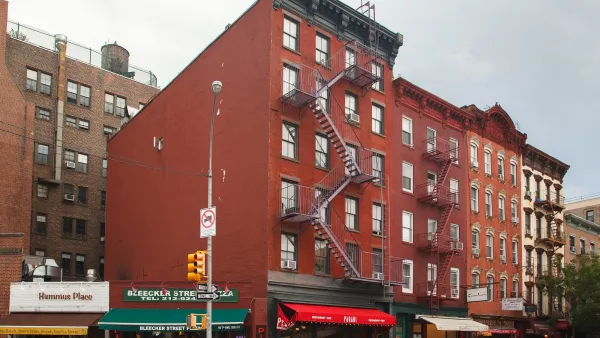
Federal cuts to voucher program put 9,000 New Yorkers at risk of homelessness
The Emergency Housing Voucher program is ending years ahead of schedule, forcing housing agencies to find new ways to support roughly 70,000 households nationwide.
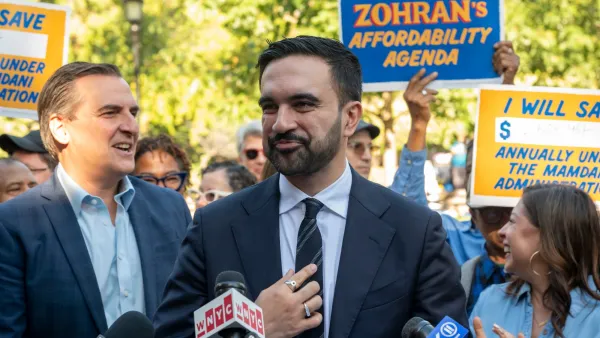
NYC Mayor Mamdani Backs Down on Expanded Rental Assistance Program, Citing $7 Billion Deficit
The new mayor had promised to expand the CityFHEPS rent assistance program to an additional 47,000 households.

‘Minnesota Nice’ Isn’t so Nice When You Can’t Find a Place to Live
The Economic Development and Housing Challenge Program can help address the scourge of homelessness among Indigenous people.

Planetizen Federal Action Tracker
A weekly monitor of how Trump’s orders and actions are impacting planners and planning in America.

The state-sanctioned urbicide of Austin
People don’t kill cities. Freeways do.

US to reduce Colorado River water deliveries to Mexico
A new Colorado Treaty amendment reduces Mexico’s Colorado River water allocation by 250,000 acre feet.

5 New England states march closer to 800 megawatt wind energy project
Securing federal approval for the project may be complicated under the Trump administration, which has historically been hostile towards domestic wind power.

Baltimore to break ground on $50 million Transit Priority Project
The project will bring faster bus trips, safer streets and better bike connections to Baltimore.

Airbnb launches $250 million 'last-dollar financing' housing accelerator, makes first investment in Austin
The company will put $6.4 million towards affordable housing development in Texas’ capital.

FREE Course: Walkable City 1: Why Walkability?
After describing his path towards focusing on walkability as the essence of good planning, Jeff Speck marches through his five principal reasons for making more walkable places.
Reinventing Malls: Planning Alchemy—Turning Gray Fields Into Gold
The course focuses on the opportunities and imperatives that shape reinvention of mall sites.

Eagle County Government
Harvard University Graduate School of Design
Nashville Planning Department
The Architects Foundation
University of Cincinnati Online
The Pocatello Development Authority
The Urban Renewal Agency of the City of Pocatello
Journal of the American Planning Association