As the state's real estate costs rise, community land trusts struggle to access funding and land in order to build more affordable housing.


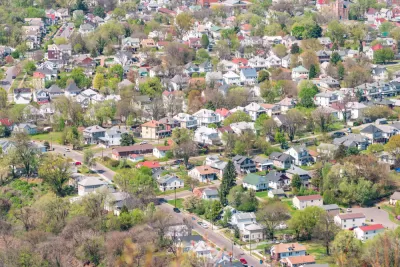
The rapid rise in housing costs in Northern Virginia's Blacksburg "has sent local officials searching for solutions, making the town of just 15,000 permanent residents the latest Virginia locality to experiment with a community land trust," according to Wyatt Gordon of Greater Greater Washington. Kim Thurlow, who works with the Town of Blacksburg on housing initiatives, says demand is high while supply is limited. "We are a small college town experiencing really rapid growth due to the university, the former alumni that see our area as a potential investment and of course the innovative businesses that are being spun off from the university. If you’re a first time home buyer, you’re getting squeezed out of town."
But a recent initiative that created a community land trust has stalled due to a lack of fundraising capacity. While "[t]here are a number of potential funding sources for the housing development side," Thurlow says, "none of them are set up to pay for the operational costs needed to have a staff that would offer support to the homeowner long-term."
CLTs maintain affordability by never selling the land underneath the housing and splitting the earned equity with the homeowner when they sell the structure. Although the model developed in rural Georgia as a way for Black farmers to protect their land from the forced sales and seizures which have long hindered people of color from accruing wealth in this country, CLTs have only recently made their way to Virginia via the movement for affordable housing.
Acknowledging the uneven pace of growth between home prices and wages, "[t]he community land trust model creates homes that are not allowed to increase in cost at the same pace as the market," says Julia McNally, program director for the Virginia Statewide CLT, the state's third such entity and the only one not focused on one specific community.
While acquiring land is expensive and difficult for CLTs, cities can help by donating or selling low-cost parcels of land to the land trusts. According to Erica Sims, CEO of the Maggie Walker CLT, "[m]unicipal contributions of land are so important because that takes one of our biggest costs of providing more affordable housing out of the equation."
To improve their prospects, Virginia CLTs are now pushing for a real estate tax exemption that would further reduce costs for CLTs and allow them to build more affordable housing at a lower cost.
FULL STORY: Can community land trusts help solve Virginia’s housing crisis?


How a San Francisco Land Trust is Preserving Affordable Housing for Artists
The Artist Space Trust has received $10 million in properties bequeathed by artists that will become permanently affordable housing.
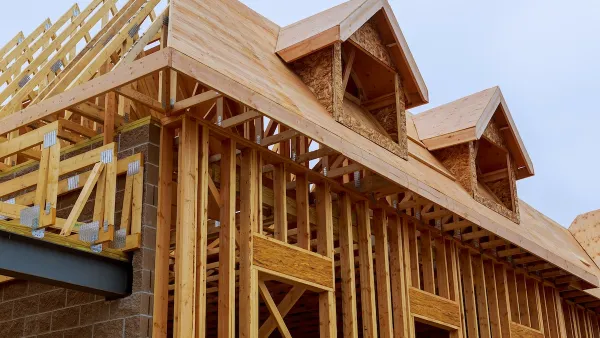
The Challenges of Building Middle-Income Housing
An affordable housing developer explains the hurdles to building more housing for middle-income households.
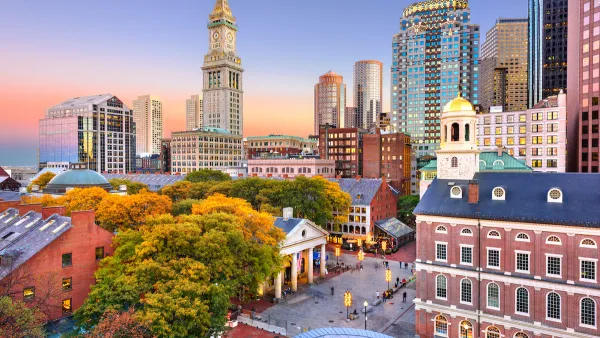
Land Trusts Preserve Affordability, but for Whom?
An analysis of buildings bought by the city for a community land trust in Boston reveals that many prior residents were evicted just before the sales.

The state-sanctioned urbicide of Austin
People don’t kill cities. Freeways do.

US to reduce Colorado River water deliveries to Mexico
A new Colorado Treaty amendment reduces Mexico’s Colorado River water allocation by 250,000 acre feet.

New Jersey’s second-largest city bans standalone data centers
Jersey City will continue to allow co-location facilities, such as those meant for research institutions that store their own data.

Amtrak not solely to blame for New Jersey commuter rail's unreliability, report finds
A new study from the Garden State Initiative found that NJ Transit’s budget grew 20% across a 4 year period, but reliability declined significantly over the same period.

EPA erases limits on planet-warming pollution from power plants
Under Monday’s plan, power plants would still have some limits on how much mercury, arsenic and other contaminants they can emit.

Phoenix announces new on-demand transit service, more frequent RAPID buses
Both new services will launch in October, and are part of Phoenix's Project Effective Access Solutions for Easing Congestion.

FREE Course: Walkable City 1: Why Walkability?
After describing his path towards focusing on walkability as the essence of good planning, Jeff Speck marches through his five principal reasons for making more walkable places.
Reinventing Malls: Planning Alchemy—Turning Gray Fields Into Gold
The course focuses on the opportunities and imperatives that shape reinvention of mall sites.

Eagle County Government
Harvard University Graduate School of Design
Nashville Planning Department
The Architects Foundation
University of Cincinnati Online
The Pocatello Development Authority
The Urban Renewal Agency of the City of Pocatello
Journal of the American Planning Association