Operators are pushing back against new proposed rules that some say could 'kneecap' the District's micromobility industry.


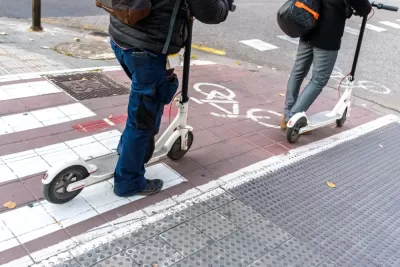
As the District of Columbia's Department of Transportation plans to cap the number of scooter and bike share operators in the District and implement a series of new regulations, Kea Wilson reports that some advocates wonder "why micromobility providers are again being held to higher standards than are drivers, automakers, and car-related businesses." In an open letter to DDOT, the District's current micromobility operators argue that the new rules could push them out of the market just as demand for their services surges.
Under the new process, companies would be assessed on a 198-point rubric that gauges the companies’ commitment to safety, equitable access, and fair labor practices, among a list of other sky-high standards that some argue would more logically apply to car-based enterprises.
App-taxi operators such as Uber do not have to pass such extensive tests in order to operate on Washington roads and can deploy as many drivers as they wish, despite such companies’ record of contributing to congestion, harmful emissions, and more. Private vehicle owners can also register as many vehicles as they like throughout the U.S. provided they meet safety and emissions requirements.
The operators "already comply with a raft of city policies, including fleets caps of 820 to 2,500 vehicles," and want DDOT "to extend the current micromobility permits for an additional year."
Read the full story: How D.C. Might Kneecap Its Micromobility Revolution

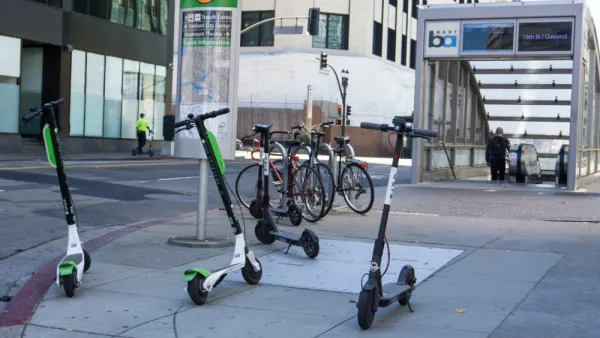
How E-Scooters Can Complement Public Transit
With some strategic planning on the part of transit agencies and operators, shared e-scooters can be an important ally in the fight against car dependence.

Making Shared Micromobility More Inclusive
Cities and shared mobility system operators can do more to include people with disabilities in planning and operations, per a new report.

DC Bike Share Growing Fast, But Regional Gaps Remain
The wildly popular system ‘frays at its geographic edges,’ making its use less effective outside the central District.

Planetizen Federal Action Tracker
A weekly monitor of how Trump’s orders and actions are impacting planners and planning in America.

Northwest rail fans eager for Sept. 30 debut of Amtrak’s Airo fleet
Get ready for that new train smell and more seats. But they won’t go faster or run more frequently on the Cascades route in Washington and Oregon.

Alabama scores up to $2.5 billion federal loan for largest infrastructure project in state’s history
The Mobile River Bridge and Bayway Project aims to ease congestion at Alabama’s worst bottleneck.

Novel study finds extreme state-by-state disparity in housing construction timelines
The first comprehensive working paper on U.S. construction timelines also found that the permitting process for multi-family projects has slowed nationwide.

California may destroy its beaches trying to save homes from El Niño
Boulders and seawalls can protect homes from waves, but ultimately destroy sandy beaches.

California high-speed rail accomplishes only one legislative goal in 2026
The majority of the agency's failed pitches were never developed into written proposals.

FREE Course: Walkable City 1: Why Walkability?
After describing his path towards focusing on walkability as the essence of good planning, Jeff Speck marches through his five principal reasons for making more walkable places.
Reinventing Malls: Planning Alchemy—Turning Gray Fields Into Gold
The course focuses on the opportunities and imperatives that shape reinvention of mall sites.

City of Thousand Oaks
City of Wisconsin Rapids
Harvard University Graduate School of Design
The Architects Foundation
University of Cincinnati Online
Northern Illinois Transit Authority (NITA)
The Pocatello Development Authority
The Urban Renewal Agency of the City of Pocatello