Inadequate infrastructure disproportionately harms people with mobility challenges who can't or don't drive, but their needs closely mirror those of all pedestrians.


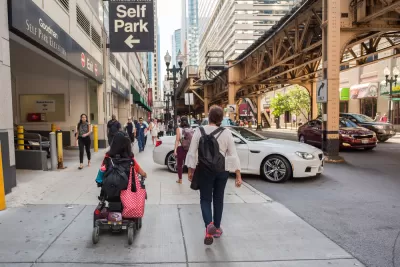
A study from Disability Rights Washington that interviewed people with mobility challenges "found that respondents 'overwhelmingly' cited 'the poor condition or absence of sidewalks' as the biggest barrier to getting where they needed to go, followed closely by problems with curb cuts, crosswalks and intersections." Kea Wilson writes that the requests made by the study's respondents "closely resemble the demands of sustainable transportation advocates on the whole." These include "[f]requent and reliable fixed-route transit; zoning changes to make a range of accessible housing options abundant in well-connected neighborhoods; and a revamped planning processes to center the needs of non-drivers."
While the cost of poor infrastructure is disproportionately high for people with mobility challenges, "insufficient infrastructure" harms more than just people with disabilities. "Focusing on non-drivers also allows us to advocate for better transportation access for people who may not be disabled, but who would benefit from better transit and active transportation infrastructure," says Anna Zivarts, director of the Disability Mobility Initiative and a lead author of the report. "Engaging deeply with the experiences of people with disabilities like the ones catalogued in this report is a good starting point for agencies who want to do better by all their residents. But the report authors stress that action is what matters."
The report outlines some key recommendations, including more robust pedestrian networks, more accessible and reliable public transit, incentives for accessible housing near transit and dense urban areas, and legal requirements for inclusion and access.
Read the full story: Why We Can’t Afford to Ignore the Needs of Non-Drivers With Disabilities
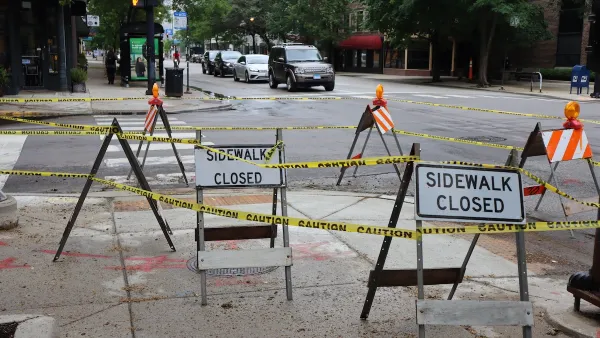
Chicago Residents Sue City Over Inaccessible Sidewalks
The suit alleges the city has failed to create a “coordinated, proactive system” for complying with ADA and ensuring accessibility on the city’s sidewalks and crosswalks.
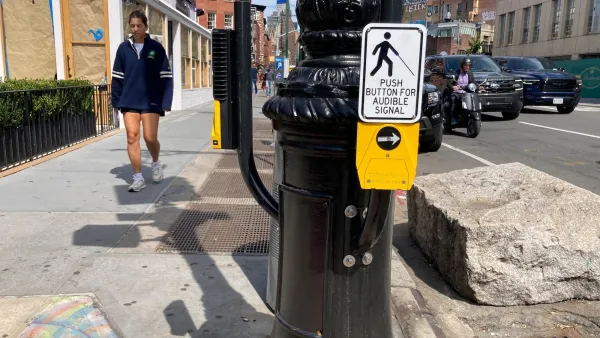
90% of NYC Intersections Lack Audible Crossing Signals for Blind Pedestrians
People with vision impairments rely on a complex network of tactile and audible signals to navigate cities.
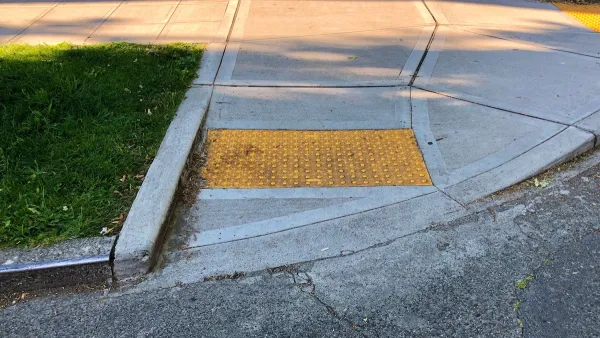
Baltimore Ordered to Improve Sidewalk Accessibility
The city is one of many to face lawsuits for failing to comply with the Americans with Disabilities Act.

Planetizen Federal Action Tracker
A weekly monitor of how Trump’s orders and actions are impacting planners and planning in America.

California plans to bury El Niño’s downpour
If the state plays its cards right, it may be able to store a billion acre-feet of El Niño’s water in aquifers.

Desperate measures: Advocates weigh draining Lake Powell to fill Colorado River
Draining the reservoir could reduce evaporation losses by a couple hundred thousand acre-feet.

In Texas, data centers are swallowing promised parkland
Residents who moved to Taylor, Texas for a rural community now have to contend with three data centers in their backyard.

How a Chicago-sized wind farm beat the odds and powered on
The project spanned five presidential administrations and a standoff with a U.S. military base.

MTA gives itself 30 days to transform pit into basketball court
The site has been under construction since 2022; the city originally estimated it would finish the court in 2024.

FREE Course: Walkable City 1: Why Walkability?
After describing his path towards focusing on walkability as the essence of good planning, Jeff Speck marches through his five principal reasons for making more walkable places.
Reinventing Malls: Planning Alchemy—Turning Gray Fields Into Gold
The course focuses on the opportunities and imperatives that shape reinvention of mall sites.

City of Rosemead
Rutgers University, Edward J. Bloustein School of Planning and Public Policy
One Hundred Miles
Hunter College, City University of New York (CUNY)
The Architects Foundation
University of Cincinnati Online
City of Cambridge
Montrose County
The Pocatello Development Authority