People with vision impairments rely on a complex network of tactile and audible signals to navigate cities.


In an article for Bloomberg CityLab, John Surico describes how cities, particularly New York, are working toward improved accessibility for people with vision impairments — and how the lack of well-maintained, standardized infrastructure can put residents in danger.
“With a dense footprint and extensive public transit service, New York City has several advantages over most US cities when it comes to mobility for visually impaired, low vision and blind residents,” Surico points out. The city has been making progress, yet roughly two-thirds of the NYC subway system is not fully ADA compliant, and 90 percent of the city’s intersections lack audible pedestrian crossing signals. In some cases, tactile tools used to signal safe pathways and dangerous areas are degraded or installed improperly, leading one visually impaired NYC resident to fall onto subway tracks.
Surico notes that “in much of the US, decades of planning and land use decisions have actively worked against accessibility, pushing everything and everyone farther apart from each other.” But designing for accessibility is not just beneficial to people with disabilities. “Like age-friendly improvements, making cities work better for blind residents also makes them safer and more livable for people of all abilities.”
FULL STORY: What Would a City Designed for Blind Commuters Look Like?

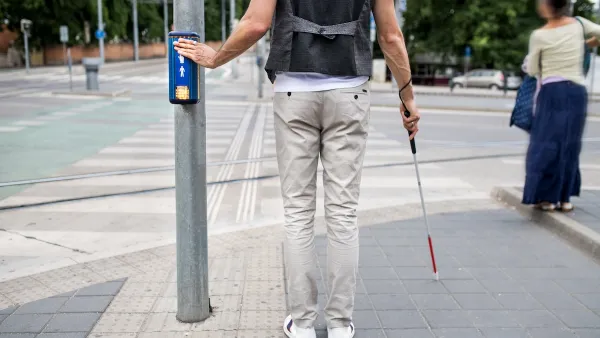
Chicago Judge Orders Thousands of Accessible Ped Signals
Only 3% of the city's crossing signals are currently accessible to blind pedestrians.
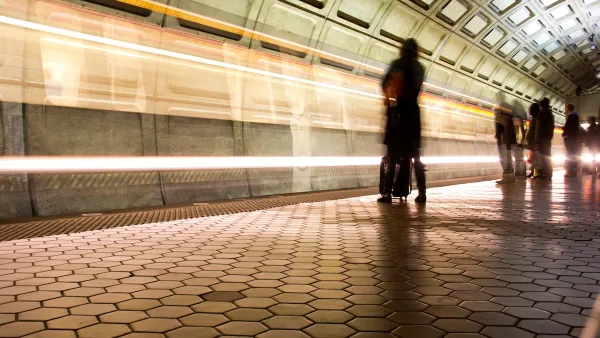
Mobile App Makes DC Transit Easy to Navigate for Visually Impaired Riders
The app gives step-by-step directions and audio and visual cues accessible from anywhere for thousands of bus stops and rail stations.
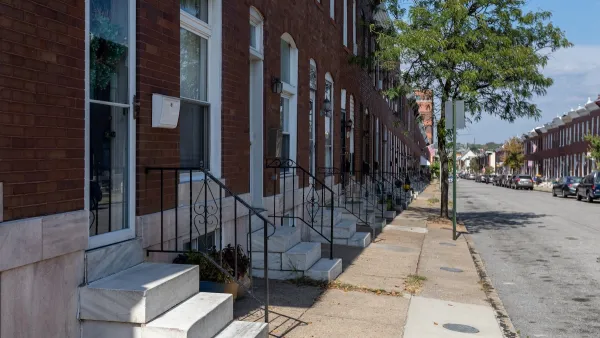
Baltimore to Allocate $44 Million to ADA Compliance
The plan is the result of a lawsuit brought by residents who say the city has failed to maintain safe, accessible sidewalks and streets for people with disabilities.

The state-sanctioned urbicide of Austin
People don’t kill cities. Freeways do.

US to reduce Colorado River water deliveries to Mexico
A new Colorado Treaty amendment reduces Mexico’s Colorado River water allocation by 250,000 acre feet.

New Jersey’s second-largest city bans standalone data centers
Jersey City will continue to allow co-location facilities, such as those meant for research institutions that store their own data.

Amtrak not solely to blame for New Jersey commuter rail's unreliability, report finds
A new study from the Garden State Initiative found that NJ Transit’s budget grew 20% across a 4 year period, but reliability declined significantly over the same period.

EPA erases limits on planet-warming pollution from power plants
Under Monday’s plan, power plants would still have some limits on how much mercury, arsenic and other contaminants they can emit.

Phoenix announces new on-demand transit service, more frequent RAPID buses
Both new services will launch in October, and are part of Phoenix's Project Effective Access Solutions for Easing Congestion.

FREE Course: Walkable City 1: Why Walkability?
After describing his path towards focusing on walkability as the essence of good planning, Jeff Speck marches through his five principal reasons for making more walkable places.
Reinventing Malls: Planning Alchemy—Turning Gray Fields Into Gold
The course focuses on the opportunities and imperatives that shape reinvention of mall sites.

Eagle County Government
Harvard University Graduate School of Design
Nashville Planning Department
The Architects Foundation
University of Cincinnati Online
The Pocatello Development Authority
The Urban Renewal Agency of the City of Pocatello
Journal of the American Planning Association