The ability of the federal government to fund, and define, infrastructure, owes itself to a history of state and federal leadership at the dawn of the nation's existence.



Writing for The Washington Post, Susan Nagel tells the history of the intense rivalries between political leaders in New York (namely Philip Schuyler) and Virginia (namely George Washington) to control waterborne traffic from the Atlantic to the interior of North America.
The challenges of determining the scope of federal power to fund and build infrastructure, and what kinds of projects fell under that power, originates to Article I, Section 8 of the Constitution, which "endowed Congress with the right to provide for national defense and regulate interstate commerce. But, explains, Nagel, "it did not grant Congress the explicit authority to fund what was then known as 'interior improvements' — or what today is called infrastructure."
Thus, the answers to questions of 1) what constituted infrastructure, 2) who was responsible for it, and 3) what role the federal government should play in developing fell politicians like George Washington, Thomas Jefferson, Alexander Hamilton, James Madison, and James Monroe.
Hanging in the balance back then was the funding of the Erie Canal, the location of Washington, D.C., and the navigability of the Potomac River hung in the balance. In the contemporary United States, the role of the federal government in funding and building infrastructure—and the definition of infrastructure—is again up for debate.
FULL STORY: A conflict among the Founders is still shaping infrastructure debates in 2021

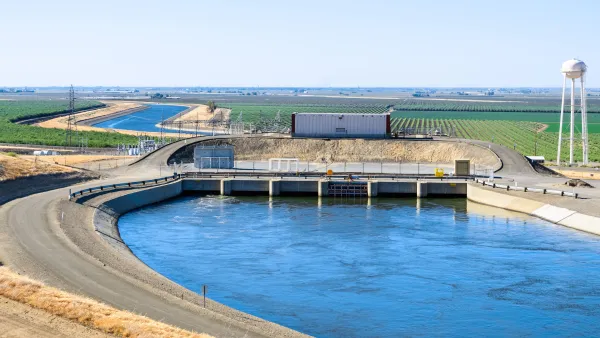
California Governor's Proposal Would Streamline Infrastructure Projects
Governor Newsom hopes his proposed changes to state laws would help speed up infrastructure projects before federal funding is put in jeopardy.
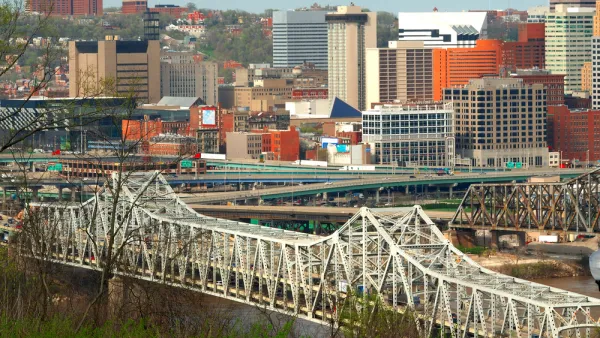
Federal Government Awards Over $1 Billion to Nine ‘Mega’ Projects
The funding comes from a discretionary grant program aimed at supporting infrastructure projects too massive or complex for traditional funding mechanisms.
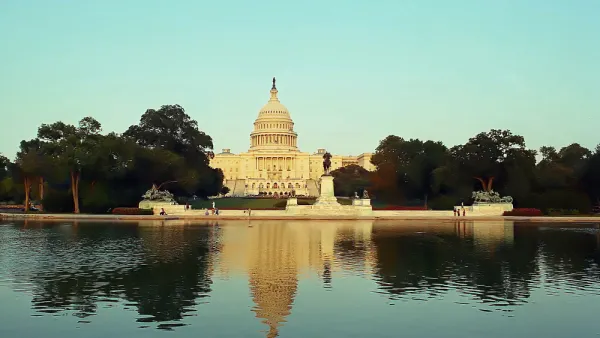
No Bragging Rights for Passing the Infrastructure Act?
You'd think the passage of the $1.2 trillion bipartisan infrastructure act would convey bragging rights for Democratic congress members facing competitive midterm elections today. Ironically, Republicans who opposed the bill are taking credit.

Planetizen Federal Action Tracker
A weekly monitor of how Trump’s orders and actions are impacting planners and planning in America.

The state-sanctioned urbicide of Austin
People don’t kill cities. Freeways do.

US to reduce Colorado River water deliveries to Mexico
A new Colorado Treaty amendment reduces Mexico’s Colorado River water allocation by 250,000 acre feet.

5 New England states march closer to 800 megawatt wind energy project
Securing federal approval for the project may be complicated under the Trump administration, which has historically been hostile towards domestic wind power.

Baltimore to break ground on $50 million Transit Priority Project
The project will bring faster bus trips, safer streets and better bike connections to Baltimore.

Airbnb launches $250 million 'last-dollar financing' housing accelerator, makes first investment in Austin
The company will put $6.4 million towards affordable housing development in Texas’ capital.

FREE Course: Walkable City 1: Why Walkability?
After describing his path towards focusing on walkability as the essence of good planning, Jeff Speck marches through his five principal reasons for making more walkable places.
Reinventing Malls: Planning Alchemy—Turning Gray Fields Into Gold
The course focuses on the opportunities and imperatives that shape reinvention of mall sites.

Eagle County Government
Harvard University Graduate School of Design
Nashville Planning Department
The Architects Foundation
University of Cincinnati Online
The Pocatello Development Authority
The Urban Renewal Agency of the City of Pocatello
Journal of the American Planning Association