Cities in the region want to increase flexibility for homeowners who want to build 'granny flats' on their property.


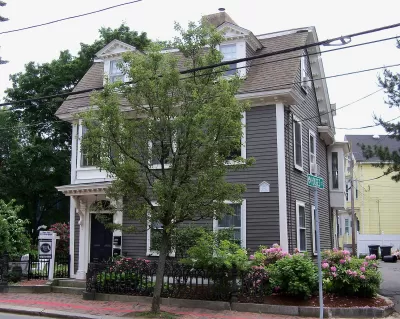
Accessory dwelling units, granny flats, in-law units—whatever you call them, the concept of building additional housing units on single-family lots has taken off across the country. Now cities in the Boston area, which have long restricted ADU construction, are "mulling so-called accessory dwelling units as one way to add housing without drastically altering the feel of neighborhoods," reports Andy Rosen. "A 2018 study by the free-market Pioneer Institute found that only 37 of 100 municipalities surrounding Boston allowed ADUs for rental to anyone other than a homeowner’s family or caregiver. And in many of those cities and towns, the rules were so strict that few people were building them."
"This spring, both Arlington and Salem passed measures to allow such units. Framingham and Barnstable, among others, are considering doing so, as well. Boston is expanding a similar 2019 program, and some candidates in the city’s mayor’s race are calling for even more permissive rules to encourage them." As Rosen writes, "[s]upporters say they are good tools to help older people and those on fixed incomes stay in their homes by converting unused space into income-producing property, while providing relatively low-cost rental stock."
The Boston program also aims to "bring unpermitted units into compliance and to ensure they meet safety standards." While "ADUs won’t come close to solving the region’s housing crunch on their own," more permissive zoning and "a thoughtful approach could house thousands of people across the region."
FULL STORY: For years, in-law apartments have been discouraged in Greater Boston. The housing shortage is changing that


Maine Looks To Legalize ‘Missing Middle Housing’
Maine could become the third state to eliminate single-family-only zoning to encourage light density increases in residential areas and make it easier for homeowners to build accessory dwelling units.
Florida Considers Legalizing ADUs
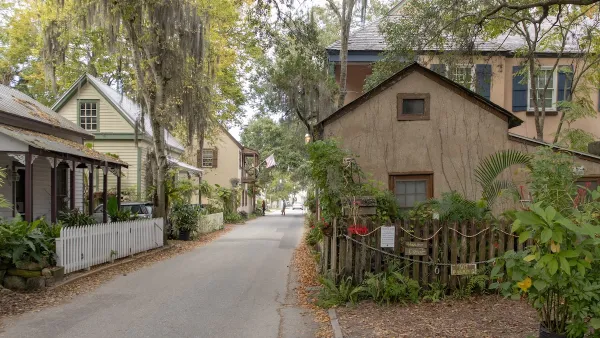
Current state law allows — but doesn’t require — cities to permit accessory dwelling units in single-family residential neighborhoods.

California Housing Advocates Closely Watching Bay Area Rezoning Deadline
California’s reaction to cities that fail to submit compliant zoning plans could reverberate across the state as other regions near their deadlines.

Planetizen Federal Action Tracker
A weekly monitor of how Trump’s orders and actions are impacting planners and planning in America.

The state-sanctioned urbicide of Austin
People don’t kill cities. Freeways do.

US to reduce Colorado River water deliveries to Mexico
A new Colorado Treaty amendment reduces Mexico’s Colorado River water allocation by 250,000 acre feet.

5 New England states march closer to 800 megawatt wind energy project
Securing federal approval for the project may be complicated under the Trump administration, which has historically been hostile towards domestic wind power.

Baltimore to break ground on $50 million Transit Priority Project
The project will bring faster bus trips, safer streets and better bike connections to Baltimore.

Airbnb launches $250 million 'last-dollar financing' housing accelerator, makes first investment in Austin
The company will put $6.4 million towards affordable housing development in Texas’ capital.

FREE Course: Walkable City 1: Why Walkability?
After describing his path towards focusing on walkability as the essence of good planning, Jeff Speck marches through his five principal reasons for making more walkable places.
Reinventing Malls: Planning Alchemy—Turning Gray Fields Into Gold
The course focuses on the opportunities and imperatives that shape reinvention of mall sites.


Eagle County Government
Harvard University Graduate School of Design
Nashville Planning Department
The Architects Foundation
University of Cincinnati Online
The Pocatello Development Authority
The Urban Renewal Agency of the City of Pocatello
Journal of the American Planning Association