The 148-year old tunnel, which slows trains to 30 miles per hour, is the biggest bottleneck between Washington, D.C. and New Jersey.


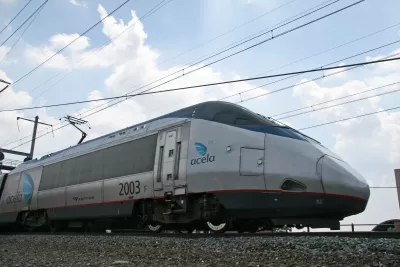
Maryland's "decrepit Baltimore and Potomac Tunnel" could soon be getting an upgrade after "Amtrak and Maryland announced an agreement Friday on a $4 billion plan to build a replacement in the next decade." As Luz Lazo writes in the Washington Post, "[t]he 148-year-old tunnel under West Baltimore is a major bottleneck for Amtrak, Maryland’s MARC commuter trains and commercial rail traffic that moves through the Northeast Corridor."
As "[o]ne of the oldest structures in the Northeast rail corridor, the B&P tunnel is a crucial piece of the network connecting Washington to Boston, moving more than 259 million passengers each year." But the 1.4-mile tunnel slows trains to 30 miles per hour as they pass through, making the tunnel "the biggest chokepoint between Washington and New Jersey." The tunnel also "has critical structural problems, including water issues and brick deterioration, according to a federal review of the project." The new tunnel would only accommodate electric trains, and "Maryland officials said the state agreed to electrify all MARC trains by the time the tunnel would open in as early as 2032."
"The proposal is a scaled-down version of a plan approved four years ago by the Federal Railroad Administration that called for four single-track tunnel tubes. Railroad officials say by building only two tunnels, the project will save $1 billion and up to two years on construction while still tripling train capacity to accommodate future demand." To move forward, Amtrak and state leaders must still secure state and federal funding for the project.

Trump Plans Takeover of DC's Union Station
USDOT says it will take over management duties for the commercial spaces managed by Amtrak since last year and address the building’s infrastructure needs.
Southern California Rail Service Resumes After Landslide
The corridor has been closed multiple times in the past year as erosion and landslides put coastal rail infrastructure in jeopardy.
Storms Sever California Rail Line—Again
The coast-hugging rail corridor linking Los Angeles and San Diego faces an uncertain future as mudslides once again force part of the line to close.

The state-sanctioned urbicide of Austin
People don’t kill cities. Freeways do.

US to reduce Colorado River water deliveries to Mexico
A new Colorado Treaty amendment reduces Mexico’s Colorado River water allocation by 250,000 acre feet.

New Jersey’s second-largest city bans standalone data centers
Jersey City will continue to allow co-location facilities, such as those meant for research institutions that store their own data.

Amtrak not solely to blame for New Jersey commuter rail's unreliability, report finds
A new study from the Garden State Initiative found that NJ Transit’s budget grew 20% across a 4 year period, but reliability declined significantly over the same period.

EPA erases limits on planet-warming pollution from power plants
Under Monday’s plan, power plants would still have some limits on how much mercury, arsenic and other contaminants they can emit.

Phoenix announces new on-demand transit service, more frequent RAPID buses
Both new services will launch in October, and are part of Phoenix's Project Effective Access Solutions for Easing Congestion.

FREE Course: Walkable City 1: Why Walkability?
After describing his path towards focusing on walkability as the essence of good planning, Jeff Speck marches through his five principal reasons for making more walkable places.
Reinventing Malls: Planning Alchemy—Turning Gray Fields Into Gold
The course focuses on the opportunities and imperatives that shape reinvention of mall sites.

Eagle County Government
Harvard University Graduate School of Design
Nashville Planning Department
The Architects Foundation
University of Cincinnati Online
The Pocatello Development Authority
The Urban Renewal Agency of the City of Pocatello
Journal of the American Planning Association