A mix of new development focused on future needs and new tools for preservation are included in the rezoning package for the south end of Governors Island approved by the New York City Council in May.


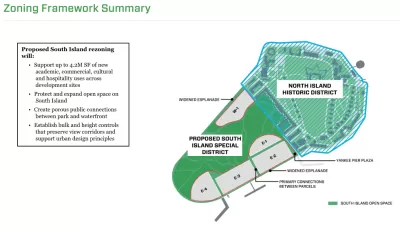
"Four million square feet on the south end of Governors Island was just approved for rezoning by the City Council," reports Michelle Colman.
"The 34 acres of the newly rezoned area makes way for the construction of university space, hotels, offices, research facilities and retail," according to Colman.
As for the zoning nitty gritty, Colman provides this summary of the details of the rezoning: "The new zoned area includes a building heights cap, overall square footage maximums, limitations on intrusions on public space, increased ferry service, and caps on the amount of office and hotel space."
According to a separate article by Kathryn Brenzel, the rezoning underwent some changes on the way to City Council approval, including height and square footage limitations. "Adjustments to the proposal — including the height caps, addition of increased ferry service and limitations on intrusions on public space — were made after Chin and community board members raised concerns about the scale of the potential development," according to Brenzel.
As noted in both articles, the developments now possible by the rezoning of the south end of the island are expected to generated revenues that help maintain the island and continue to attract a year-round flow of visitors.
When Planetizen first picked up news of the rezoning process for the south end of Governors Island, news coverage focused on aspirations for a climate change research center on the island. The approved rezoning still allows the space for that programming, but with no tenant or construction timeline set.
FULL STORY: New York City Council approves Governor's Island rezoning

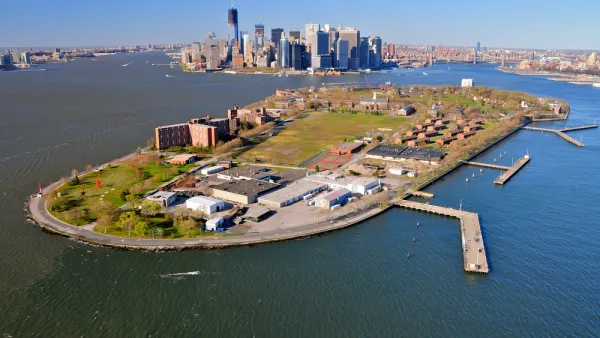
Massive Climate Research Center Planned for Governors Island, Rezoning Now Included
A speculative but exceedingly ambitious plan is pressing for air time in New York City.
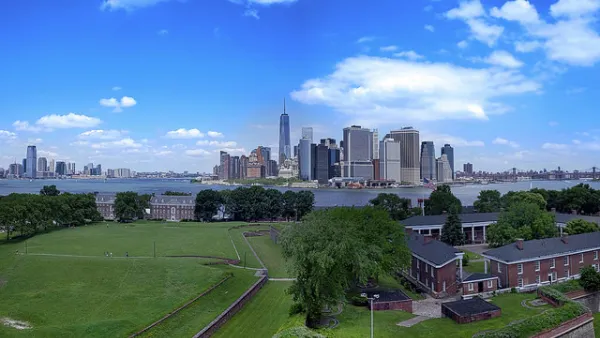
Finalists Selected for Governors Island Climate Research Center
Four teams will submit detailed proposals for a new climate research and education center on New York's Governors Island.

Opinion: It's Time to Rezone Gowanus
As the New York City Council considers a controversial plan for the Gowanus neighborhood in Brooklyn, Moses Gates calls on the city to pass "one of the best and most inclusive community planning processes in recent times."

The state-sanctioned urbicide of Austin
People don’t kill cities. Freeways do.

US to reduce Colorado River water deliveries to Mexico
A new Colorado Treaty amendment reduces Mexico’s Colorado River water allocation by 250,000 acre feet.

New Jersey’s second-largest city bans standalone data centers
Jersey City will continue to allow co-location facilities, such as those meant for research institutions that store their own data.

Amtrak not solely to blame for New Jersey commuter rail's unreliability, report finds
A new study from the Garden State Initiative found that NJ Transit’s budget grew 20% across a 4 year period, but reliability declined significantly over the same period.

EPA erases limits on planet-warming pollution from power plants
Under Monday’s plan, power plants would still have some limits on how much mercury, arsenic and other contaminants they can emit.

Phoenix announces new on-demand transit service, more frequent RAPID buses
Both new services will launch in October, and are part of Phoenix's Project Effective Access Solutions for Easing Congestion.

FREE Course: Walkable City 1: Why Walkability?
After describing his path towards focusing on walkability as the essence of good planning, Jeff Speck marches through his five principal reasons for making more walkable places.
Reinventing Malls: Planning Alchemy—Turning Gray Fields Into Gold
The course focuses on the opportunities and imperatives that shape reinvention of mall sites.

Eagle County Government
Harvard University Graduate School of Design
Nashville Planning Department
The Architects Foundation
University of Cincinnati Online
The Pocatello Development Authority
The Urban Renewal Agency of the City of Pocatello
Journal of the American Planning Association