The Not One More Girl initiative seeks to implement tangible changes to improve the safety of young people on public transit.


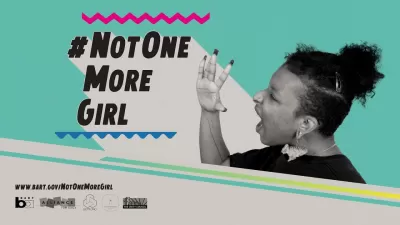
A teen-led initiative called Not One More Girl is taking on sexual harassment on Bay Area public transit. Two of the initiative's leaders, Uche Esomonu and Riss Myung, write in Teen Vogue that they "wanted to work outside the traditional structure of police response to reimagine safety, shepherding significant changes that increase the security of all BART riders, but especially of girls like us."
The campaign's founders, as teen girls themselves, understand all too well the fear that many young people face when taking public transportation. "We make sure our real-time location is shared with a family or friend. When we get on the train, we take a seat at the back of the car and plug in our earphones. But even with our ears blocked, our eyes remain alert, scanning our surroundings for anyone making sudden, unwelcome movements toward us." A recent report reflected that fear: "of 274 students surveyed, 45.3% did not feel safe taking Bay Area Rapid Transit." Esonomu and Myung write that, like many teens, they have "canceled certain appointments or paid extra money to order an Uber or Lyft because we felt unsafe taking public transportation."
Partnering with BART and other organizations, the young women have developed Not One More Girl into a full-fledged campaign. "Girls made key decisions to drive this initiative and held 100 paid roles, including social media strategy, public speaking, art and campaign design, and focus groups. What’s more, our labor was also valued, with BART paying each youth $18 per hour for their work."
"Tangible changes include improvements like a bystander intervention training video and the ability to report incidents of sexual harassment. Additionally, the BART Watch app, which allows the public to report suspicious activity to BART police, was updated to include information on sexual harassment incidents, providing metrics that can help authorities better assess public safety."
"We expanded reporting channels for sexual harassment and are giving survivors the right to determine what avenue of help is best for them — which includes saying no to police intervention. Impacted people now have the option to defer to immediate crisis help through community organizations like Bay Area Women Against Rape." By listening to the voices of teens like them, write Esomonu and Myung, "BART became a leader in centering youth in addressing gender-based violence and reimagining safety."
The campaign's founders call on other transit agencies to take similar actions to protect young people on public transit and improve safety for everyone.
FULL STORY: Bay Area Teens Led Campaign to Stop Sexual Harassment on Public Transit

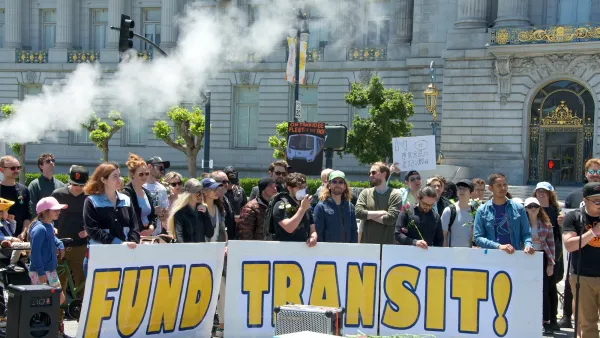
BART approves 2027 budget with no cuts, banking on November ballot measure for new funding
The Bay Area transit agency hopes to move forward without service cuts or fare increases.
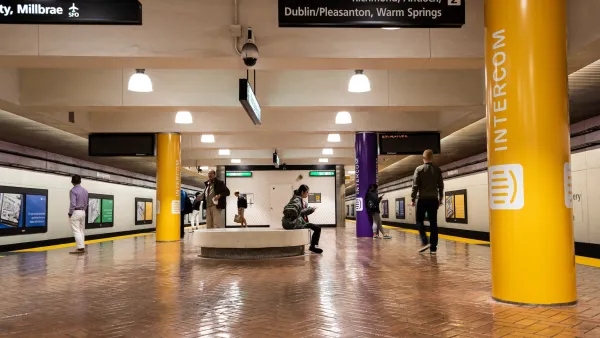
BART Announces Major Service Cuts, Fare Increases in Face of $376M Deficit
If a November ballot measure fails to bring new funding, BART’s ‘alternative service plan’ would reduce frequencies to 30 minutes, raise fares by 30%, and close up to 15 stations.
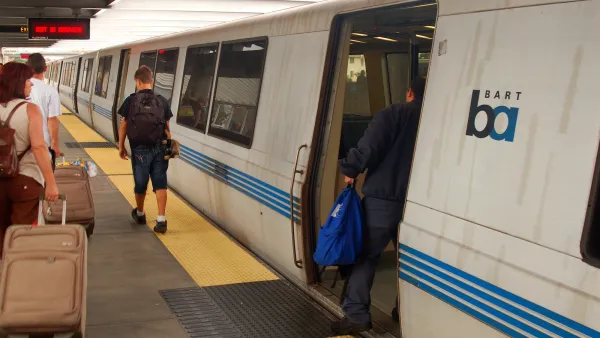
BART Service Cuts, Station Closures Could ‘Set Back the System 50 Years’
The agency could close dozens of stations and eliminate the Blue line between Daly City and Dublin-Pleasanton entirely.

Planetizen Federal Action Tracker
A weekly monitor of how Trump’s orders and actions are impacting planners and planning in America.

The state-sanctioned urbicide of Austin
People don’t kill cities. Freeways do.

US to reduce Colorado River water deliveries to Mexico
A new Colorado Treaty amendment reduces Mexico’s Colorado River water allocation by 250,000 acre feet.

Mamdani overhauls NYC's Vision Zero plan with 100 new policy goals
The overhaul aims to reduce traffic deaths and make streets safer for pedestrians, cyclists and drivers through lower speed limits, new safety infrastructure and more.

Amtrak not solely to blame for New Jersey commuter rail's unreliability, report finds
A new study from the Garden State Initiative found that NJ Transit’s budget grew 20% across a 4 year period, but reliability declined significantly over the same period.

EPA erases limits on planet-warming pollution from power plants
Under Monday’s plan, power plants would still have some limits on how much mercury, arsenic and other contaminants they can emit.

FREE Course: Walkable City 1: Why Walkability?
After describing his path towards focusing on walkability as the essence of good planning, Jeff Speck marches through his five principal reasons for making more walkable places.
Reinventing Malls: Planning Alchemy—Turning Gray Fields Into Gold
The course focuses on the opportunities and imperatives that shape reinvention of mall sites.

Eagle County Government
Harvard University Graduate School of Design
Nashville Planning Department
The Architects Foundation
University of Cincinnati Online
The Pocatello Development Authority
The Urban Renewal Agency of the City of Pocatello
Journal of the American Planning Association