Black Americans pay a higher price to be homeowners—and the number of those who can afford to pay that price is dropping quickly.


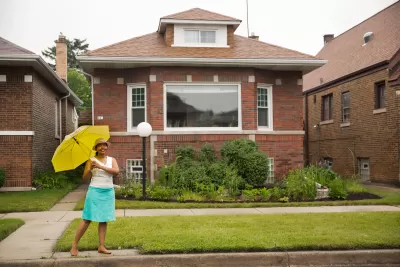
Feature reporting by Ailsa Chang, Christopher Intagliata and Jonaki Mehta dig into the past and present of what the headline of the story refers to as the "racist architecture of homeownership."
The statistics that explain the state of Black homeownership in the United States are staggering:
Over the last 15 years, Black homeownership has declined more dramatically than for any other racial or ethnic group in the United States. In 2019, the Black homeownership rate was about as low as in the 1960s, when private race-based discrimination was legal.
And after the explaining the history of redlining and other discriminatory practices built into the legal and financial systems of the country, the article explains this:
Today, many of the same neighborhoods that were redlined continue not only to have the highest poverty rates, but also worse health outcomes that lead to shorter lifespans. And Black Americans are nearly five times more likely to own a home in a formerly redlined neighborhood than in a greenlined, or "desirable," neighborhood, resulting in less home equity than white Americans have.
The article illustrates its points with human interest angles and a deep dive into the causes and effects of racism in the housing and development market of the greater Los Angeles area, starting with the neighborhood of Sugar Hill, razed and severed by the construction of the Interstate 10 Freeway, before also describing blockbusting in the city of Compton and the emigration of Black Americans from urban areas to suburban and exurban locations in the Inland Empire to the east of Los Angeles—the latter interrupted by the disparate impacts of the foreclosure crisis and predatory lending of the Great Recession.
A recent report by the Urban Institute offers supplemental reading about the causes of the decline of Black homeownership in six neighborhoods around the country.
FULL STORY: Black Americans And The Racist Architecture Of Homeownership

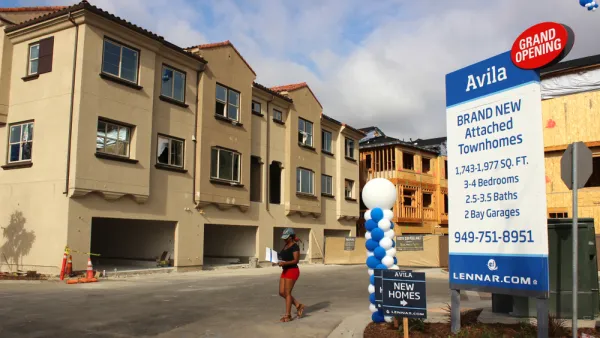
Housing Market Failing Black Millennials
"The gap between white and black home ownership is the widest since the New Deal."

Fair Housing Act May Cover Renters with Criminal Records
The largest private landlord in the U.S. faces a discrimination suit for refusing to rent to people with criminal records.

HUD Plans to Kill Key Fair Housing Rule
The department issued a proposal to eliminate the disparate impact rule, a cornerstone of some discrimination rulings under the Fair Housing Act.

Planetizen Federal Action Tracker
A weekly monitor of how Trump’s orders and actions are impacting planners and planning in America.

The state-sanctioned urbicide of Austin
People don’t kill cities. Freeways do.

US to reduce Colorado River water deliveries to Mexico
A new Colorado Treaty amendment reduces Mexico’s Colorado River water allocation by 250,000 acre feet.

Mamdani overhauls NYC's Vision Zero plan with 100 new policy goals
The overhaul aims to reduce traffic deaths and make streets safer for pedestrians, cyclists and drivers through lower speed limits, new safety infrastructure and more.

Amtrak not solely to blame for New Jersey commuter rail's unreliability, report finds
A new study from the Garden State Initiative found that NJ Transit’s budget grew 20% across a 4 year period, but reliability declined significantly over the same period.

EPA erases limits on planet-warming pollution from power plants
Under Monday’s plan, power plants would still have some limits on how much mercury, arsenic and other contaminants they can emit.

FREE Course: Walkable City 1: Why Walkability?
After describing his path towards focusing on walkability as the essence of good planning, Jeff Speck marches through his five principal reasons for making more walkable places.
Reinventing Malls: Planning Alchemy—Turning Gray Fields Into Gold
The course focuses on the opportunities and imperatives that shape reinvention of mall sites.

Eagle County Government
Harvard University Graduate School of Design
Nashville Planning Department
The Architects Foundation
University of Cincinnati Online
The Pocatello Development Authority
The Urban Renewal Agency of the City of Pocatello
Journal of the American Planning Association