"The gap between white and black home ownership is the widest since the New Deal."


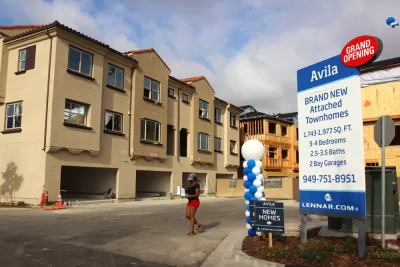
Pedro Nicolaci Da Costa reports: "The Great Recession delivered a far bigger hit to black Americans’ already meager wealth holdings— depressed by slavery, centuries of discrimination, and deliberately discriminatory housing policies — than it did to whites."
The effect of the Great Recession means the homeownership gap between black and white Americans is as bas as it has been at any point since the beginning of the 20th century.
The article is reporting the findings of a new report by Darrick Hamilton and Christopher Famighetti, published by the Stanford Center for Poverty and Inequality.
In addition to foreclosures and the decline of housing prices that resulted from the Great Recession, the report points to other factors worsening the gap between racial groups in the homeownership market, like gentrification, more stringent mortgage eligibility criteria, and ongoing lending and housing discrimination.
FULL STORY: Black millennials less likely to own a home than their grandparents were at same age

The Numerous Obstacles—Past and Present—Facing Black Homeowners
Black Americans pay a higher price to be homeowners—and the number of those who can afford to pay that price is dropping quickly.
Black Housing Project Spotlights Black Homeownership
A new initiative highlights the stories of Black homeowners in New York City and the challenges that Black homebuyers continue to face across the country.
Million-Dollar Homes Becoming Standard Fare Across Los Angeles
As households with means seek to escape crowded apartment buildings and take advantage of historically low mortgage rates, average home prices of over $1 million are proliferating across the LA region.

Planetizen Federal Action Tracker
A weekly monitor of how Trump’s orders and actions are impacting planners and planning in America.

The state-sanctioned urbicide of Austin
People don’t kill cities. Freeways do.

US to reduce Colorado River water deliveries to Mexico
A new Colorado Treaty amendment reduces Mexico’s Colorado River water allocation by 250,000 acre feet.

Airbnb launches $250 million 'last-dollar financing' housing accelerator, makes first investment in Austin
The company will put $6.4 million towards affordable housing development in Texas’ capital.

Guerilla urbanists are building DIY bus stop benches in Chicago
A before-and-after of one of the bus stops with a new bench. The new benches are not officially sanctioned or permitted, but the residents who placed them hope they will be the start of a network of DIY benches across the city.

Mamdani overhauls NYC's Vision Zero plan with 100 new policy goals
The overhaul aims to reduce traffic deaths and make streets safer for pedestrians, cyclists and drivers through lower speed limits, new safety infrastructure and more.

FREE Course: Walkable City 1: Why Walkability?
After describing his path towards focusing on walkability as the essence of good planning, Jeff Speck marches through his five principal reasons for making more walkable places.
Reinventing Malls: Planning Alchemy—Turning Gray Fields Into Gold
The course focuses on the opportunities and imperatives that shape reinvention of mall sites.

Eagle County Government
Harvard University Graduate School of Design
Nashville Planning Department
The Architects Foundation
University of Cincinnati Online
The Pocatello Development Authority
The Urban Renewal Agency of the City of Pocatello
Journal of the American Planning Association