Nearly 6 million Californians will receive $600 in economic stimulus checks as the state makes a plan to spend its surprise, massive budget surplus. $2.6 million for rent relief and $2 billion to pay utility bills are also planned.



"Buoyed by a historic influx of tax revenue, Gov. Gavin Newsom on Monday announced a massive expansion of a state economic stimulus plan," reports Scott Shafer.
"The announcement, framed by the governor as part of his 'California Comeback Plan,' is a major expansion of a stimulus package Newsom signed into law in February that sent one-time payments of $600 to nearly 6 million low-income Californians," adds Shafer.
"According to the California Department of Finance, households earning up to $75,000 in adjusted gross income will be eligible for the new round of stimulus checks, with an extra $500 for families with children."
The stimulus spending is made possible by a $75.7 billion budget surplus—a remarkable development for the state considering the dire alarms sounded about the potential for fiscal crisis at the state and local levels as a result of the pandemic. According to Shafer, the strength of the stock market, combined with federal stimulus spending through the American Rescue Plan, enabled the windfall.
There's also a surprising twist to this news about the state's big stimulus spending plans. Los Angeles Times reporter Liam Dillon amplified the news about an extra layer of significance about how this stimulus plan came to be, namely, anti-tax legislation approved by state voters in 1979.
Anyone following Newsom's plan to send $8b in stimulus payments to 2/3rds of Californians needs to understand he's essentially required to send money back to taxpayers due to a 1979 ballot measure mandating that real per person state government spending must be under 1979 levels https://t.co/WIfNAAiRg8
— Liam Dillon (@dillonliam) May 10, 2021
Shafer also offers an explanation: "The so-called 1979 Gann Limit, named for the Proposition 13-era anti-tax crusader Paul Gann, capped state spending at 1978-79 levels with adjustments for population growth and growth in personal income taxes. It was last triggered in 1986."
Perhaps buried by the big boost to the California Comeback Plan, Gov. Newsom on the same day announced a $2.6 billion plan to help renters pay for unpaid rent debt incurred during the pandemic—the source of a large amount of economic angst and the lingering potential to upend the economy.
NEW: CA is delivering immediate relief to renters through the largest renter assistance package in the COUNTRY:
$5.2 billion for renters to cover their back-rent AND their rent for several months into the future.
And $2 billion to help pay overdue water and utility bills.— Gavin Newsom (@GavinNewsom) May 10, 2021
According to Shafer, the state's sudden fiscal strength does not reflect a completely sound economy. The state's unemployment rate is higher than the national average, and there is obvious need for support for those struggling outside the corporate and capital realms that achieved during the pandemic.
The news about California's economic relief spending took an additional turn today, a day after the news about the direct payments and rent relief, as CalMatters reporters got the scoop about an impending announcement about additional spending to address the state of California's homelessness crisis.
BREAKING: @GavinNewsom will today propose investing $12 billion to address CA’s homelessness crisis.
- $8.75B for 46,000 homeless housing units/placements & affordable apartments
- $3.7B in homeless prevention and rental support
- $1.5B to clean up roadways & public spaces— Emily Hoeven (@emily_hoeven) May 11, 2021
Planetizen will update this story with more details on the proposed spending to address the state's homelessness crisis as it becomes available. Update: Julie Watson and Janie Har report on the plan to spend $12 billion of the state budget surplus to address homelessness. The article also includes details about the State's efforts to reduce risks for people experiencing homelessness during the pandemic.
FULL STORY: Flush With Cash, California Set to Send Billions in Rebates to Taxpayers

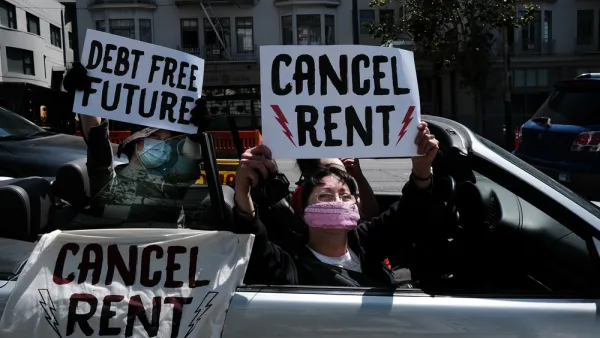
Survey Measures Consequences of the Pandemic for Small Landlords
A new survey reveals details about the financial crunch facing owners of small rental properties as tenants struggle to pay rent during the pandemic and emergency aid is slow to reach those in need.
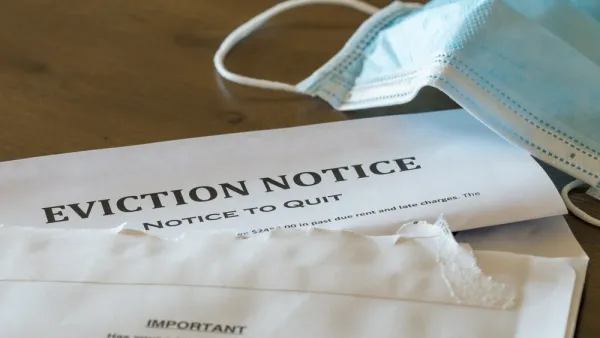
$425 Million in Rent Relief Never Reached Those in Need
A damning investigation reveals the immense financial resources that states could have spent on rent relief but failed to do so, whether willfully or not.
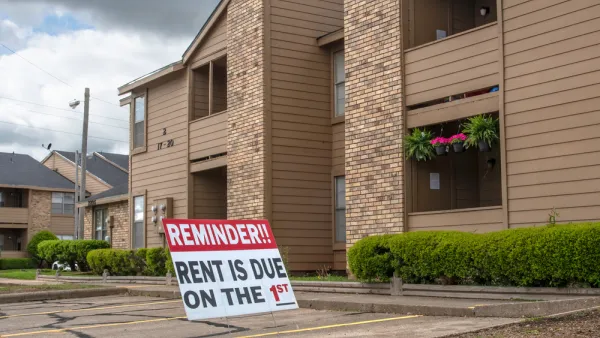
Census: 7 Million Americans Are Behind on Rent
With the federal eviction moratorium due to expire at the end of the month and rent relief programs failing to reach those who need it most, an eviction crisis still looms.

Planetizen Federal Action Tracker
A weekly monitor of how Trump’s orders and actions are impacting planners and planning in America.

The state-sanctioned urbicide of Austin
People don’t kill cities. Freeways do.

US to reduce Colorado River water deliveries to Mexico
A new Colorado Treaty amendment reduces Mexico’s Colorado River water allocation by 250,000 acre feet.

5 New England states march closer to 800 megawatt wind energy project
Securing federal approval for the project may be complicated under the Trump administration, which has historically been hostile towards domestic wind power.

Baltimore to break ground on $50 million Transit Priority Project
The project will bring faster bus trips, safer streets and better bike connections to Baltimore.

Airbnb launches $250 million 'last-dollar financing' housing accelerator, makes first investment in Austin
The company will put $6.4 million towards affordable housing development in Texas’ capital.

FREE Course: Walkable City 1: Why Walkability?
After describing his path towards focusing on walkability as the essence of good planning, Jeff Speck marches through his five principal reasons for making more walkable places.
Reinventing Malls: Planning Alchemy—Turning Gray Fields Into Gold
The course focuses on the opportunities and imperatives that shape reinvention of mall sites.

Eagle County Government
Harvard University Graduate School of Design
Nashville Planning Department
The Architects Foundation
University of Cincinnati Online
The Pocatello Development Authority
The Urban Renewal Agency of the City of Pocatello
Journal of the American Planning Association