A proposed $2 billion megaproject would expand the footprint of the ongoing reinvention of Downtown Los Angeles and its surrounding neighborhoods.


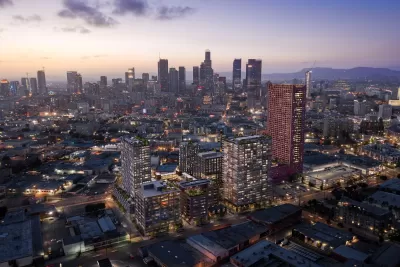
"An Arts District cold-storage plant dating to the 1890s would be replaced with housing, offices, a hotel and shops in a proposal unveiled Thursday by Denver developers," reports Roger Vincent. "With a price tag between $1.5 billion and $2 billion, the complex would rank among the largest L.A. commercial real estate developments in recent memory."
The article presents the massive development proposal as evidence that developers are pushing ahead with the ongoing renaissance of Downtown Los Angeles and surrounding neighborhoods—despite lingering questions about the effect of the pandemic on office work in the central business district.
The developer, Continuum Partners, would add ten new buildings including a residential skyscraper at Central Avenue and 4th Street on the edge of the quickly redeveloping Arts District neighborhood to the east of Downtown Los Angeles. According to Vincent, the "historically industrial neighborhood dotted with art galleries, apartments and buzzy restaurants […] has become increasingly attractive to tech and entertainment companies including Apple TV, Sony and Warner Music."

The four-acre Fourth & Central project would require the relocation of Los Angeles Cold Storage Co. (the deal is a partnership between Continuum and Los Angeles Cold Storage), despite the ongoing strength of the cold storage business in Los Angeles. In Los Angeles Cold Storage's place, the development would add "572 condominiums and 949 apartments, with 216 units set aside for residents with low incomes paying reduced rent," according to Vincent. A hotel and office space tailored to creative industries would also be included. More details on the proposed development are included in the source article.
FULL STORY: A $2-billion mega-project could reshape the Arts District

Los Angeles Arts District Residents Resisting Plans for More Density
The Arts District in Downtown Los Angeles has seen plenty of chic newcomers in recent years—high-end cafes, restaurants, and expensive lofts. But a recently revealed plan that would allow new, dense construction has sparked controversy.
Gentrification Pushes Artists out of LA's Arts District
The arts district in downtown Los Angeles is transforming its industrial buildings into trendy boutiques, restaurants and hotels. The concern is that gentrification will drive out low-paid artists who can no longer afford to live there.

High Housing Costs Driving Down Transit Ridership in LA
When neighborhoods gentrify and displace lower-income residents, transit ridership suffers, new research shows.

The state-sanctioned urbicide of Austin
People don’t kill cities. Freeways do.

US to reduce Colorado River water deliveries to Mexico
A new Colorado Treaty amendment reduces Mexico’s Colorado River water allocation by 250,000 acre feet.

New Jersey’s second-largest city bans standalone data centers
Jersey City will continue to allow co-location facilities, such as those meant for research institutions that store their own data.

Amtrak not solely to blame for New Jersey commuter rail's unreliability, report finds
A new study from the Garden State Initiative found that NJ Transit’s budget grew 20% across a 4 year period, but reliability declined significantly over the same period.

EPA erases limits on planet-warming pollution from power plants
Under Monday’s plan, power plants would still have some limits on how much mercury, arsenic and other contaminants they can emit.

Phoenix announces new on-demand transit service, more frequent RAPID buses
Both new services will launch in October, and are part of Phoenix's Project Effective Access Solutions for Easing Congestion.

FREE Course: Walkable City 1: Why Walkability?
After describing his path towards focusing on walkability as the essence of good planning, Jeff Speck marches through his five principal reasons for making more walkable places.
Reinventing Malls: Planning Alchemy—Turning Gray Fields Into Gold
The course focuses on the opportunities and imperatives that shape reinvention of mall sites.

Eagle County Government
Harvard University Graduate School of Design
Nashville Planning Department
The Architects Foundation
University of Cincinnati Online
The Pocatello Development Authority
The Urban Renewal Agency of the City of Pocatello
Journal of the American Planning Association