New research shows that ride sharing contributes to increased congestion and decreased transit ridership.


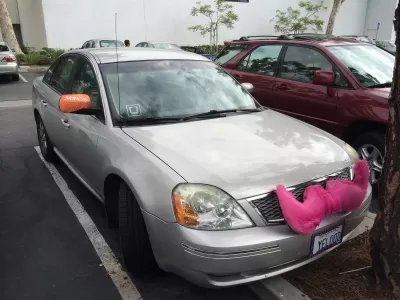
"While ride-sharing has been credited with being more environmentally friendly than taxis and private vehicles," a new study from the the Future Urban Mobility (FM) Interdisciplinary Research Group (IRG) at Singapore-MIT Alliance for Research and Technology (SMART), MIT, and Tongji University assessing the impacts of ride-sharing on urban mobility in the U.S. found that "the entrance of TNCs [Transportation Network Companies] led to increased road congestion in terms of both intensity and duration." The study also found that public transit ridership decreased by 8.9 percent, while private car ownership experienced an "insignificant decrease of only 1 percent."
The study concluded that "easy access to ride-sharing discourages commuters from taking greener alternatives, such as walking or public transportation," and that "approximately half of TNC trips would otherwise have been made by walking, cycling, public transport, or would not have been made at all."
"The researchers think that the substantial deadheading miles (miles traveled without a passenger) by TNCs could contribute to the TNC’s negative impact on road congestion. According to some other studies, approximately 40.8 percent of TNC miles are deadheading miles." The study's authors hope that their findings "can be very useful in supporting transportation planners and policymakers in their decisions and regulations with regard to TNCs."
FULL STORY: Study finds ride-sharing intensifies urban road congestion

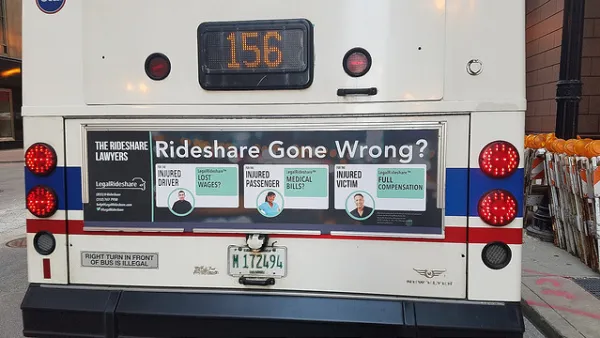
Study Finds UberPOOL Adds to City Traffic by Competing with the Subway
Past studies have shown how ride hailing services have added to congestion. A new study by Bruce Schaller suggests that even ride shares add to traffic, because they pull riders off of more efficient transit options like public transit.
Minnesota Lawmakers Reach Ride Share Compromise
A law awaiting the governor’s signature establishes wage rates for drivers. Ride share companies say if the law passes, they plan to continue service in the state.
The Post-Pandemic Future of Rideshare
With pooled services suspended through the pandemic and research showing most users prefer private rides, will shared rides continue to play a role in urban transportation?

Planetizen Federal Action Tracker
A weekly monitor of how Trump’s orders and actions are impacting planners and planning in America.

The state-sanctioned urbicide of Austin
People don’t kill cities. Freeways do.

US to reduce Colorado River water deliveries to Mexico
A new Colorado Treaty amendment reduces Mexico’s Colorado River water allocation by 250,000 acre feet.

Mamdani overhauls NYC's Vision Zero plan with 100 new policy goals
The overhaul aims to reduce traffic deaths and make streets safer for pedestrians, cyclists and drivers through lower speed limits, new safety infrastructure and more.

Amtrak not solely to blame for New Jersey commuter rail's unreliability, report finds
A new study from the Garden State Initiative found that NJ Transit’s budget grew 20% across a 4 year period, but reliability declined significantly over the same period.

EPA erases limits on planet-warming pollution from power plants
Under Monday’s plan, power plants would still have some limits on how much mercury, arsenic and other contaminants they can emit.

FREE Course: Walkable City 1: Why Walkability?
After describing his path towards focusing on walkability as the essence of good planning, Jeff Speck marches through his five principal reasons for making more walkable places.
Reinventing Malls: Planning Alchemy—Turning Gray Fields Into Gold
The course focuses on the opportunities and imperatives that shape reinvention of mall sites.

Eagle County Government
Harvard University Graduate School of Design
Nashville Planning Department
The Architects Foundation
University of Cincinnati Online
The Pocatello Development Authority
The Urban Renewal Agency of the City of Pocatello
Journal of the American Planning Association