With regular updates of rent debt data from around the United States, a new dashboard reveals the depths of one of the most pressing crises of the pandemic.



The National Equity Atlas and the Right to the City Alliance this week launched a new rent debt dashboard with near real-time data on the number and characteristics of renters behind on rent for the United States, 45 states, and 15 metropolitan areas.
An article by Sarah Treuhaft, Jamila Henderson, Michelle Huang, Alex Ramiller, and Justin Scoggins introduces the dashboard, which raises awareness about the mounting rent debt and the potential for mass eviction as "one of the most pressing equity issues created by the Covid-19 pandemic."
"The vast majority of renters who are in debt are low-wage workers — disproportionately people of color — who’ve suffered job and income losses due to the pandemic," according to the article.
The aggregate numbers reveal a debt crisis of a similar scale of the foreclosure crisis of the Great Recession. "As of the end of March 2021, 5.7 million renters – 14 percent of all renter households – were behind on their rent payments," according to the article. The total rent debt owed is estimated at $20 billion. "For comparison, nearly 8 million households lost their homes to foreclosure due to the 2008 financial crisis."
Solutions to all that mounting debt, according to the article, include eviction protection, debt relief, and financial support. With that support, many of these millions of renter households will face eviction.
The dashboard draws data from the Census Bureau’s Household Pulse Survey and the University of Southern California Center for Economic and Social Research's Understanding Coronavirus in America survey, and will be refreshed approximately every two weeks. The full methodology is available online here.
FULL STORY: Rent Debt in America: Stabilizing Renters Is Key to Equitable Recovery

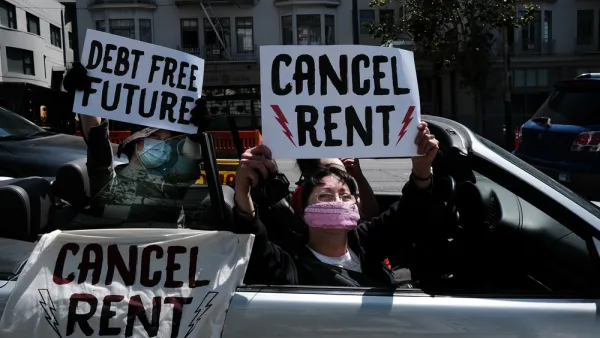
U.S. Rent Debt Estimated at More Than $21 Billion
The National Equity Atlas has been tracking national rent debt, which takes on new meaning since the federal eviction moratorium expired at the end of July.
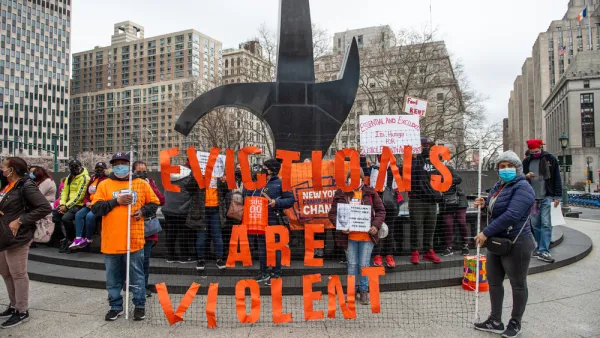
Emergency Rental Relief Gaining Momentum in Some States
Rental assistance spending in June surpassed the entire year's total so far, but there's still a long way to go.
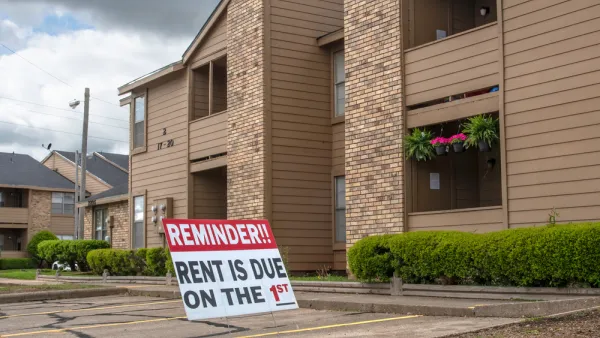
Census: 7 Million Americans Are Behind on Rent
With the federal eviction moratorium due to expire at the end of the month and rent relief programs failing to reach those who need it most, an eviction crisis still looms.

Planetizen Federal Action Tracker
A weekly monitor of how Trump’s orders and actions are impacting planners and planning in America.

The state-sanctioned urbicide of Austin
People don’t kill cities. Freeways do.

US to reduce Colorado River water deliveries to Mexico
A new Colorado Treaty amendment reduces Mexico’s Colorado River water allocation by 250,000 acre feet.

5 New England states march closer to 800 megawatt wind energy project
Securing federal approval for the project may be complicated under the Trump administration, which has historically been hostile towards domestic wind power.

Baltimore to break ground on $50 million Transit Priority Project
The project will bring faster bus trips, safer streets and better bike connections to Baltimore.

Airbnb launches $250 million 'last-dollar financing' housing accelerator, makes first investment in Austin
The company will put $6.4 million towards affordable housing development in Texas’ capital.

FREE Course: Walkable City 1: Why Walkability?
After describing his path towards focusing on walkability as the essence of good planning, Jeff Speck marches through his five principal reasons for making more walkable places.
Reinventing Malls: Planning Alchemy—Turning Gray Fields Into Gold
The course focuses on the opportunities and imperatives that shape reinvention of mall sites.

Eagle County Government
Harvard University Graduate School of Design
Nashville Planning Department
The Architects Foundation
University of Cincinnati Online
The Pocatello Development Authority
The Urban Renewal Agency of the City of Pocatello
Journal of the American Planning Association