Less restrictive permit laws and pre-fabricated, pre-approved building options are spurring more homeowners to build backyard additions.


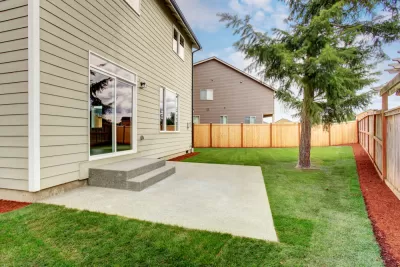
Since the state passed regulations loosening restrictions on accessory dwelling units (ADUs), backyard homes have become a growing business in California, where housing is scarce and land is often prohibitively expensive. "California homeowners built some 12,000 backyard flats in 2019 — more than double the number permitted just two years earlier and a ten-fold increase since the state passed its preemption laws," writes Kriston Capps in Bloomberg CityLab.
With the rise of pre-fabricated, pre-approved houses made available by companies like Bay Area-based Abodu, building a backyard accessory unit is becoming easier than ever. "Its smallest offering, a 340-square-foot studio, starts at $189,000 — significantly cheaper than a similar stick-built house, according to CEO and co-founder John Geary. For select cities in California, Abodu promises that it can finish an ADU, from permitting through construction, in as little as 30 days." Cities like Los Angeles and San Jose have pre-approved designs such as Abodu's in an effort to streamline permitting for homeowners.
While construction slowed during 2020, "ADUs could be a rare bright spot in California and a few other places," with permit applications for "granny flats" continuing to increase. With 51% of ADUs serving as long-term rentals, the trend could help increase the availability of affordable rental housing in formerly single-family neighborhoods.
FULL STORY: How California Set Off a Backyard Apartment Boom


Maine Looks To Legalize ‘Missing Middle Housing’
Maine could become the third state to eliminate single-family-only zoning to encourage light density increases in residential areas and make it easier for homeowners to build accessory dwelling units.
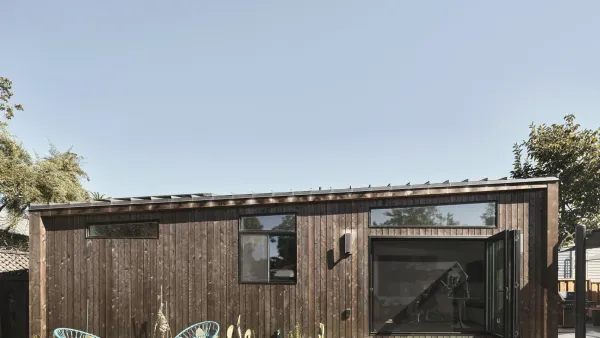
Los Angeles Streamlines ADU Permits with High-Design Templates
Los Angeles' ADU Standard Plan Program will offer homeowners a set of pre-approved designs that will save them time and money.

Maine Forces Cities to Allow at Least 2 ADUs on Residential Lots
A new state law bars local jurisdictions from restricting ADUs in residential areas.

The state-sanctioned urbicide of Austin
People don’t kill cities. Freeways do.

US to reduce Colorado River water deliveries to Mexico
A new Colorado Treaty amendment reduces Mexico’s Colorado River water allocation by 250,000 acre feet.

New Jersey’s second-largest city bans standalone data centers
Jersey City will continue to allow co-location facilities, such as those meant for research institutions that store their own data.

Amtrak not solely to blame for New Jersey commuter rail's unreliability, report finds
A new study from the Garden State Initiative found that NJ Transit’s budget grew 20% across a 4 year period, but reliability declined significantly over the same period.

EPA erases limits on planet-warming pollution from power plants
Under Monday’s plan, power plants would still have some limits on how much mercury, arsenic and other contaminants they can emit.

Phoenix announces new on-demand transit service, more frequent RAPID buses
Both new services will launch in October, and are part of Phoenix's Project Effective Access Solutions for Easing Congestion.

FREE Course: Walkable City 1: Why Walkability?
After describing his path towards focusing on walkability as the essence of good planning, Jeff Speck marches through his five principal reasons for making more walkable places.
Reinventing Malls: Planning Alchemy—Turning Gray Fields Into Gold
The course focuses on the opportunities and imperatives that shape reinvention of mall sites.

Eagle County Government
Harvard University Graduate School of Design
Nashville Planning Department
The Architects Foundation
University of Cincinnati Online
The Pocatello Development Authority
The Urban Renewal Agency of the City of Pocatello
Journal of the American Planning Association