A third of mayors surveyed said that despite increased outdoor activity, many of the changes made in the public realm during the pandemic won't be a part of a new normal.


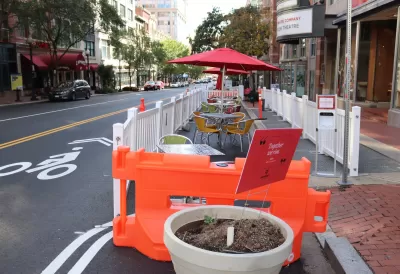
"Mayors expect their residents to spend more time outdoors after being inspired to do so amid the coronavirus pandemic, but few leaders are looking to incorporate pandemic-fueled changes to those spaces into long-term plans," reports Chris Teale.
Teale is sharing the news of the Menino Survey of Mayors from Boston University. Of the 130 mayors surveyed for the report, just over a third "said they do not expect to see changes made to outdoor spaces during the pandemic — like expanded outdoor dining and infrastructure — last long-term due to budgetary constraints," according to Teale.
The mayors who decide to roll back pandemic planning features like al fresco dining programs and open streets will be cutting against the grain of another survey finding. Two-thirds of surveyed mayors say they believe residents will spend more times outdoors after the pandemic.
Read the full story: Few mayors expect to keep COVID-inspired changes to public spaces, survey finds
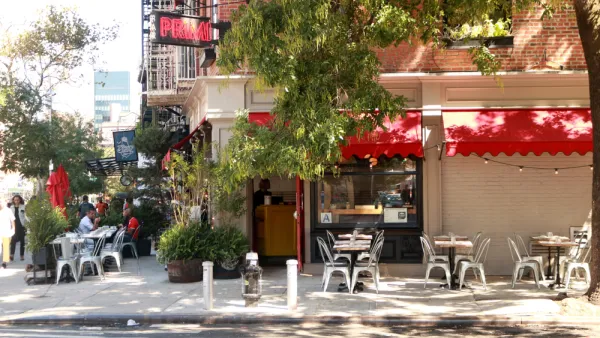
Car-Free Streets Benefit Restaurants, Yelp Survey Shows
Restaurants in areas designated as "slow streets" during the pandemic saw a boost in consumer interest.
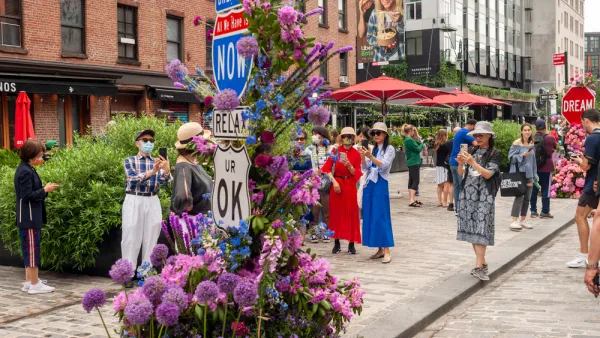
The Tide Has Turned Against Open Streets
Once a promising development for advocates pushing for a less car-centric future in cities, the open streets movement has ceded significant ground to cars since the height of the pandemic.

Pedestrians Briefly Take Back Miami Beach's Ocean Drive
Miami Beach reopened Ocean Drive to vehicles earlier this year at the request of hotel owners. So many pedestrians showed up to the famous street on a weekend earlier this month, however, that cars were blocked once again.

Planetizen Federal Action Tracker
A weekly monitor of how Trump’s orders and actions are impacting planners and planning in America.

California plans to bury El Niño’s downpour
If the state plays its cards right, it may be able to store a billion acre-feet of El Niño’s water in aquifers.

Desperate measures: Advocates weigh draining Lake Powell to fill Colorado River
Draining the reservoir could reduce evaporation losses by a couple hundred thousand acre-feet.

Mamdani’s pied-à-terre tax survives legal challenge
A panel of judges found that the plaintiffs failed to demonstrate injury as a result of New York City's implementation of the tax.

Eastern Nebraska is running out of electricity
Data centers and electrification are straining eastern Nebraska’s grid, throttling economic development.

Seattle passes record-breaking transit services expansion
Proposition 1 will double the city’s transit tax to add 95,000 more bus trips and preserve 180,000 bus trips annually.

FREE Course: Walkable City 1: Why Walkability?
After describing his path towards focusing on walkability as the essence of good planning, Jeff Speck marches through his five principal reasons for making more walkable places.
Reinventing Malls: Planning Alchemy—Turning Gray Fields Into Gold
The course focuses on the opportunities and imperatives that shape reinvention of mall sites.


City of Rosemead
Rutgers University, Edward J. Bloustein School of Planning and Public Policy
One Hundred Miles
University of Michigan School for Environment and Sustainability (SEAS)
Hunter College, City University of New York (CUNY)
The Architects Foundation
City of Cambridge
Montrose County
The Pocatello Development Authority