Expanding rail service to more communities in Maryland and D.C. could enhance the benefits of Virginia's recent investments in intercity rail.


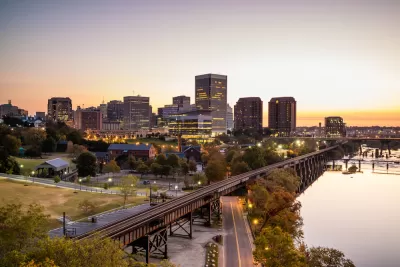
On the heels of Virginia's significant investments in intercity rail, a business community think tank calls for a "regional rail vision" that includes Maryland and the District of Columbia that would connect the entire region and maximize the benefits of Virginia's work on rail connectivity, writes Wyatt Gordon in the Virginia Mercury.
The goal is a regional rail service that lets commuters travel directly to D.C. and Baltimore from as far south as Richmond without changing trains, which Representative Don Beyer of Alexandria hopes will translate into a "big increase in ridership." Expanded rail service could "translate into big bucks for households and government coffers across the region." Increased connectivity could yield significant economic benefits for the region and boost access to affordable housing, evening out the pressure of the region's high cost of living. "If convenient commutes become a truly regional commodity, home prices closer to the Capitol may also slow their rapid staggering ascent."
"What we’re trying to do is to create more amenable communities to live or create jobs in throughout our region out of places that today are largely inaccessible unless you drive a car like Fredericksburg or Frederick, Maryland," Greater Washington Partnership's vice president of transportation, Joe McAndrew, told the Virginia Mercury. A major challenge for the regional vision is working across jurisdictions. "We are a complicated region with a lot of different governance structures and don’t always get along," Virginia Passenger Rail Authority board member Sharon Bulova said, "but we are able to come together and get things done."
FULL STORY: Regional rail vision aims to stitch Virginia, Maryland and D.C. closer together

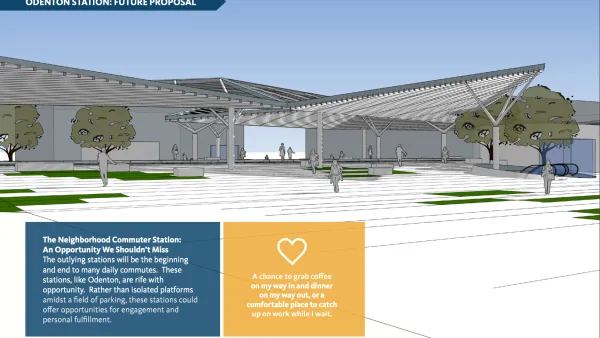
New 'Capital Regional Rail Vision' Revealed
An idea to expand regional rail service around D.C. has new substance after the Greater Washington Partnership revealed the first details of a plan to convert the MARC and VRE commuter train systems into high-frequency, all-day regional service.
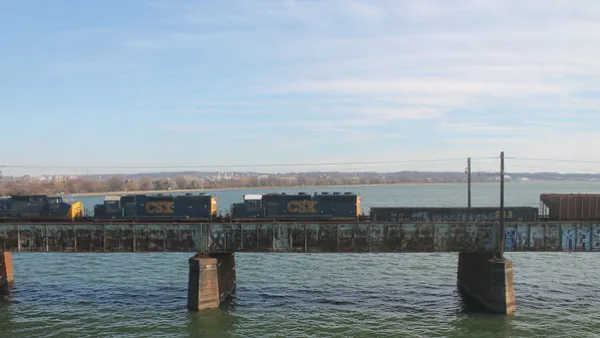
Virginia Passenger Rail Sets Ridership Records, Seeks More Wins
Virginia’s commitment to intercity rail is paying off in record ridership numbers, but more work will be necessary to achieve the state’s ambitions for passenger rail.

Amtrak Calls for Expansion, Citing Close to 100 Requests for New Lines
The agency told a House committee it has received more than 90 applications for new intercity rail lines from cities around the country.

The state-sanctioned urbicide of Austin
People don’t kill cities. Freeways do.

US to reduce Colorado River water deliveries to Mexico
A new Colorado Treaty amendment reduces Mexico’s Colorado River water allocation by 250,000 acre feet.

New Jersey’s second-largest city bans standalone data centers
Jersey City will continue to allow co-location facilities, such as those meant for research institutions that store their own data.

Amtrak not solely to blame for New Jersey commuter rail's unreliability, report finds
A new study from the Garden State Initiative found that NJ Transit’s budget grew 20% across a 4 year period, but reliability declined significantly over the same period.

EPA erases limits on planet-warming pollution from power plants
Under Monday’s plan, power plants would still have some limits on how much mercury, arsenic and other contaminants they can emit.

Phoenix announces new on-demand transit service, more frequent RAPID buses
Both new services will launch in October, and are part of Phoenix's Project Effective Access Solutions for Easing Congestion.

FREE Course: Walkable City 1: Why Walkability?
After describing his path towards focusing on walkability as the essence of good planning, Jeff Speck marches through his five principal reasons for making more walkable places.
Reinventing Malls: Planning Alchemy—Turning Gray Fields Into Gold
The course focuses on the opportunities and imperatives that shape reinvention of mall sites.

Eagle County Government
Harvard University Graduate School of Design
Nashville Planning Department
The Architects Foundation
University of Cincinnati Online
The Pocatello Development Authority
The Urban Renewal Agency of the City of Pocatello
Journal of the American Planning Association