With most gyms closed to the pandemic and its associated restrictions, more and more people are getting exercise equipment installed in their own homes to maintain their fitness goals and routines.


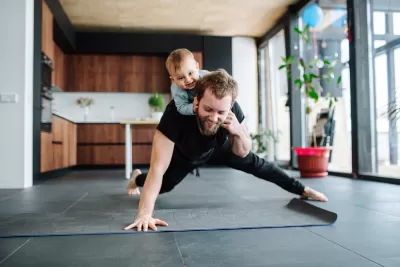
Most indoor gyms have been closed since mid-March 2020 as a result of the COVID-19 pandemic and the associated public health orders. A few have re-opened because they have enough space to move their equipment outdoors. Many people have also turned to parks and trails for workouts, while some have even resorted to using children's play areas, resulting in a "Battle for Playgrounds."
In this article, Alex Hutchinson writes about home fitness systems and their growing popularity as a result of gym closures and people's desire to continue their workout routines. Hutchinson highlights discusses various home fitness options, including Peloton which has become a household name in part due to its many TV commercials. Peloton's main product is a stationary bicycle that allows monthly subscribers to remotely participate in classes led by celebrity fitness instructors that are streamed from the company's fitness studio. With more and more people exercising at home and getting used to the idea, gyms may have a hard time regaining their devotees, even when they are allowed to re-open. .
Read the full story: Can Fancy Home Fitness Tech Kill the Gym?

How COVID-19 Impacted Mobility in California
Analysis of cell phone location tracking data shows changes in how Californians have moved around since the pandemic.

Why Playgrounds Need to Stay Open
California has reversed its decision to close playgrounds as part of the state's stay-at-home order after some legislators and parents complained and argued that children need outdoor play for their health and well-being.
The Battle for Playgrounds
New York City parents are unhappy that fitness enthusiasts are turning to playgrounds for their workouts.

Planetizen Federal Action Tracker
A weekly monitor of how Trump’s orders and actions are impacting planners and planning in America.

California plans to bury El Niño’s downpour
If the state plays its cards right, it may be able to store a billion acre-feet of El Niño’s water in aquifers.

Desperate measures: Advocates weigh draining Lake Powell to fill Colorado River
Draining the reservoir could reduce evaporation losses by a couple hundred thousand acre-feet.

Mamdani’s pied-à-terre tax survives legal challenge
A panel of judges found that the plaintiffs failed to demonstrate injury as a result of New York City's implementation of the tax.

Eastern Nebraska is running out of electricity
Data centers and electrification are straining eastern Nebraska’s grid, throttling economic development.

Seattle passes record-breaking transit services expansion
Proposition 1 will double the city’s transit tax to add 95,000 more bus trips and preserve 180,000 bus trips annually.

FREE Course: Walkable City 1: Why Walkability?
After describing his path towards focusing on walkability as the essence of good planning, Jeff Speck marches through his five principal reasons for making more walkable places.
Reinventing Malls: Planning Alchemy—Turning Gray Fields Into Gold
The course focuses on the opportunities and imperatives that shape reinvention of mall sites.

City of Rosemead
Rutgers University, Edward J. Bloustein School of Planning and Public Policy
One Hundred Miles
Hunter College, City University of New York (CUNY)
The Architects Foundation
University of Cincinnati Online
City of Cambridge
Montrose County
The Pocatello Development Authority