The history of planning is dominated by a few iconic figures—all white.


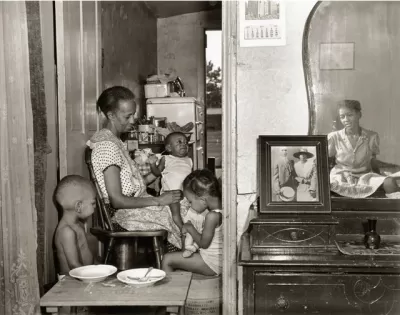
Pete Saunders writes to counter the tradition of planning history that favors the contributions of famous white urbanists (Jane Jacobs and Daniel Burnham are mentioned by name).
Building on the work of Daphne Lundi in "Rewriting the Urban Planning Cannon," Saunders recognizes 11 of historical figures and contemporary pioneers as leading Black urbanists. "Some of their work may not fall within the conventional realm of urbanism as it's understood today, but they should be known and celebrated by all in the planning profession," writes Saunders.
Listing the following 11 Black urbanists in chronological order, the original article includes a lot more details about the ideas and accomplishments of most of the following: W.E.B. Du Bois, Horace Clayton Jr., St. Clair Drake, Gordon Parks, John Hope Franklin, Samuel L. Cullers, Dorothy Mae Richardson, Rev. Dr. Calvin Butts, William Julius Wilson, Geoffrey Canada, and Mary Pattillo.
The work of reversing centuries and decades of erasing the contributions of Black Americans to the planning and designing of cities continues to this day, with efforts to reverse the disparate representation of those employed in the field of planning. An article by Lindiwe Rennert, published in December 2020, makes the case for hiring more Black Women planners: "Despite being one of the most civically active demographic groups, representing a disproportionately high proportion of the nation’s urban population (17% compared to their 7% share of the total national population), and being heralded as the ‘pillars’ of their communities, in 2019 black women comprised just 3% of employees in the field of urban planning."
FULL STORY: 11 Black Urbanists Every Planner Should Know


The Planning Profession Needs More Black Women
If planners want to address the impacts of exclusionary planning, historical inequities, and policies that ignore the needs of women and minorities, they must address systemic inequities within the field itself.
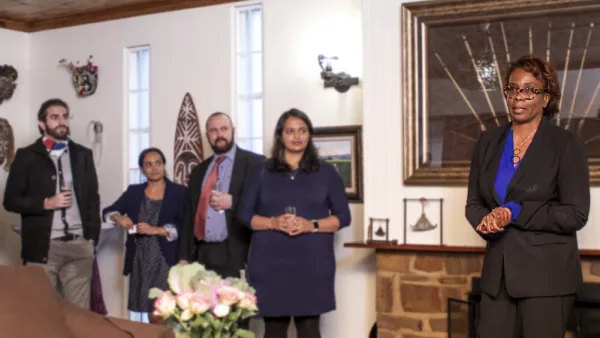
Elevating Black Voices in the Planning Canon
The traditional narratives about the history of planning fail to note the role of Black urbanists, as well as the effect of planning policies on Black Americans.
The Most Influential Contemporary Urbanists
The 100 people making an impact on planning and cities today.

Planetizen Federal Action Tracker
A weekly monitor of how Trump’s orders and actions are impacting planners and planning in America.

The state-sanctioned urbicide of Austin
People don’t kill cities. Freeways do.

US to reduce Colorado River water deliveries to Mexico
A new Colorado Treaty amendment reduces Mexico’s Colorado River water allocation by 250,000 acre feet.

5 New England states march closer to 800 megawatt wind energy project
Securing federal approval for the project may be complicated under the Trump administration, which has historically been hostile towards domestic wind power.

Baltimore to break ground on $50 million Transit Priority Project
The project will bring faster bus trips, safer streets and better bike connections to Baltimore.

Airbnb launches $250 million 'last-dollar financing' housing accelerator, makes first investment in Austin
The company will put $6.4 million towards affordable housing development in Texas’ capital.

FREE Course: Walkable City 1: Why Walkability?
After describing his path towards focusing on walkability as the essence of good planning, Jeff Speck marches through his five principal reasons for making more walkable places.
Reinventing Malls: Planning Alchemy—Turning Gray Fields Into Gold
The course focuses on the opportunities and imperatives that shape reinvention of mall sites.


Eagle County Government
Harvard University Graduate School of Design
Nashville Planning Department
The Architects Foundation
University of Cincinnati Online
The Pocatello Development Authority
The Urban Renewal Agency of the City of Pocatello
Journal of the American Planning Association