LGBTQ elders are more likely than their age-peers to have experienced discrimination, leaving them more likely to be poor and have chronic health problems. LGBTQ-friendly senior housing aims to provide a safe and supportive place to age.


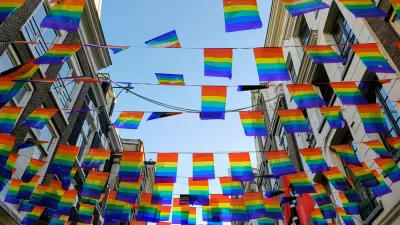
For 20 years Marti Smith lived in an apartment in a fairly upscale neighborhood on the north side of Chicago. Smith loved her home—it was affordable, had three bedrooms, and a backyard where she could garden. Her landlord even allowed her to mow the lawn and shovel snow in order to keep the rent down. But over the years, the area began to change and home prices increased dramatically, making it difficult for locals—especially those on fixed incomes—to find housing they could afford.
The apartment building where Smith lived was eventually sold, and Smith, who at the time was in her late 60s and retired, had to find someplace else to call home. A self-described “card-carrying lesbian,” Smith knew it wasn’t going to be easy to find a place where she could live comfortably and be herself, without judgment. As luck would have it, Chicago’s first LGBTQ-welcoming, 100 percent affordable housing residence was accepting applications. Town Hall Apartments, a 79-unit building, opened in 2014 and Smith has been living there ever since.
While she misses her garden, and she tends to be a person who sees her glass half empty, Smith knows she’s one of the lucky ones. LGBTQ seniors are far more likely to face poverty and homelessness because of discrimination—48 percent of older same-sex couples have experienced discrimination when seeking housing, according to a 2014 Equal Rights Center study. And due to sometimes-rampant homophobia in retirement communities, it’s not uncommon for LGBTQ elders to hide their sexual preference and gender identities, Smith says. Those settings contribute to social isolation, which is deadly.
The LGBTQ senior population—estimated at 3 million strong in the U.S.—have contended with a lifetime of insufficient legal protections, and racial and gender disparities. LGBTQ older adults also experience serious health issues, like higher blood pressure rates and earlier onset of disabilities, according to a report by the Kaiser Family Foundation.
And the community is only growing. It’s expected that the LBGT senior population will grow to 7 million—double the size of Chicago—by 2030.
In recent years, LGBT-friendly affordable housing residences like Town Hall Apartments have been popping up in major cities across the country—from Philadelphia to San Francisco. At present there are about 12 developments in the U.S. that account for almost 1,100 units of affordable housing geared toward LGBTQ elders, according to SAGE, an advocacy and services organization for LGBTQ elders. Six other developments on the horizon are expected to have 300-plus units, and several more of these types of developments are in the early to mid-planning stages.
How are these units getting built, and what are the obstacles to building more?
....
Read the full story: Affordable Housing for LGBTQ Seniors

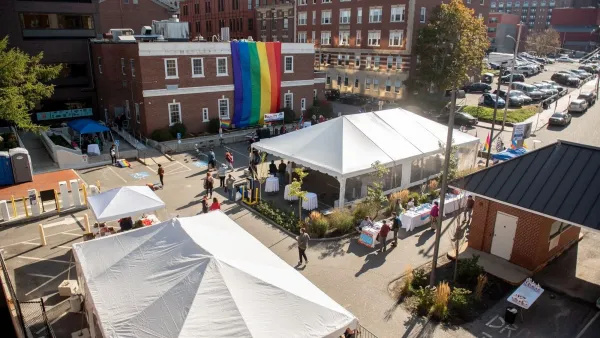
Portland unveils Maine’s first affordable housing complex for LGBTQ+ seniors
The building earmarks 11 units for people with disabilities or living with HIV/AIDS.
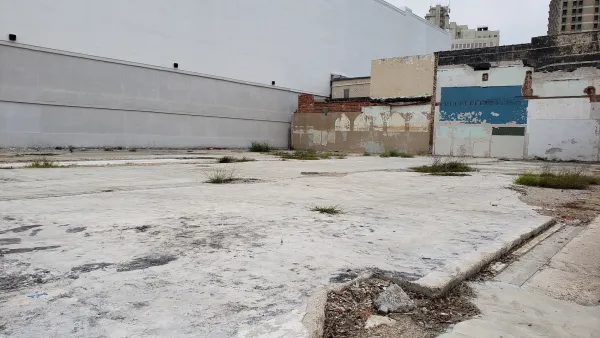
Vacant lots in south Dallas are giving way to affordable housing
A land use analysis found that Dallas could increase tax revenue and close resource gaps if it invests in vacant lot redevelopment.

Report: Dallas Has Just 6 Affordable Homes for Every 10 Middle-income Households
The city’s affordable housing stock is rapidly disappearing.

Planetizen Federal Action Tracker
A weekly monitor of how Trump’s orders and actions are impacting planners and planning in America.

California plans to bury El Niño’s downpour
If the state plays its cards right, it may be able to store a billion acre-feet of El Niño’s water in aquifers.

Desperate measures: Advocates weigh draining Lake Powell to fill Colorado River
Draining the reservoir could reduce evaporation losses by a couple hundred thousand acre-feet.

California city breaks ground on transit connector
The project includes three mobility hubs and a pedestrian bridge.

After public outcry, Massachusetts city releases housing development tracker
Cambridge’s tracker currently shows 250 housing projects in various stages of development.

40 years after approval, Chicago breaks ground on new park
The park honors Jean Baptiste Point du Sable, the city’s first permanent non-native settler.

FREE Course: Walkable City 1: Why Walkability?
After describing his path towards focusing on walkability as the essence of good planning, Jeff Speck marches through his five principal reasons for making more walkable places.
Reinventing Malls: Planning Alchemy—Turning Gray Fields Into Gold
The course focuses on the opportunities and imperatives that shape reinvention of mall sites.

City of Rosemead
Rutgers University, Edward J. Bloustein School of Planning and Public Policy
One Hundred Miles
Hunter College, City University of New York (CUNY)
The Architects Foundation
University of Cincinnati Online
City of Cambridge
Montrose County
The Pocatello Development Authority