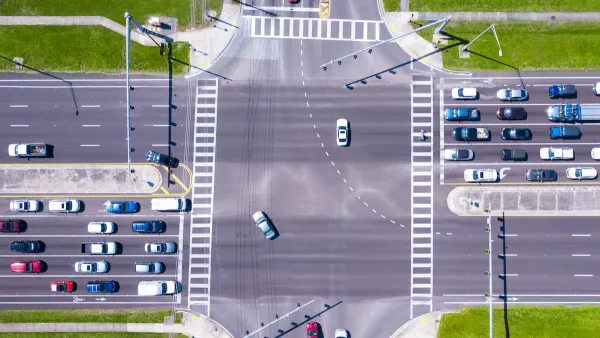
The unusual design improves traffic flow and reduces the danger of head-on collisions as cars enter the I-5 freeway.


If you've ever wondered what it's like to drive on the left side of the road, you can now experience it in Washington State. The "diverging diamond" interchange in Laceyopened in August of 2020, with final touches scheduled to be completed early this year. The design, writes Mike Lindblom in the Seattle Times, reduces possible collision points by nearly half and speeds up the time it takes drivers to reach the I-5 freeway. Putting cars on the left side eliminates the need for a traffic light as drivers turn left to enter the freeway and eases the flow of traffic. According to Blake Knoblauch, executive director of the Lacey South Sound Chamber of Commerce, "drivers who previously waited through two or three light cycles now usually make it through on the first green light."
Popularized by Gilbert Chlewicki of Advanced Traffic Solutions, the diverging diamond interchangeis slowly picking up steam in the United States, with around 150 constructed to date. A study of the design that analyzed 26 such interchanges found that the number of collisions declined by 37%, with the number of injury crashes falling by more than 50%.
The interchange takes a bit of getting used to for some drivers, who fear getting hit or have trouble reaching the appropriate lane for entering the freeway. Bicycling conditions "remain hostile," says Lindblom, an issue acknowledged by Chlewicki. The project is primarily a measure to accommodate projected traffic growth through 2025 as local authorities plan for more expansions to facilitate truck traffic to local warehouses.
Read the full story: A novel I-5 interchange in Lacey lets motorists drive on the left side of the road

Opinion: What American Transportation Engineering Gets Wrong
And how transportation decisions could more effectively prioritize safety.
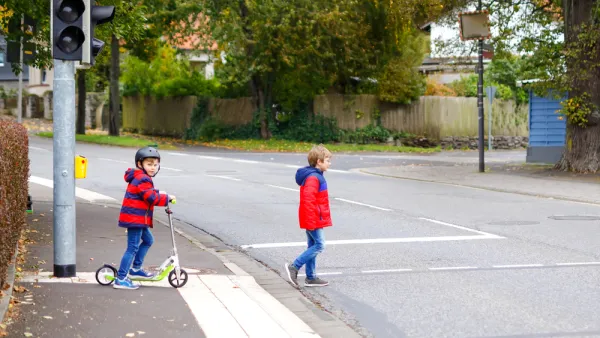
Pedestrian Safety Still Not a Priority in the United States
Dangerous by Design 2021 quantifies the transportation sector's ongoing neglect of the health and safety of people performing that basic human action of taking a walk.
New USDOT safety strategy highlights enforcement, embraces autonomous cars
The new National Roadway Safety Strategy emphasizes safety technology and enforcement and promises to further crack down on immigrant truck drivers with illicitly obtained licenses.

Planetizen Federal Action Tracker
A weekly monitor of how Trump’s orders and actions are impacting planners and planning in America.

Northwest rail fans eager for Sept. 30 debut of Amtrak’s Airo fleet
Get ready for that new train smell and more seats. But they won’t go faster or run more frequently on the Cascades route in Washington and Oregon.
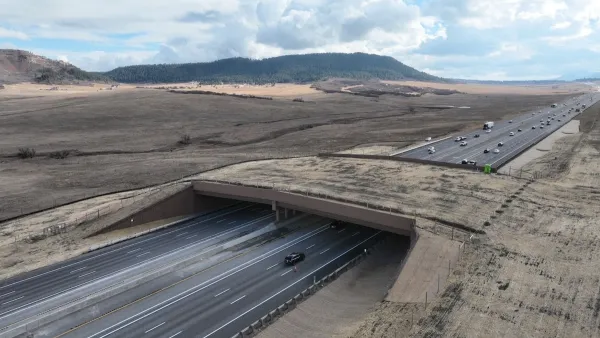
Record-breaking wildlife overpass in Colorado brings 91% reduction in animal collisions
Prior to the overpass, vehicles were hitting one deer per day on Colorado’s Interstate 25.

Detroit to transform waterfront with $2.2 billion investment
Developers will convert about 18 acres of unused parking lot space into civic spaces.

‘Going backwards:’ Baltimore mayor, students rally against state's transit funding plan
Maryland's proposed six-year plan provides no funding for Baltimore’s BMORE bus program and reduces its road maintenance funding.

Trump wants to cancel nearly 98% of funding for HUD housing support program
Multiple housing groups are suing the administration in an effort to preserve the funding.

FREE Course: Walkable City 1: Why Walkability?
After describing his path towards focusing on walkability as the essence of good planning, Jeff Speck marches through his five principal reasons for making more walkable places.
Reinventing Malls: Planning Alchemy—Turning Gray Fields Into Gold
The course focuses on the opportunities and imperatives that shape reinvention of mall sites.


City of Thousand Oaks
City of Wisconsin Rapids
Harvard University Graduate School of Design
The Architects Foundation
University of Cincinnati Online
Northern Illinois Transit Authority (NITA)
The Pocatello Development Authority
The Urban Renewal Agency of the City of Pocatello