To reimagine the city's most important artery, Bogotá sought community input via an innovative online platform.


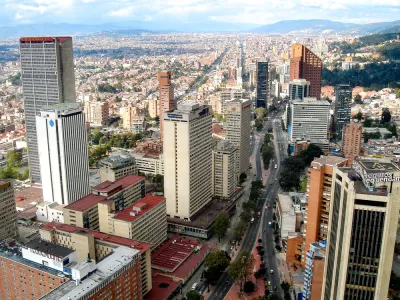
Bogotá's Avenida Séptima, a six-lane thoroughfare that traverses the city's eastern side, has seen its share of modernization attempts over the last two decades, each creating more disagreement between conflicting interests and spurring demand for increased community involvement. When announcing the latest plan for transforming the traffic-choked street into a green corridor that prioritizes public and active transportation, Bogotá's new mayor, Claudia Lopez, promised a process that would be thoroughly participatory.
Using a custom version of the open-source online platform Streetmix, the city solicited design proposals from the public. Accessible to anyone with an internet connection, Streetmix lets participants build their ideal street design with a set of simple graphic tools. Over the two weeks that the Séptima Verde initiative opened to the public, the city received 7,000 design submissions from 6,000 residents. Analyzing this data provides Bogotá's leaders with invaluable information about what community members want to see on their streets and how to more effectively use street space to improve livability and reduce congestion.
Accessible to anyone with an internet connection, Streetmix lets participants build their own ideal street design with a set of simple graphic tools, giving everyday citizens—the people with deep first-hand knowledge of their community—the chance to make concrete suggestions for improvements on a hyper-local scale. Even(or especially) if those suggestions include magic carpets.
FULL STORY: How Bogotá Is Turning 7,000 Citizen Proposals into a Real Plan to Redesign a Major Thoroughfare

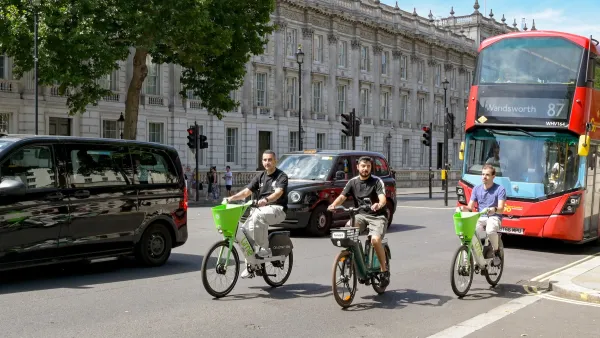
Bike use in London grew by 43% since 2019, but car use remains roughly the same
The city's efforts to reduce car use have stalled despite ambitious programs like congestion pricing and low-traffic neighborhoods.
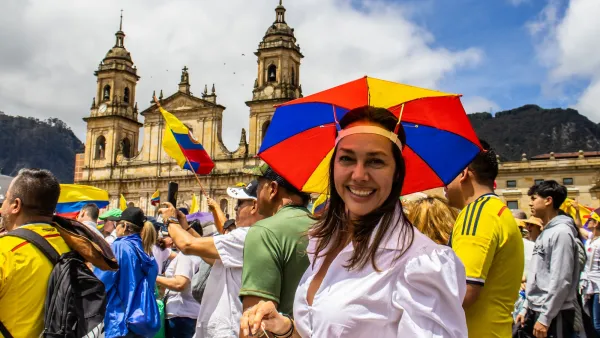
Bogota's next big urban innovation: Equity for working women
The city that brought BRT and Ciclovía to the world is at the forefront of a new revolution.
Texas Bill Would Ban Road Diets, Congestion Pricing
A Texas state senator wants to prevent any discussion of congestion pricing and could suspend existing bike lane and sidewalk projects.

Planetizen Federal Action Tracker
A weekly monitor of how Trump’s orders and actions are impacting planners and planning in America.

The state-sanctioned urbicide of Austin
People don’t kill cities. Freeways do.

US to reduce Colorado River water deliveries to Mexico
A new Colorado Treaty amendment reduces Mexico’s Colorado River water allocation by 250,000 acre feet.

5 New England states march closer to 800 megawatt wind energy project
Securing federal approval for the project may be complicated under the Trump administration, which has historically been hostile towards domestic wind power.

Baltimore to break ground on $50 million Transit Priority Project
The project will bring faster bus trips, safer streets and better bike connections to Baltimore.

Airbnb launches $250 million 'last-dollar financing' housing accelerator, makes first investment in Austin
The company will put $6.4 million towards affordable housing development in Texas’ capital.

FREE Course: Walkable City 1: Why Walkability?
After describing his path towards focusing on walkability as the essence of good planning, Jeff Speck marches through his five principal reasons for making more walkable places.
Reinventing Malls: Planning Alchemy—Turning Gray Fields Into Gold
The course focuses on the opportunities and imperatives that shape reinvention of mall sites.

Eagle County Government
Harvard University Graduate School of Design
Nashville Planning Department
The Architects Foundation
University of Cincinnati Online
The Pocatello Development Authority
The Urban Renewal Agency of the City of Pocatello
Journal of the American Planning Association