The stakes in the economic stimulus package under consideration on Capitol Hill this week are incredibly high.


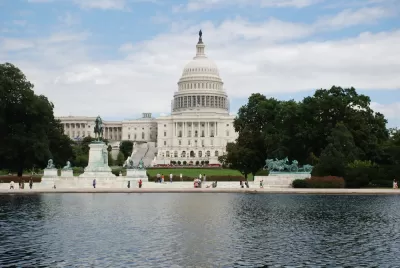
New York MTA chief executive Patrick J. Foye lays out the stakes of the effects of the pandemic on the fiscal health of transit agencies around the country in an article by Justin George, Lori Aratani, and Meagan Flynn.
“This is a once-in-100-years fiscal tsunami that the MTA and our counterpart transit agencies across the country, including in Washington, D.C., are facing,” MTA chief executive Patrick J. Foye said. “This is not a negotiating tactic. It’s not a stunt. It is kind of grim reality.”
According to the article, transit agencies "have been warning for months about enormous deficits, but as they begin announcing proposed cuts, transit leaders say, people are realizing how intertwined public transportation is with their local economies and lives."
The article offers the most comprehensive collection of bad news regarding budget deficits and reduced operation to date. For a sample of the carnage, the article lists the Chicago Transit Authority's (CTA) budget deficit is listed as $375 million. The Bay Area Rapid Transit System (BART) faces a $200 million shortfall through July 2022. For the Washington Metropolitan Transit Authority (Metro) it's a $500 million gap in next year's operating budget.
According to the article, recently announced plans for massive service reductions and layoffs all over the country, including New York City and Washington, D.C., have motivated some members of Congress to put together a stimulus package that includes $45 billion for transportation (of which, only $15 billion is set aside for transit agencies).
"It would be stupidity on steroids if Congress left for Christmas without doing an interim package as a bridge," is the soundbite in the article from Sen. Mark R. Warner (D-Va.).
To further drove the point home of how much harm these proposed cuts to transit operations could do, the article includes statistics and anecdotes—the former reveal the tremendous damage that reductions like those proposed in D.C. and New York would do to the regional and national economies; the latter include a lot of elected officials in different positions expressing dismay at the prospects facing the country's transit systems.
Still, it's unclear if this mountain of evidence will be enough to sway Congress and the trump administration to action.
Paul P. Skoutelas, president of the American Public Transportation Association, is cited in the article calling for more than double the proposed spending levels in the current version of the stimulus package. Congressional aides are cited in the article saying the details of the package are fluid, and the bill "received a cool reception Tuesday from the White House…"
FULL STORY: Transit system service cuts proposed in Congress’s backyard elicit calls for more funding

WMATA Approved Buyouts and Service Reductions
The Washington Metropolitan Area Transit Authority couldn't wait for a still hypothetical bailout from Congress or the Biden administration.
What's in the New Economic Stimulus Package for U.S. Transit Agencies
A new economic stimulus package that appears headed for approval as of this writing will give $15 billion to public transit, far less than transit advocates had hoped, but far better than nothing.
New York, Boston Transit Agencies Back Off Proposed Cuts
News of a potential economic stimulus package in Congress is followed by news that two of the nation's most prominent transit systems are reducing cuts proposed to address plummeting revenues.

The state-sanctioned urbicide of Austin
People don’t kill cities. Freeways do.

US to reduce Colorado River water deliveries to Mexico
A new Colorado Treaty amendment reduces Mexico’s Colorado River water allocation by 250,000 acre feet.

New Jersey’s second-largest city bans standalone data centers
Jersey City will continue to allow co-location facilities, such as those meant for research institutions that store their own data.

Amtrak not solely to blame for New Jersey commuter rail's unreliability, report finds
A new study from the Garden State Initiative found that NJ Transit’s budget grew 20% across a 4 year period, but reliability declined significantly over the same period.

EPA erases limits on planet-warming pollution from power plants
Under Monday’s plan, power plants would still have some limits on how much mercury, arsenic and other contaminants they can emit.

Phoenix announces new on-demand transit service, more frequent RAPID buses
Both new services will launch in October, and are part of Phoenix's Project Effective Access Solutions for Easing Congestion.

FREE Course: Walkable City 1: Why Walkability?
After describing his path towards focusing on walkability as the essence of good planning, Jeff Speck marches through his five principal reasons for making more walkable places.
Reinventing Malls: Planning Alchemy—Turning Gray Fields Into Gold
The course focuses on the opportunities and imperatives that shape reinvention of mall sites.

Eagle County Government
Harvard University Graduate School of Design
Nashville Planning Department
The Architects Foundation
University of Cincinnati Online
The Pocatello Development Authority
The Urban Renewal Agency of the City of Pocatello
Journal of the American Planning Association