A new book created by the Sonoran Institute explains how exploratory scenario planning can be useful to prepare for the uncertainty of water in the near- and long-term future.


John Shepard, senior director of programs at the Sonoran Institute, writes a blog post that offers news of a new book to aid in scenario planning for water supply issues in the western United States.
Shepard offers some historical context for why scenario planning can be powerful tool for water infrastructure planners:
Historically, communities planned around water supply and demand with specific goals in mind—we expect to grow by X, so we will need Y amount of water to meet future needs. They had a confidence that there would be few surprises ahead, but in reality, communities need to consider a range of possible situations when they plan for their water supply. Communities need to be able to pivot accordingly, depending on which future comes to pass.
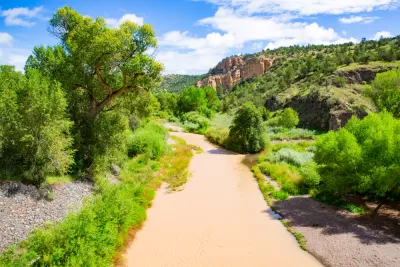
The book offers case studies of scenario planning applied in three planning efforts—the Colorado Water and Growth Dialogue, a systems improvement process in Fort Collins, and an effort at the Upper Gila Watershed Partnership to identify resilience strategies for the watershed.
The Sonoran Institute wrote the book, published in August 2020, which was published by the Lincoln Institute of Land Policy. Video tutorials and other resources are also available to complement the guidance found in the book.
FULL STORY: Planning for an Uncertain Future around Water

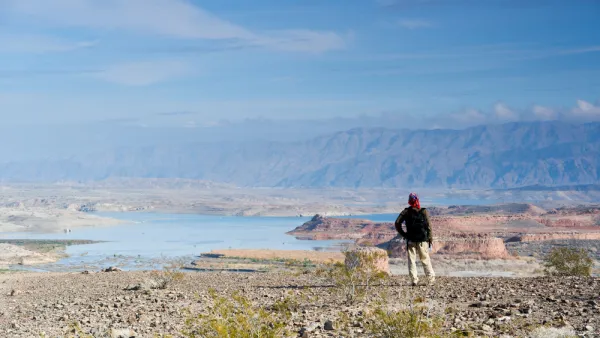
More Need Than Ever for Drought Resilience on the Colorado River
The effects of climate change are already cutting deeply into the lifeblood of the U.S. West—the Colorado River.
Exploratory Scenario Planning, Explained
Planners don't need fancy software to prepare for an uncertain future. Exploratory scenario planning promises a more aware, adaptive, and resilient planning profession.
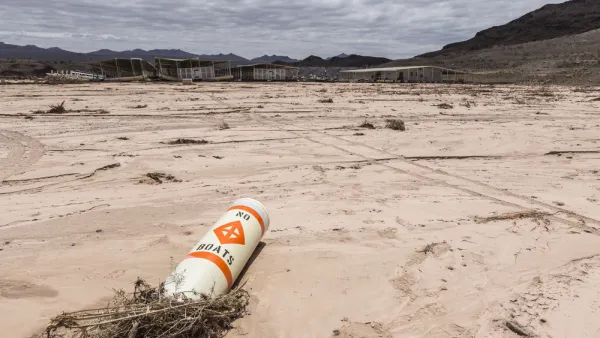
Arizona Struggles to Balance Demand for Water
Two case studies exemplify the extreme economic and legal pressures surrounding water supply in the state of Arizona.

Planetizen Federal Action Tracker
A weekly monitor of how Trump’s orders and actions are impacting planners and planning in America.

The state-sanctioned urbicide of Austin
People don’t kill cities. Freeways do.

US to reduce Colorado River water deliveries to Mexico
A new Colorado Treaty amendment reduces Mexico’s Colorado River water allocation by 250,000 acre feet.

5 New England states march closer to 800 megawatt wind energy project
Securing federal approval for the project may be complicated under the Trump administration, which has historically been hostile towards domestic wind power.

Baltimore to break ground on $50 million Transit Priority Project
The project will bring faster bus trips, safer streets and better bike connections to Baltimore.

Airbnb launches $250 million 'last-dollar financing' housing accelerator, makes first investment in Austin
The company will put $6.4 million towards affordable housing development in Texas’ capital.

FREE Course: Walkable City 1: Why Walkability?
After describing his path towards focusing on walkability as the essence of good planning, Jeff Speck marches through his five principal reasons for making more walkable places.
Reinventing Malls: Planning Alchemy—Turning Gray Fields Into Gold
The course focuses on the opportunities and imperatives that shape reinvention of mall sites.

Eagle County Government
Harvard University Graduate School of Design
Nashville Planning Department
The Architects Foundation
University of Cincinnati Online
The Pocatello Development Authority
The Urban Renewal Agency of the City of Pocatello
Journal of the American Planning Association