The regional planning organization for the four-county area around Puget Sound has adopted a new long-term plan for the future.



The Puget Sound Regional Council (PSRC) has adopted Vision 2050, the blueprint for growth and transportation investments in the four county Puget Sound region, reports Ray Dubicki.
Vision 2050 is designed to prepare the way for an expected 1.8 million new residents in King, Kitsap, Pierce, and Snohomish counties over the next 30 years.
"With the four counties, Vision 2050 and PSRC cover the transportation and planning projections for 76 cities and towns, four tribes, six transit agencies, five ports, two universities, and an assortment state and regional transportation and transit agencies," according to Dubicki. "It’s an exercise in regionalism that can result in broad objectives and narrow impacts."
Dubicki offers a critical review of Vision 2050, finding both good and bad, but overall approving of the plan as a thoughtful planning document that will provide a "strong framework" for the region.
Previous Planetizen coverage of Vision 2050:
- A Transit-Oriented Regional Growth Plan (September 6, 2019)
FULL STORY: Vision 2050 Has Passed. On to Visions 2024.

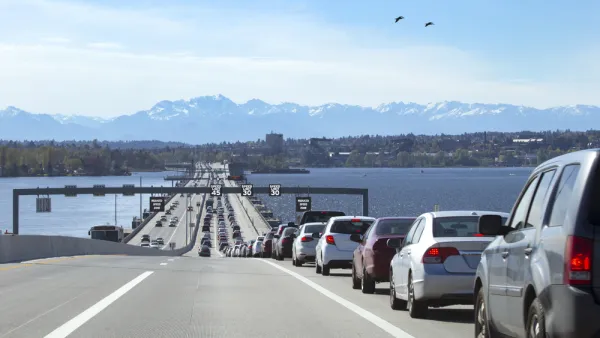
Planning for 1.8 Million New Residents Around Puget Sound
The state of Washington's 1990 Growth Management Act requires regions to create long-range growth plans. The Puget Sound Region Council is currently working on its latest iteration of the plan.

Debating the Puget Sound Regional Transportation Plan
The Puget Sound Regional Council's recently released "Regional Transportation Plan – 2018" has inspired debate about how the region should plan for growth.
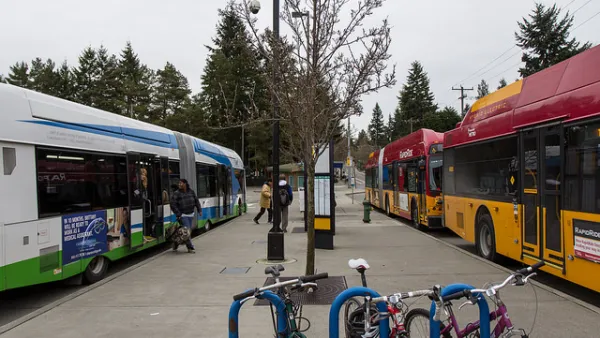
A Transit-Oriented Regional Growth Plan
The Vision 2050 plan, which charts the growth for King, Pierce, Snohomish, and Kitsap counties in Washington State, would focus almost all the growth meant to accommodate 1.8 million new residents inside urban areas.

Planetizen Federal Action Tracker
A weekly monitor of how Trump’s orders and actions are impacting planners and planning in America.

The state-sanctioned urbicide of Austin
People don’t kill cities. Freeways do.

US to reduce Colorado River water deliveries to Mexico
A new Colorado Treaty amendment reduces Mexico’s Colorado River water allocation by 250,000 acre feet.

Mamdani overhauls NYC's Vision Zero plan with 100 new policy goals
The overhaul aims to reduce traffic deaths and make streets safer for pedestrians, cyclists and drivers through lower speed limits, new safety infrastructure and more.

Amtrak not solely to blame for New Jersey commuter rail's unreliability, report finds
A new study from the Garden State Initiative found that NJ Transit’s budget grew 20% across a 4 year period, but reliability declined significantly over the same period.

EPA erases limits on planet-warming pollution from power plants
Under Monday’s plan, power plants would still have some limits on how much mercury, arsenic and other contaminants they can emit.

FREE Course: Walkable City 1: Why Walkability?
After describing his path towards focusing on walkability as the essence of good planning, Jeff Speck marches through his five principal reasons for making more walkable places.
Reinventing Malls: Planning Alchemy—Turning Gray Fields Into Gold
The course focuses on the opportunities and imperatives that shape reinvention of mall sites.

Eagle County Government
Harvard University Graduate School of Design
Nashville Planning Department
The Architects Foundation
University of Cincinnati Online
The Pocatello Development Authority
The Urban Renewal Agency of the City of Pocatello
Journal of the American Planning Association