The state of Washington's 1990 Growth Management Act requires regions to create long-range growth plans. The Puget Sound Region Council is currently working on its latest iteration of the plan.


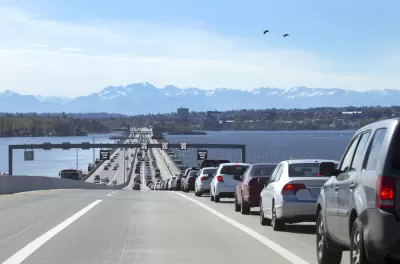
"If you think the Puget Sound region is crowded now, give it another 30 years," writes Josh Cohen.
"There are currently about 4.1 million people and 2.2 million jobs in the four counties that surround Puget Sound — King, Kitsap, Pierce and Snohomish. The Puget Sound Regional Council (PSRC) predicts that by 2050, those numbers will rise to 5.8 million residents and 3.4 million jobs."
With that scale of growth expected, the Puget Sound Regional Council (PSRC) is working on the Vision 2050 plan, "which updates the metropolitan planning agency’s road map for the next 30 years of growth in the Puget Sound region." The PSRC is the only organization that gathers every city in the region, and it's faced with a tall task to balance jobs and housing needed to meet the demands of population growth across the region.
According to Cohen, a coalition of transportation, environmental and community groups, led by the Transportation Choices Coalition, is pushing the PSRC to center issues of race in the regional planning process, to ensure that balance reaches across demographic lines, not just geographic boundaries.
Earlier this month, the PSRC released Vision 2050's draft environmental impact statement, at about the halfway point in a four-year process.
FULL STORY: Can Puget Sound make room for 1.8M people without pushing anyone out?


Debating the Puget Sound Regional Transportation Plan
The Puget Sound Regional Council's recently released "Regional Transportation Plan – 2018" has inspired debate about how the region should plan for growth.
Different Approaches to Fast Growth in Idaho's Treasure Valley
Three cities on the periphery of the fast-growing Treasure Valley showcase different approaches to a sudden influx of newcomers.
Cascadia Expects Millions of New Residents. Should it Build New Cities or New Density?
A recent report calls for the region stretching from Oregon to British Columbia to think big about accommodating expected population growth. The report's recommendation to build four new, large cities isn't universally accepted, however.

Planetizen Federal Action Tracker
A weekly monitor of how Trump’s orders and actions are impacting planners and planning in America.

The state-sanctioned urbicide of Austin
People don’t kill cities. Freeways do.

US to reduce Colorado River water deliveries to Mexico
A new Colorado Treaty amendment reduces Mexico’s Colorado River water allocation by 250,000 acre feet.

Baltimore to break ground on $50 million Transit Priority Project
The project will bring faster bus trips, safer streets and better bike connections to Baltimore.

Airbnb launches $250 million 'last-dollar financing' housing accelerator, makes first investment in Austin
The company will put $6.4 million towards affordable housing development in Texas’ capital.

Guerilla urbanists are building DIY bus stop benches in Chicago
A before-and-after of one of the bus stops with a new bench. The new benches are not officially sanctioned or permitted, but the residents who placed them hope they will be the start of a network of DIY benches across the city.

FREE Course: Walkable City 1: Why Walkability?
After describing his path towards focusing on walkability as the essence of good planning, Jeff Speck marches through his five principal reasons for making more walkable places.
Reinventing Malls: Planning Alchemy—Turning Gray Fields Into Gold
The course focuses on the opportunities and imperatives that shape reinvention of mall sites.

Eagle County Government
Harvard University Graduate School of Design
Nashville Planning Department
The Architects Foundation
University of Cincinnati Online
The Pocatello Development Authority
The Urban Renewal Agency of the City of Pocatello
Journal of the American Planning Association