Major changes are coming to the Metro bus system in the nation's second largest city. After three years of planning and public feedback, the Metro board has approved the NextGen bus plan.


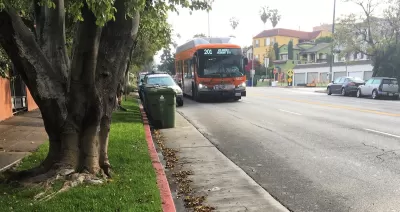
The Los Angeles County Metropolitan Transportation Authority (Metro) Board of Directors recently approved the NextGen bus plan after three years of planning and a high profile outreach and public engagement campaign, according to an article by Steve Hymon for Metro's The Source.
Metro planning staff released a draft of the plan in January 2020, but the plan largely vanished from the public eye as the pandemic gutted transit ridership in the city. Now the plan for the nation's second busiest bus system will begin to implement service changes in December 2020, with a second and third round of changes coming in June 2021 and December 2021, respectively.
"Under the new plan — to be implemented in stages, beginning in December (more on this below) — buses will arrive every five to 10 minutes for 83 percent of current riders compared to around 48 percent today," according to Hymon.
One of the key changes of the NextGen plan will be to combine most rapid and local bus routes. "These new lines will stop fewer times than a local bus but a few more than a rapid. Transit signal priority that has been a key part of rapid service will also now work these new lines. The end result will be a faster door-to-door trip for all riders, whether they currently take Metro Local or Rapid routes," according to Hymon.
A significant obstacle standing in the way of full implementation of the NextGen plan includes ridership and fare revenues decimated by the pandemic. Metro staff are expected to deliver a plan for increasing service while dealing with declining system revenues later this year.
FULL STORY: NextGen Plan to improve Metro Bus system is approved by agency’s Board of Directors


Driver Shortage Undercuts the Potential of L.A.’s Recent Bus System Redesign
The Los Angeles County Metropolitan Transportation Authority implemented a complete overhaul of its bus system in three waves over the course of 2021. A shortage of drivers for the system has made it impossible to implement that vision.
Metro L.A. Drafts Frequent Bus Service Plan
Late last week, Los Angeles transit riders got a first peak at the proposed NextGen Bus Plan, a system redesign that promises to completely redefine transit access in the county.

L.A. Metro Plans for an Equitable Recovery
The pandemic has forced difficult confrontations with inequities that existed long before the novel coronavirus. L.A. Metro planners are responding by charting a path toward a transportation system that reverses and improves those previous realities.

Planetizen Federal Action Tracker
A weekly monitor of how Trump’s orders and actions are impacting planners and planning in America.

The state-sanctioned urbicide of Austin
People don’t kill cities. Freeways do.

US to reduce Colorado River water deliveries to Mexico
A new Colorado Treaty amendment reduces Mexico’s Colorado River water allocation by 250,000 acre feet.

5 New England states march closer to 800 megawatt wind energy project
Securing federal approval for the project may be complicated under the Trump administration, which has historically been hostile towards domestic wind power.

Baltimore to break ground on $50 million Transit Priority Project
The project will bring faster bus trips, safer streets and better bike connections to Baltimore.

Airbnb launches $250 million 'last-dollar financing' housing accelerator, makes first investment in Austin
The company will put $6.4 million towards affordable housing development in Texas’ capital.

FREE Course: Walkable City 1: Why Walkability?
After describing his path towards focusing on walkability as the essence of good planning, Jeff Speck marches through his five principal reasons for making more walkable places.
Reinventing Malls: Planning Alchemy—Turning Gray Fields Into Gold
The course focuses on the opportunities and imperatives that shape reinvention of mall sites.

Eagle County Government
Harvard University Graduate School of Design
Nashville Planning Department
The Architects Foundation
University of Cincinnati Online
The Pocatello Development Authority
The Urban Renewal Agency of the City of Pocatello
Journal of the American Planning Association