Land banks and community land trusts are finding new ways to work together in light of the ongoing housing affordability crisis and the new economic pressures of the COVID-19 pandemic.



Emma Zehner reports on the latest collaborations between community land trusts and land banks to address systemic racism and expand affordable housing opportunities.
The first example examined in the article: the New Home Development Program (NHDP), a collaboration of the city of Houston, the Houston Land Bank, and the Houston Community Land Trust (HCLT).
"Launched in 2018, NHDP was created to provide newly constructed, affordable single-family homes to homebuyers with a household income of 80 percent or less of area median income (AMI)," according to Zehner. "The program is working to address systemic racial disparities and discriminatory practices that have shut Black people and other people of color out of homeownership opportunities."
The Houston model is found in other cities around the country, like Portland and Atlanta, coalescing in the 36-month Catalytic Land Cohort, a program run by the Grounded Solutions Network and the Center for Community Progress, with initial funding from Wells Fargo.
Zehner offers insight into what makes these recent collaborations so innovative: "Land banks and community land trusts haven’t historically coordinated their work: land banks typically purchase properties in weak markets with the goal of bringing them back to productive use, while community land trusts have focused on ensuring affordability in hot markets. But by joining together, these entities can serve as an important tool in expanding homeownership opportunities."
The article also includes a history of community land trusts in addition to deeply reported partnership case studies from Albany, New York, and Richmond, Virginia, in addition to the New Home Development Program in Houston and examples from Atlanta and Portland.
As for next steps for the Catalytic Land Cohort, Zehner reports that the collaboration is seeking funding support to scale the model up to the regional level.
FULL STORY: Opening Doors


The Power of Community Land Trusts
A New York Times article explains and, potentially, introduces the community land trust concept, which has proven immensely capable of preventing displacement and foreclosures while advancing homeownership and racial equity.
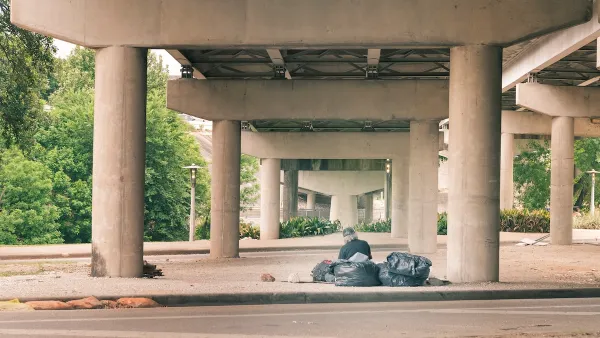
After Years of Success, Houston Sees Spike in Unsheltered Homelessness
Unsheltered homelessness rose by 16 percent in 2025 despite the city’s previous success in reducing the number of people living on the streets.

How Houston Can Be a Model for Housing Reform
The city builds more new housing than almost any other and has dramatically reduced homelessness, yet low-income families struggle to find affordable housing.

Planetizen Federal Action Tracker
A weekly monitor of how Trump’s orders and actions are impacting planners and planning in America.

The state-sanctioned urbicide of Austin
People don’t kill cities. Freeways do.

US to reduce Colorado River water deliveries to Mexico
A new Colorado Treaty amendment reduces Mexico’s Colorado River water allocation by 250,000 acre feet.

Mamdani overhauls NYC's Vision Zero plan with 100 new policy goals
The overhaul aims to reduce traffic deaths and make streets safer for pedestrians, cyclists and drivers through lower speed limits, new safety infrastructure and more.

Amtrak not solely to blame for New Jersey commuter rail's unreliability, report finds
A new study from the Garden State Initiative found that NJ Transit’s budget grew 20% across a 4 year period, but reliability declined significantly over the same period.

EPA erases limits on planet-warming pollution from power plants
Under Monday’s plan, power plants would still have some limits on how much mercury, arsenic and other contaminants they can emit.

FREE Course: Walkable City 1: Why Walkability?
After describing his path towards focusing on walkability as the essence of good planning, Jeff Speck marches through his five principal reasons for making more walkable places.
Reinventing Malls: Planning Alchemy—Turning Gray Fields Into Gold
The course focuses on the opportunities and imperatives that shape reinvention of mall sites.

Eagle County Government
Harvard University Graduate School of Design
Nashville Planning Department
The Architects Foundation
University of Cincinnati Online
The Pocatello Development Authority
The Urban Renewal Agency of the City of Pocatello
Journal of the American Planning Association