There are significant differences between Proposition 21, a statewide rent control measure on the ballot in California, compared to a similar measure defeated soundly by voters in 2018.


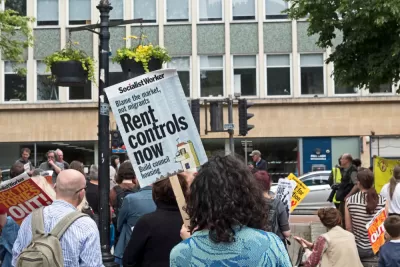
Liam Dillon explains Proposition 21, which would alter statewide rent control limits just two years after voters resoundingly defeated a similar statewide measure known as Proposition 10.
Dillon writes to explain the differences between the two propositions—most of the changes have been made by rent control advocates of making the idea more palatable to voters—and to describe the stakes in the election for the state's ongoing housing affordability crisis.
The key is in how much local control is being granted: Proposition 21 would allow local governments to decide whether they want to implement local control on broader swaths of the local rental market than is currently allowed by state law, but short of what Proposition 10 would have allowed.
Dillon provides the following list of changes that would be implemented by Proposition 21:
- Apartments, except for those built within the last 15 years. If the initiative passes, cities could implement rent control on apartments built before 2006, with newer apartments eligible to be covered every year following.
- Single-family homes and condominiums, provided that the owner is a corporation or has more than two properties.
- Vacant apartments, but cities would have to allow landlords to increase rents on vacant units by at least 15%.
That represents a much more limited approach to what cities would be able to enact than what Proposition 10 would have accomplished. "Proposition 10 would have just repealed Costa-Hawkins, allowing cities to craft their own guidelines without limits," explains Dillon.
The article includes soundbites from leaders of campaigns on either side of the issue, as well as background on rent control law in California since the approval of the Costa-Hawkins Rental Housing Act. Dillon also shares recent research on the effects of rent control, including research from three Stanford economists published by the American Economic Review journal, as well as a report released just prior to the Proposition 10 vote, by researchers from the University of Southern California. The more recent study makes the claim that rent control lowers rental housing supply by creating incentives for landlords to convert rental units to condominiums. The USC study has fewer negative consequences than traditionally thought, and can contribute to neighborhood stability.
Read the full story: How California’s Prop. 21 is different from the rent control initiative two years ago

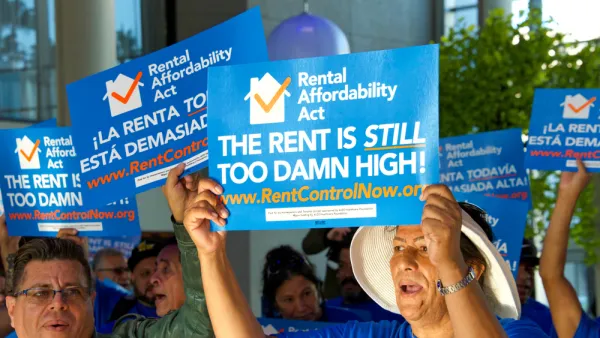
Lessons From Rent Control's Latest Election Rejection
California voters, with a reputation for liberal politics, have repeatedly refused to approve statewide rent control laws at the ballot box.

Rent Control Debated in the Nation's Capital
District council members and local tenant advocates are engaged in a bit of tug of war about how far the District should go to limit the amount landlords can raise rents.
New Research Changes the Narrative on the Effects of Rent Control
As California voters consider a ballot initiative that would greatly expand rent control around the state, researchers are working to inform the populace about rent control.

Planetizen Federal Action Tracker
A weekly monitor of how Trump’s orders and actions are impacting planners and planning in America.

California plans to bury El Niño’s downpour
If the state plays its cards right, it may be able to store a billion acre-feet of El Niño’s water in aquifers.

Chicago breaks ground on $3 billion megadevelopment
The new neighborhood, titled Foundry Park, will one day host 3,700 residences.

California High-Speed Rail Authority CEO resigns after $600,000 scandal
Under Ian Choudri, the authority used taxpayer dollars to fund first class flights and trips to nightclubs.

Want to study the Missouri River? Soon, you may need unanimous approval from 10 states
Legislation would require 10 governors’ permission to study or build projects moving water outside the basin.

Desperate measures: Advocates weigh draining Lake Powell to fill Colorado River
Draining the reservoir could reduce evaporation losses by a couple hundred thousand acre-feet.

FREE Course: Walkable City 1: Why Walkability?
After describing his path towards focusing on walkability as the essence of good planning, Jeff Speck marches through his five principal reasons for making more walkable places.
Reinventing Malls: Planning Alchemy—Turning Gray Fields Into Gold
The course focuses on the opportunities and imperatives that shape reinvention of mall sites.

City of Rosemead
Rutgers University, Edward J. Bloustein School of Planning and Public Policy
One Hundred Miles
Hunter College, City University of New York (CUNY)
The Architects Foundation
University of Cincinnati Online
City of Cambridge
Montrose County
The Pocatello Development Authority