The oldest city park in the United States, used as a cow pasture until the 19th century, is slated for a major upgrade.


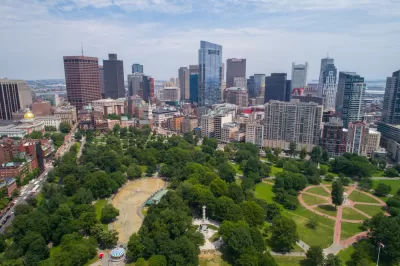
Matt Hickman reports on a recently revealed draft master plan for a renovation of Boston Common.
The draft master plan proposes a large number of enhancements, including "an enlarged and enhanced Visitor Information Center, athletic areas with improved flexibility and accessibility, a dog run, and numerous revamps to the Frog Pond, a large water feature that serves as an ice-skating rink in the winter, a splash pad in the summer, and a reflecting pool during the spring and fall," according to Hickman.
"While Boston Common has gone through numerous changes over its nearly 400-year history, the $28 million makeover outlined in the Boston Common Master Plan involves some of the most significant and sought-after alterations and upgrades to the park in decades," explains Hickman.
The draft master plan was revealed in mid-September, earning initial praise from Boston Mayor Marty Walsh, after an initial announcement in the summer of 2019. The master plan is expected to cost $28 million, with funding available from the sale of the old Winthrop Square Garage in Boston’s Financial District, reports Hickman. The $28 million outlined in the plan includes $5 million for maintenance once the project is complete.
FULL STORY: Boston Common master plan proposes sweeping upgrades to America’s oldest city park

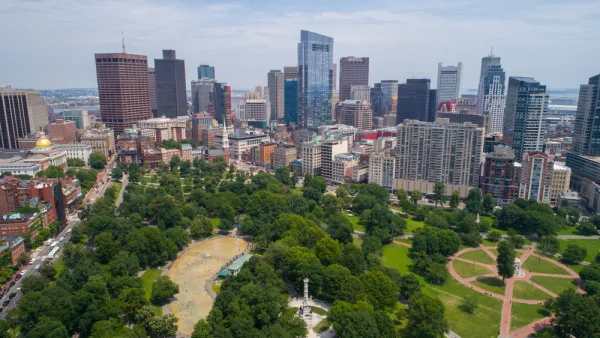
Ideas for Improving the Oldest Public Park in the U.S.
A windfall of $28 million will be spent to repair and renovate Boston Common—public input into the priorities of that spending would be appreciated.
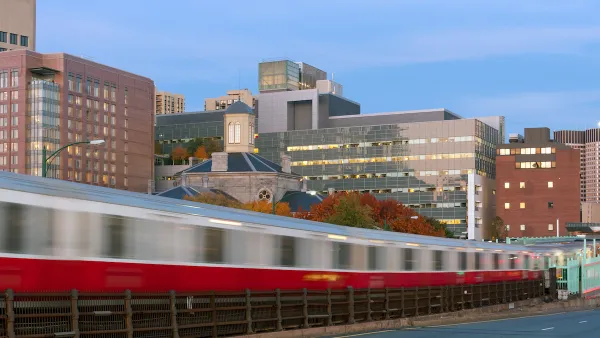
Boston Cap Park Closer to Reality
The proposed Dorchester Greenway would create a new linear park above part of the Red Line subway.
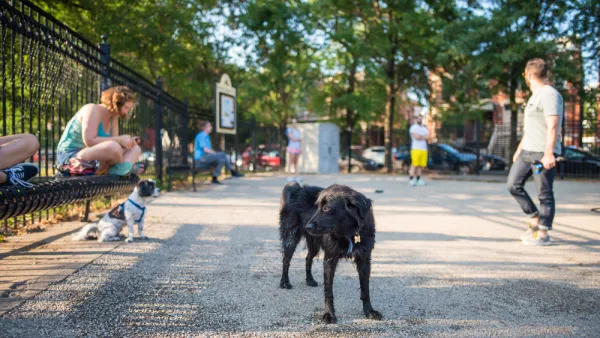
Boston Leaders Want A Dog Park in Every Neighborhood
City leaders want to build more off-leash dog parks, partly as a response to the trend of "pandemic puppies" that has led to a sharp spike in urban dog ownership.

Planetizen Federal Action Tracker
A weekly monitor of how Trump’s orders and actions are impacting planners and planning in America.

The state-sanctioned urbicide of Austin
People don’t kill cities. Freeways do.

US to reduce Colorado River water deliveries to Mexico
A new Colorado Treaty amendment reduces Mexico’s Colorado River water allocation by 250,000 acre feet.

5 New England states march closer to 800 megawatt wind energy project
Securing federal approval for the project may be complicated under the Trump administration, which has historically been hostile towards domestic wind power.

Baltimore to break ground on $50 million Transit Priority Project
The project will bring faster bus trips, safer streets and better bike connections to Baltimore.

Airbnb launches $250 million 'last-dollar financing' housing accelerator, makes first investment in Austin
The company will put $6.4 million towards affordable housing development in Texas’ capital.

FREE Course: Walkable City 1: Why Walkability?
After describing his path towards focusing on walkability as the essence of good planning, Jeff Speck marches through his five principal reasons for making more walkable places.
Reinventing Malls: Planning Alchemy—Turning Gray Fields Into Gold
The course focuses on the opportunities and imperatives that shape reinvention of mall sites.

Eagle County Government
Harvard University Graduate School of Design
Nashville Planning Department
The Architects Foundation
University of Cincinnati Online
The Pocatello Development Authority
The Urban Renewal Agency of the City of Pocatello
Journal of the American Planning Association