City leaders want to build more off-leash dog parks, partly as a response to the trend of "pandemic puppies" that has led to a sharp spike in urban dog ownership.


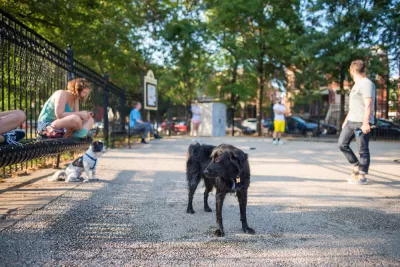
As the pandemic forced people to isolate from their friends and co-workers, many Americans took solace in adopting a furry friend. As Marcela García writes for the Boston Globe, "the dog economy is booming." With so many "pandemic puppies" in new homes, "soon-to-be mature dogs will be matriculating in public spaces and will insist that their voices are heard." Recently, city officials in Boston confirmed that they want to build a dog park in every neighborhood, but some opponents push back on what they see as a frivolous use of public funds.
Proponents of public off-leash dog parks argue that the parks can reduce "unwanted and sometimes dangerous" interactions and create vibrant community hubs for both people and pets. And although dog-on-dog violence and accidents do occur, writes García, "there is a level of responsibility and etiquette that comes with ownership. That includes licensing your animal, 100 percent poop pickup — no excuses — and following leash laws except when one is sure no harm or hassle will ensue." More public dog parks can help urban dogs and their owners stay healthy, social, and sane long after the pandemic.
FULL STORY: Boston's dogs just wanna run free

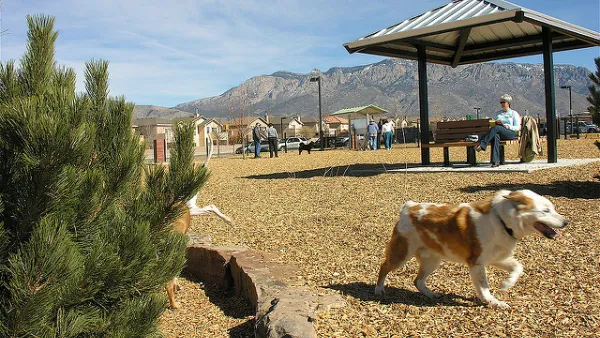
Report: Dog Parks 'Lead the Pack' in New Urban Parks
The Trust for Public Land's annual City Parks Facts report finds cities around the country are adding dog parks with the enthusiasm of a pack puppies.
Op-Ed: Tech Can Enhance Parks
In the traditional view, nature and digital technology clash. But for many people, tech can offer ways to better engage with parks.
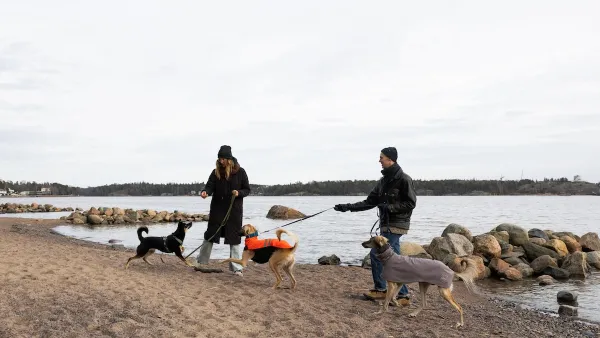
Sunday Smile: Helsinki Opens Sightseeing Route for Dogs
The Finnish capital is one of the world's most dog-friendly cities, with over 90 dedicated dog parks.

The state-sanctioned urbicide of Austin
People don’t kill cities. Freeways do.

US to reduce Colorado River water deliveries to Mexico
A new Colorado Treaty amendment reduces Mexico’s Colorado River water allocation by 250,000 acre feet.

New Jersey’s second-largest city bans standalone data centers
Jersey City will continue to allow co-location facilities, such as those meant for research institutions that store their own data.

Amtrak not solely to blame for New Jersey commuter rail's unreliability, report finds
A new study from the Garden State Initiative found that NJ Transit’s budget grew 20% across a 4 year period, but reliability declined significantly over the same period.

EPA erases limits on planet-warming pollution from power plants
Under Monday’s plan, power plants would still have some limits on how much mercury, arsenic and other contaminants they can emit.

Phoenix announces new on-demand transit service, more frequent RAPID buses
Both new services will launch in October, and are part of Phoenix's Project Effective Access Solutions for Easing Congestion.

FREE Course: Walkable City 1: Why Walkability?
After describing his path towards focusing on walkability as the essence of good planning, Jeff Speck marches through his five principal reasons for making more walkable places.
Reinventing Malls: Planning Alchemy—Turning Gray Fields Into Gold
The course focuses on the opportunities and imperatives that shape reinvention of mall sites.

Eagle County Government
Harvard University Graduate School of Design
Nashville Planning Department
The Architects Foundation
University of Cincinnati Online
The Pocatello Development Authority
The Urban Renewal Agency of the City of Pocatello
Journal of the American Planning Association